Woman at Her Toilette by Vuillard, Edouard
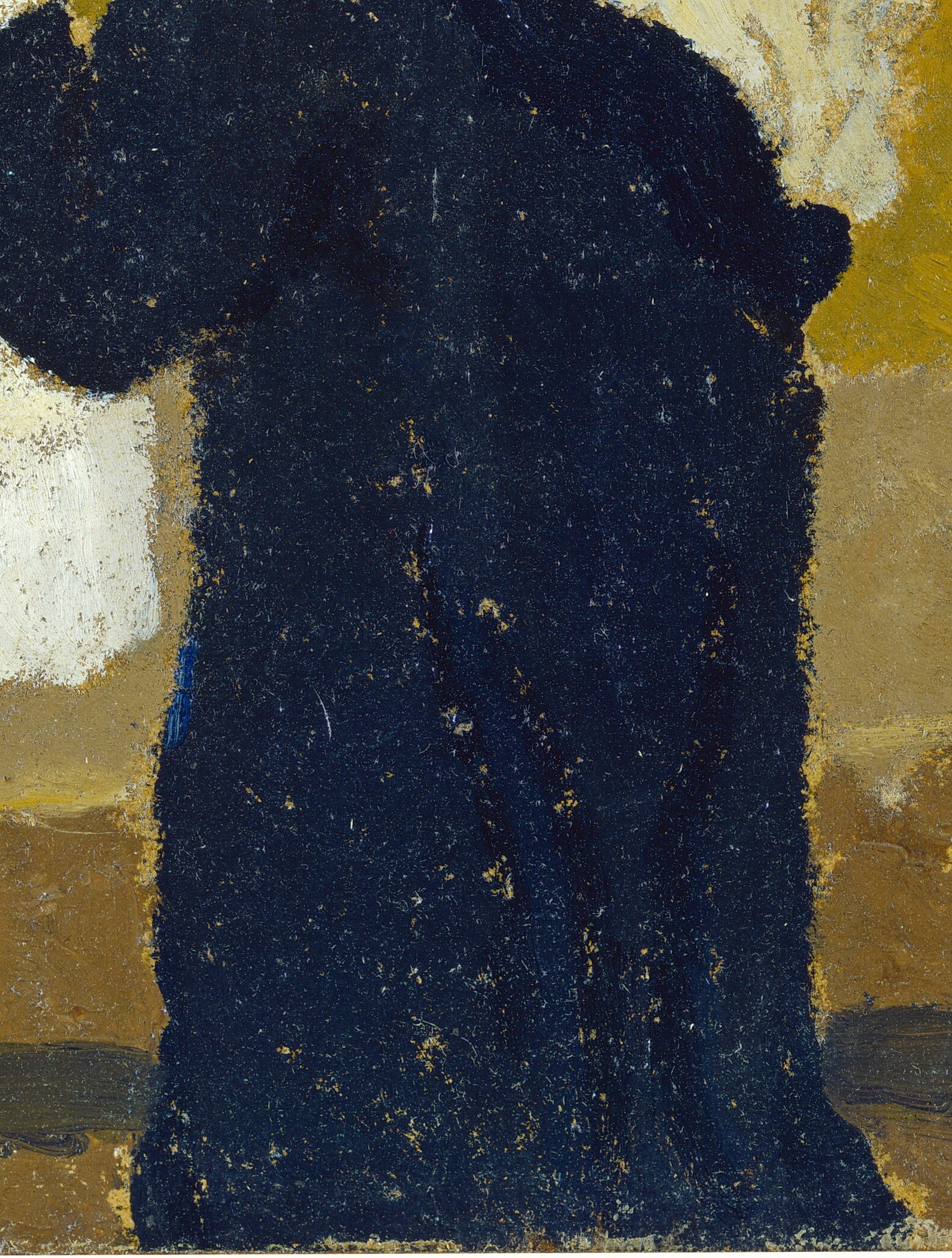
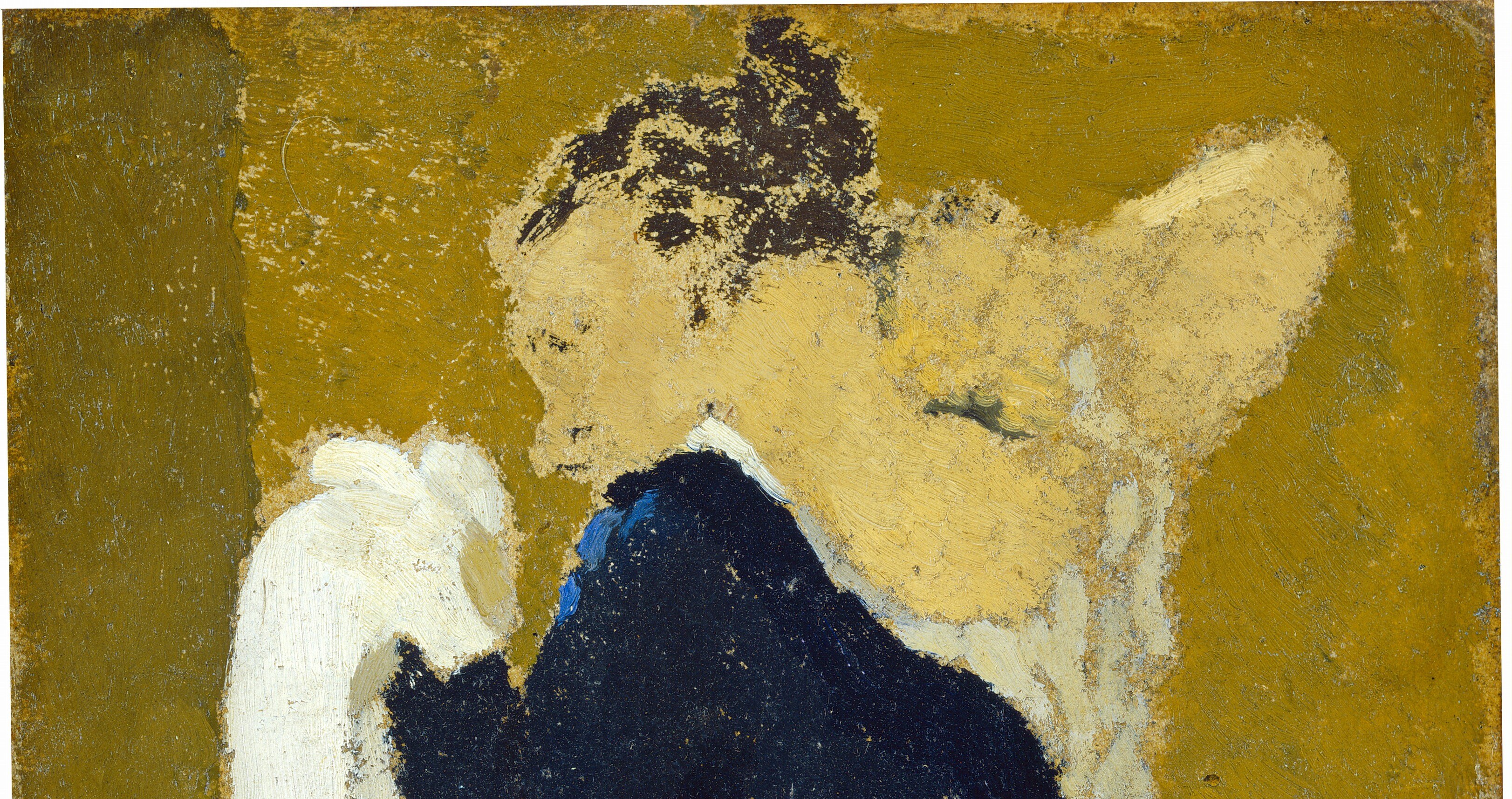
Édouard Vuillard’s "Woman at Her Toilette" (c. 1891) pulls off an astonishing material trick: the deepest, most enclosing shadow in the painting is not paint at all. The dark mass of her dress is the raw oil-stained cardboard he chose as his canvas. He understood that the ground itself could model the form, so he simply left it bare.
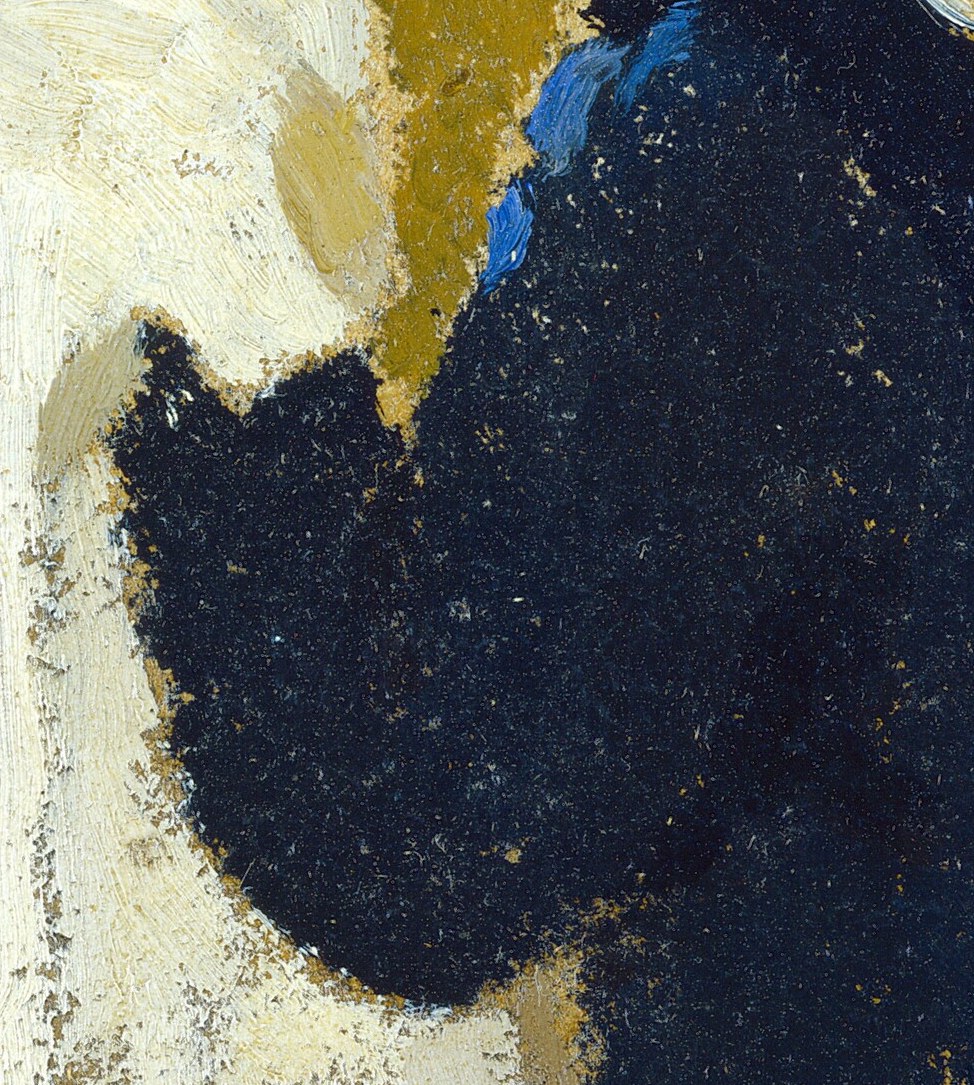
Run your eyes over the yellow wall and the white cloth. Those passages are almost dry, the brush dragged across the surface so the tooth of the cardboard catches the pigment. Vuillard was part of the Nabis, a group devoted to the flat, patterned logic of Japanese prints, and here he treats oil paint like pastel, building light rather than blending it away. Notice the single quick stroke of blue at her collar, it is the only bright note in the whole image, and it immediately pulls the eye to her quiet, downcast profile.
Painted on a modest piece of cardboard in a shared apartment, this work comes from the exact moment Vuillard was designing theater sets and stained glass on the side. You can sense that decorative instinct in how he frames her: the yellow wall and brown foreground become abstract blocks of warm domestic space, a private world held by a handful of restrained marks. It is a painting about intimacy made visible through economy, the less he painted, the more you feel the silence of the room.
Details
Transcript
At first glance, it's just a woman getting ready. But look at the dark mass of her dress. It is the raw brown cardboard. Unpainted. The shadows are just the bare surface, doing all the heavy lifting. He builds light with thick, dry strokes of yellow on the wall. And the white cloth is almost pure paint, dragged dry across the surface. Only one cool note: a single brushstroke of blue at her collar. The whole intimate world holds in a few colors and a piece of cardboard.