Portrait of a Young Man by Hans Memling
Hans Memling's Portrait of a Young Man, created around 1475, is a masterful example of Northern Renaissance portraiture. It depicts an unknown sitter, whose wealth is suggested through symbolic details. Held at The Metropolitan Museum of Art.
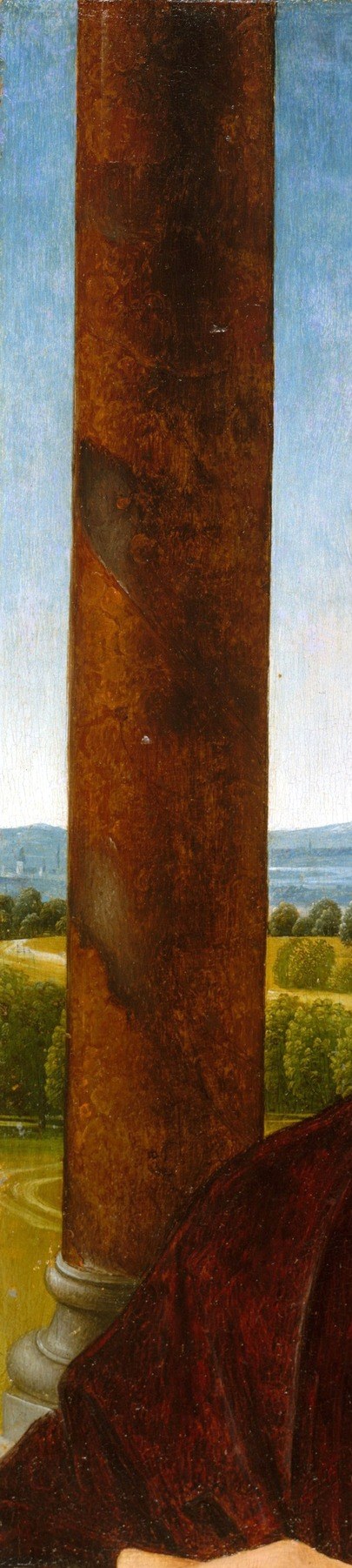
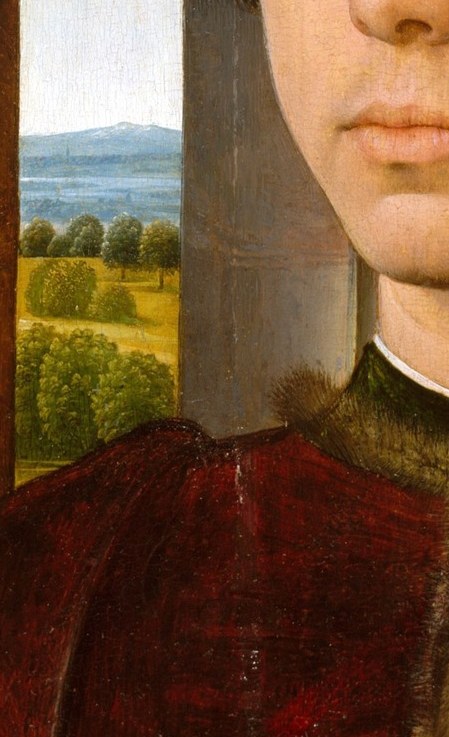
Look closely at the sitter's left hand. The prominent ring signifies not only his wealth but potentially his marital status, a common coded message of the era. The background features two classical columns, symbolizing permanence and a connection to antiquity, framing a serene, distant landscape that offers a sense of depth and the sitter's world.
Memling, a prominent artist in Bruges, was known for his ability to imbue portraits with subtle meaning through carefully chosen details. His meticulous oil technique creates a refined surface and introspective mood, characteristic of his work.
These objects work together to build a portrait of status, stability, and the sitter's place in the world.
Details

Transcript
This man wears a ring on his finger. It signifies wealth and marital status. Two columns frame a distant landscape. They suggest permanence and antiquity. The landscape adds depth and his world. Hans Memling painted this in 1475.