Pietà by http://www.wikidata.org/.well-known/genid/49a3855a97809db63a7ddbd3a39c66e7
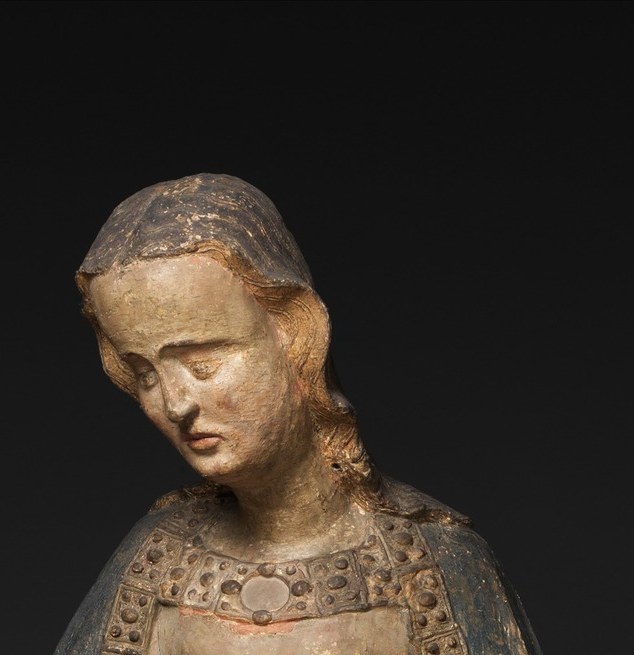
This is a German Pietà from around 1387, currently in the collection of The Metropolitan Museum of Art. Carved from wood and painted, it translates core Christian theology into a single, emotionally direct image for a largely non-literate medieval audience.
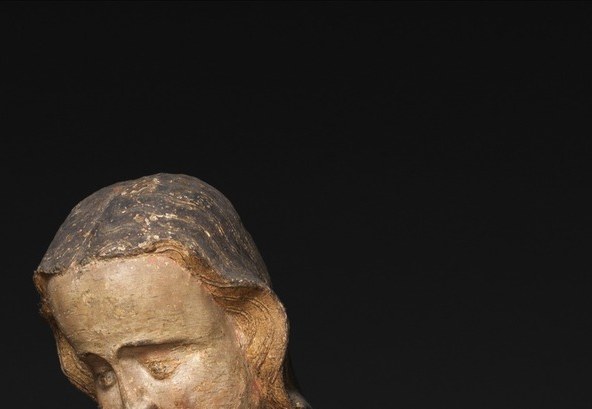
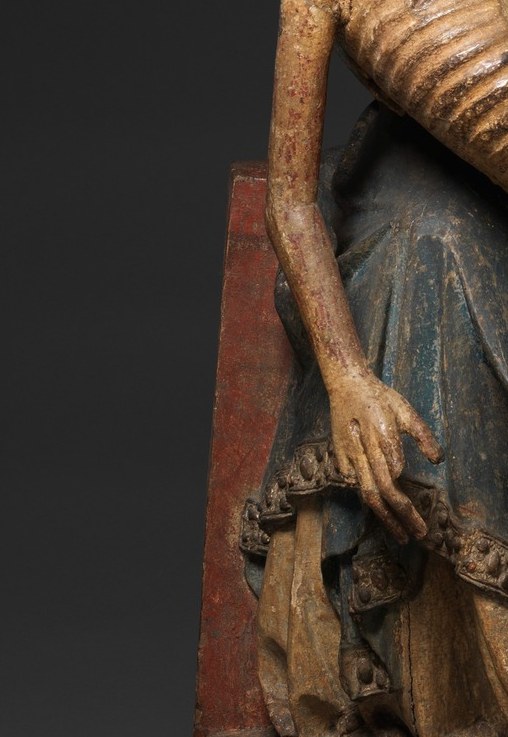
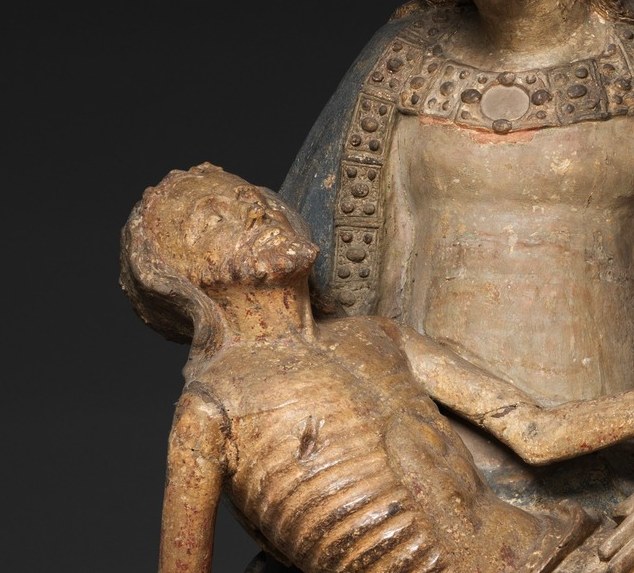
Start at the top: Mary wears a gilded crown and a deep blue robe. The blue is likely azurite, an expensive pigment reserved for the most sacred figures. She is both the mourning mother and the Queen of Heaven, a deliberate tension the sculptor builds into every fold of the drapery. Her hand rests gently on Christ's, the most intimate contact in the entire composition.
Then move down. Christ's arm hangs in a dead drop, a conventional medieval sign that the figure is truly lifeless. His ribcage is carved with real anatomical attention, the suffering is physical and specific. And yet his face is completely at peace. The sculpture insists on both the brutal fact of death and the theological promise of redemption in the same body.
Late medieval devotional art often worked like a visual catechism, each detail a line of doctrine. This piece makes that legible even now. Does the contrast between Mary's lavish queenly crown and her bowed, grieving posture change how you read her expression?
Details
Transcript
A mother holds her son. The pose is a sermon. The gold on her head is not a crown of grief. She is the Queen of Heaven, dressed in costly azurite blue. His dead arm drops straight down. In this period, that is a hard sign of lifelessness. But look at his face. The sculptor gave him perfect peace. One body shows the full cost. The other shows the promise.