Haystacks in Brittany by Gauguin, Paul
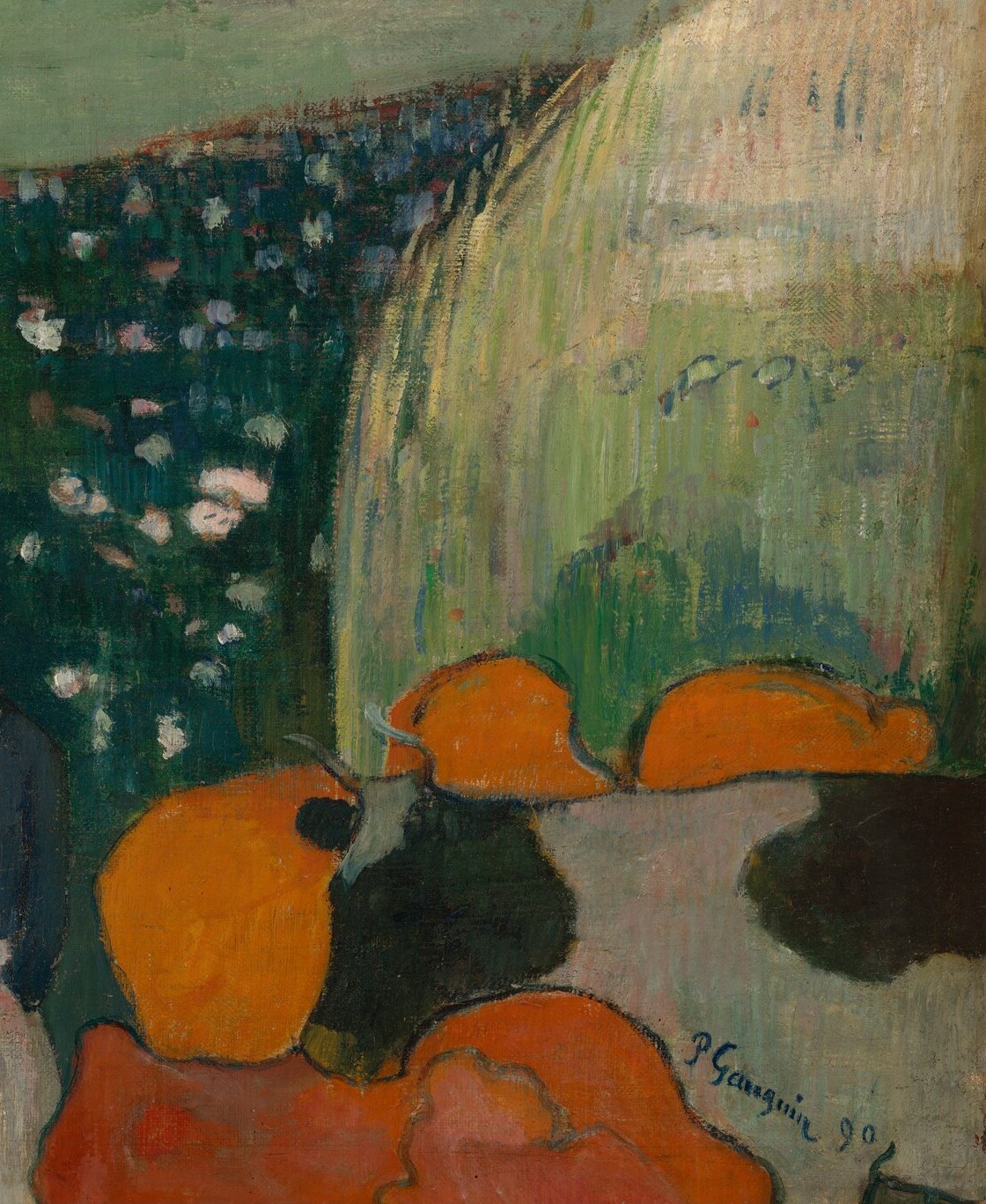
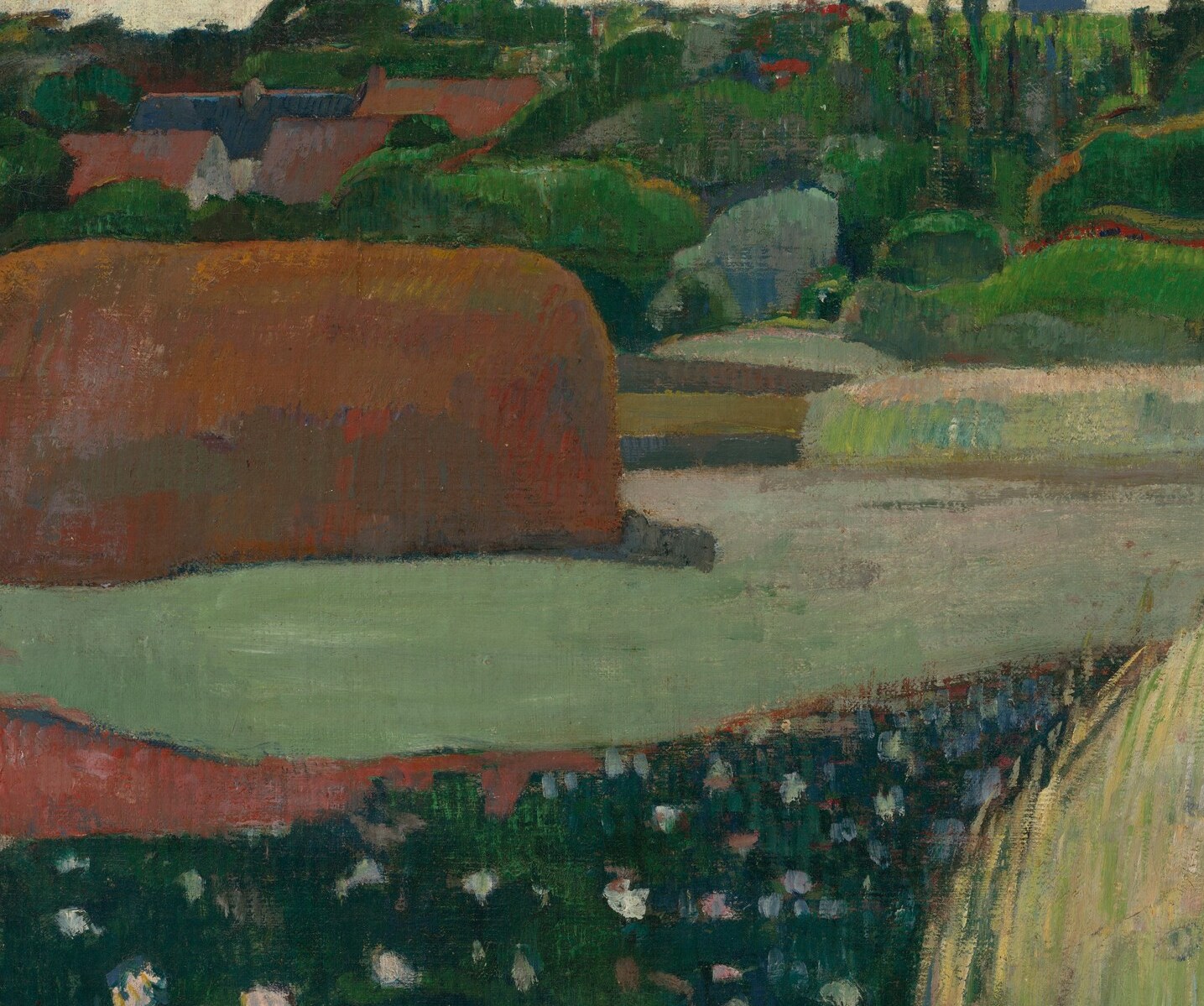
Paul Gauguin’s 1890 painting, *Haystacks in Brittany*, currently held in a private collection, shows his genius for transforming everyday subjects into powerful expressions. While seemingly a simple rural scene, Gauguin imbues the humble haystacks with an expressive quality, using bold colors and simplified forms characteristic of his Post-Impressionist style.
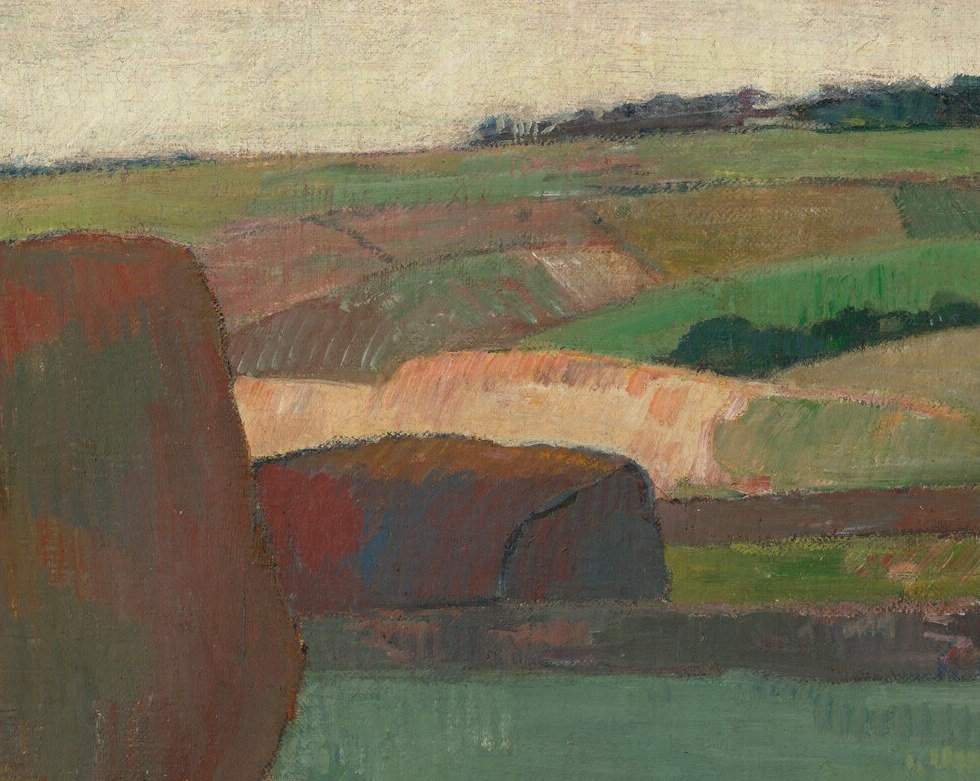
Look closely at how he uses repeated forms across the canvas. From the prominent haystacks in the foreground to the small, often-missed one in the upper left, Gauguin creates a deliberate rhythm. This technique, part of his Synthetist approach, shows his interest in constructing, rather than merely depicting, reality.
Gauguin, a French painter, shifted from a career as a stockbroker to art, largely self-taught and influenced by artists like Pissarro. He moved beyond Impressionism’s focus on optical reality, using color and form symbolically to convey deeper meaning.
This painting is a wonderful example of how Gauguin structured his compositions, guiding the viewer's eye through a landscape that is both familiar and profoundly reimagined. What other details do you notice?
Details

Transcript
Paul Gauguin often painted humble subjects. Like these haystacks in Brittany, in 1890. He used bold colors, not true to life, for emotion. Notice how the forms echo each other. Even a tiny haystack in the far distance. He repeats them to create a rhythmic, structured world.