Alan Harriman by George de Forest Brush
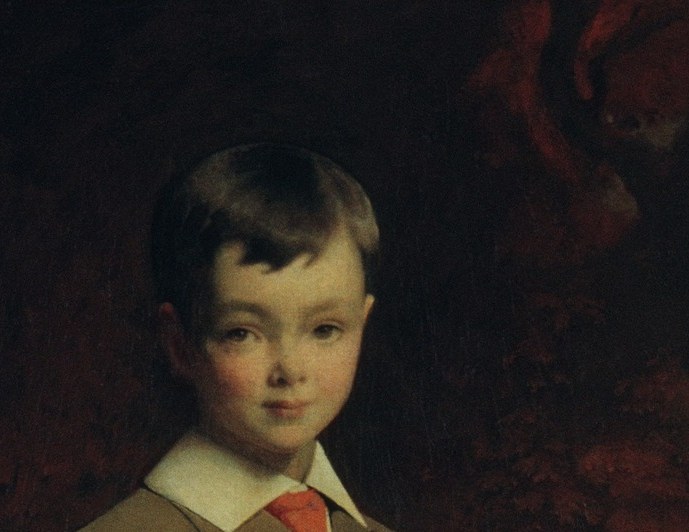
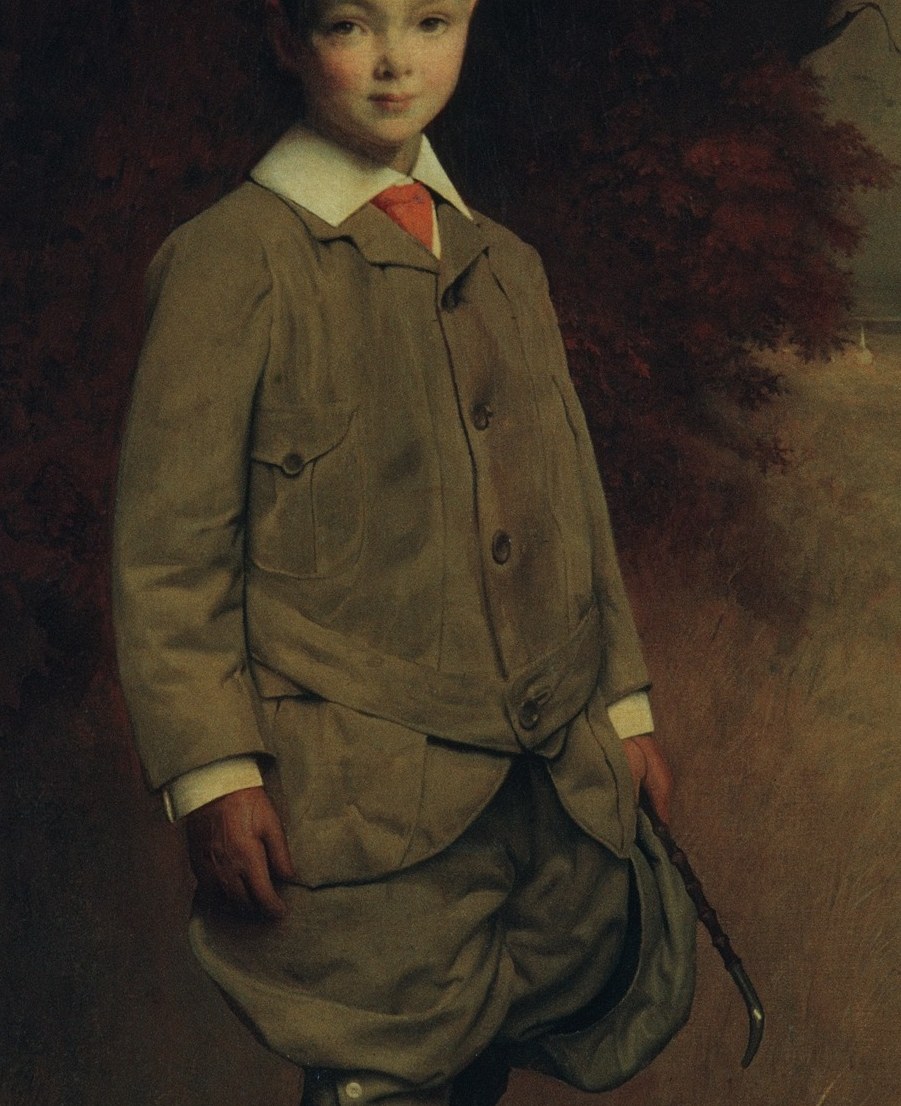
George de Forest Brush painted Alan Harriman in 1905, and the portrait is now held at The Metropolitan Museum of Art. At first glance, it is simply a boy in a wood. But the painting is a precise, tender document of what childhood cost in the Gilded Age.
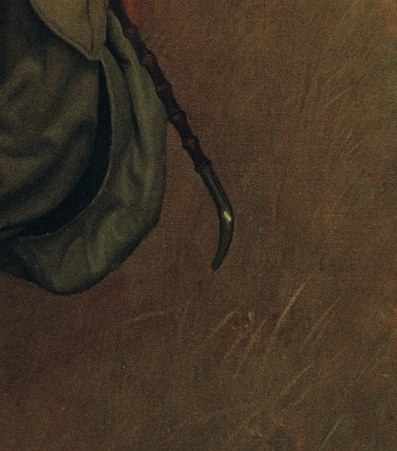
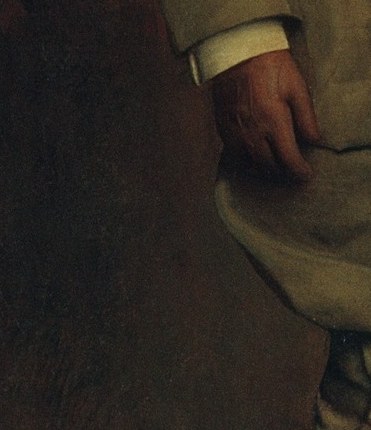
Look at the clothes. The grey coat, the white collar, the small red cravat, every detail is an adult’s costume scaled down. The hat in his right hand is a social prop. Then look at his left hand, hanging loose at his side. It is the only part of him that is not performing. Brush lets that one unconscious gesture hold the whole boy.
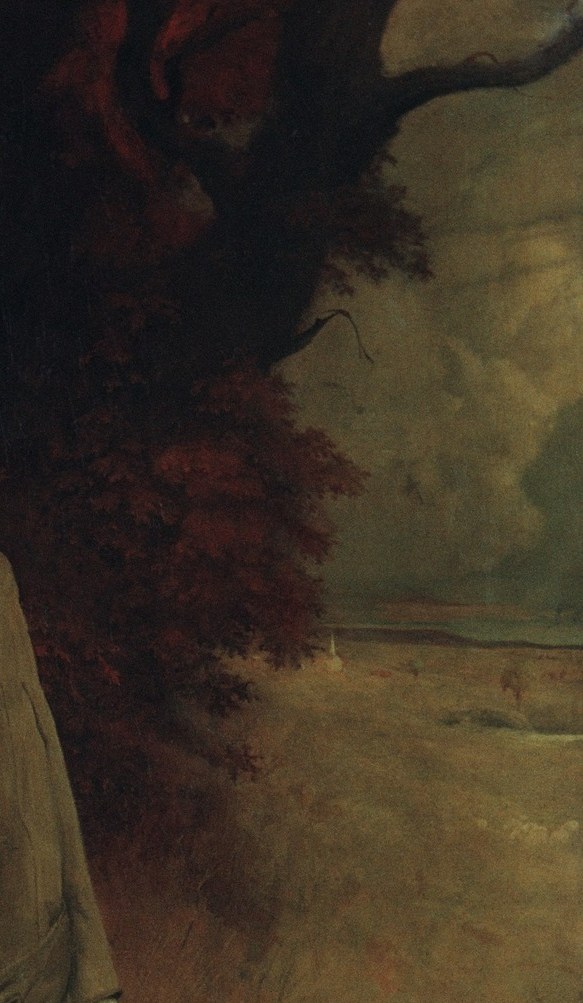
Brush was a friend and collaborator of Abbott H. Thayer, and together they pioneered early military camouflage. His wife, Mary, was an aviator and artist; their son Gerome became a sculptor. Brush knew how to see what was hidden. Here, he hides nothing. He places Alan against a dark tree trunk and a soft, luminous sky, and lets the child stand still inside a role he did not choose.
A portrait is always a record of what a culture expects. This one expects composure. What did the boy expect? We only have his eyes, and the hand he forgot to pose.
Details
Transcript
He looks like a small, serious adult. In 1905, a boy of his class was raised to be seen, not heard. The grey suit is a miniature of what his father wore. Even the hat in his hand signals status. But look at his other hand. It hangs relaxed, the one gesture he was not taught. The painter, George de Forest Brush, also designed military camouflage. He framed the boy in a darkening wood, soft and protective.