Trout Brook in the Catskills by Whittredge, Worthington
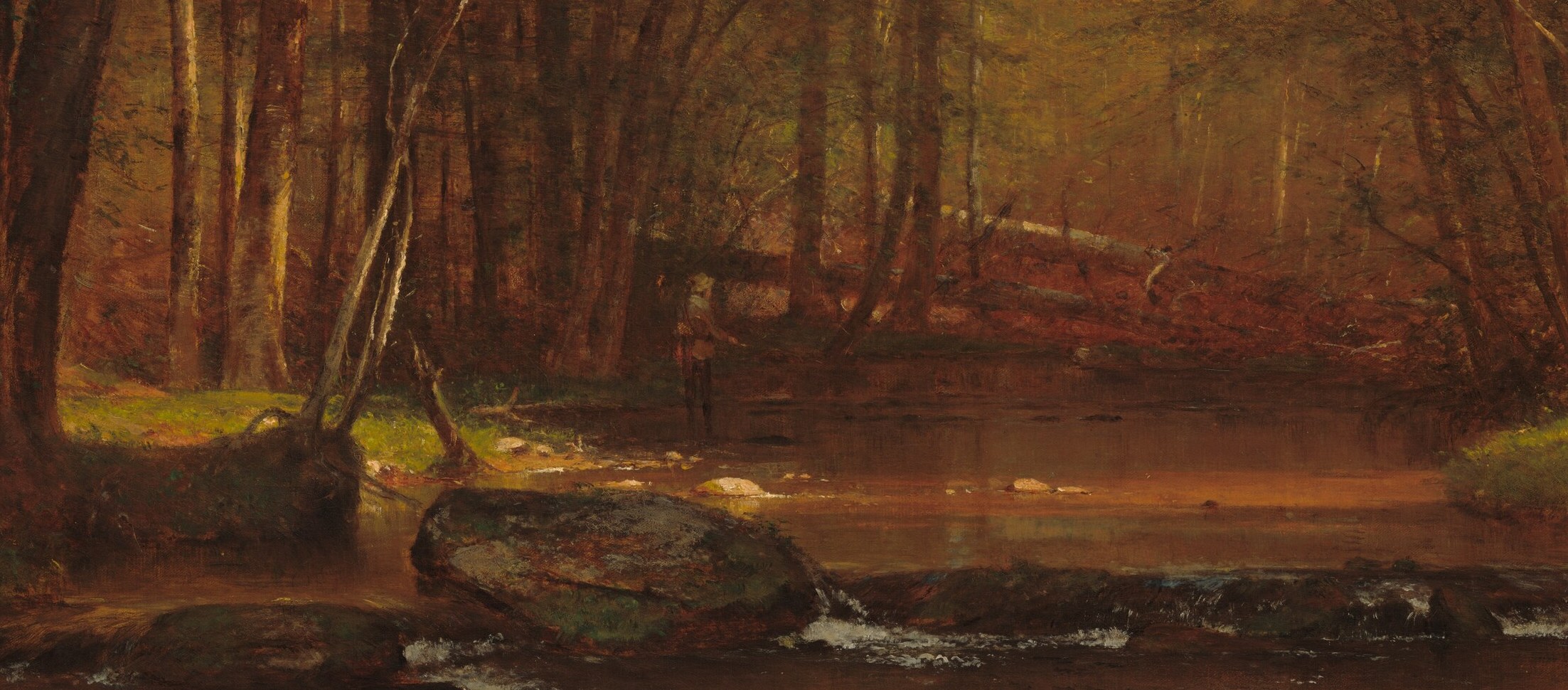
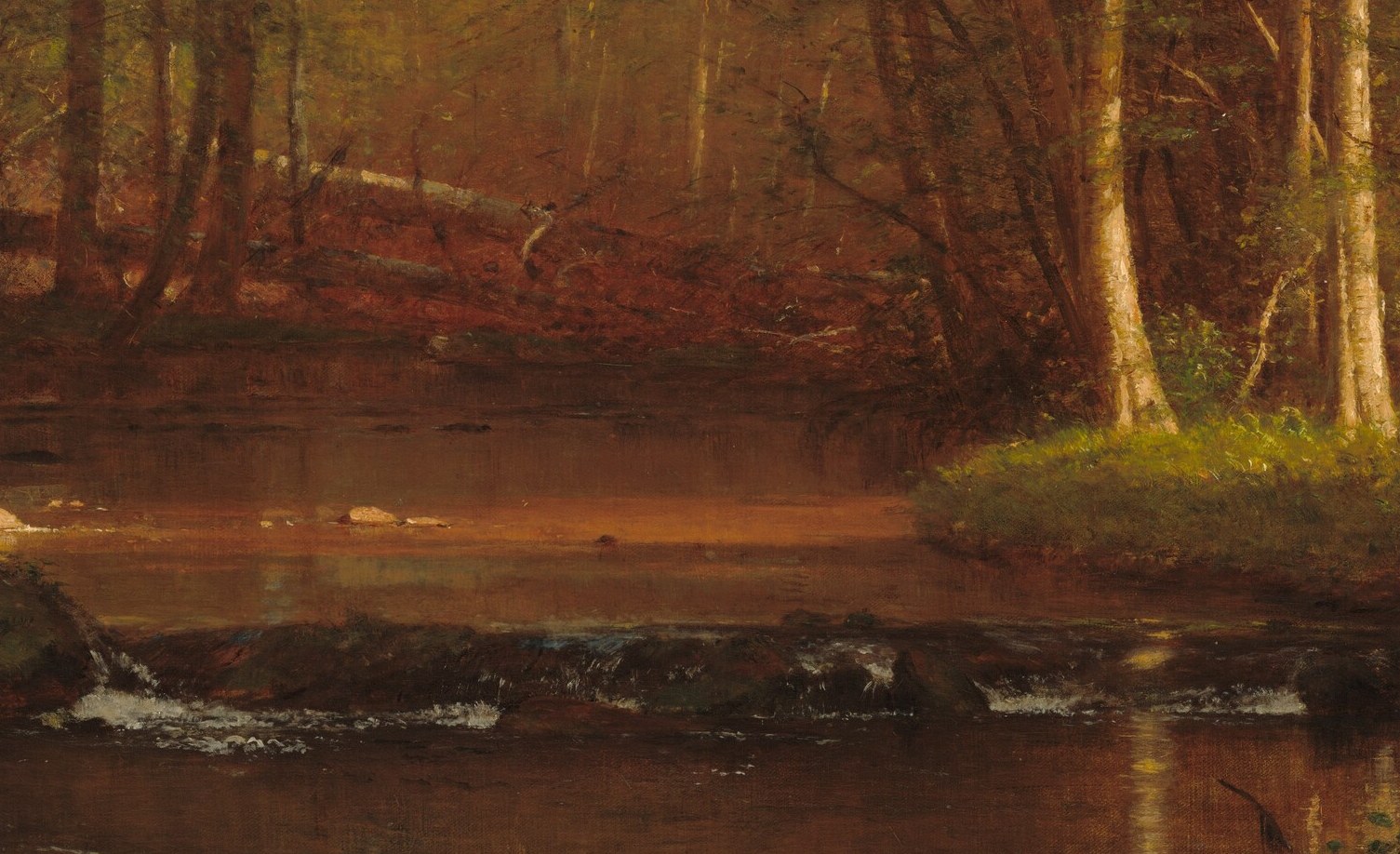
Worthington Whittredge painted 'Trout Brook in the Catskills' in 1875, walking deep into the woods to capture exactly what he saw. It now belongs to the collection of the Metropolitan Museum of Art, a quiet witness to a specific American moment: the post-Civil War era, when the Hudson River School painters were documenting a wilderness they sensed would not last.
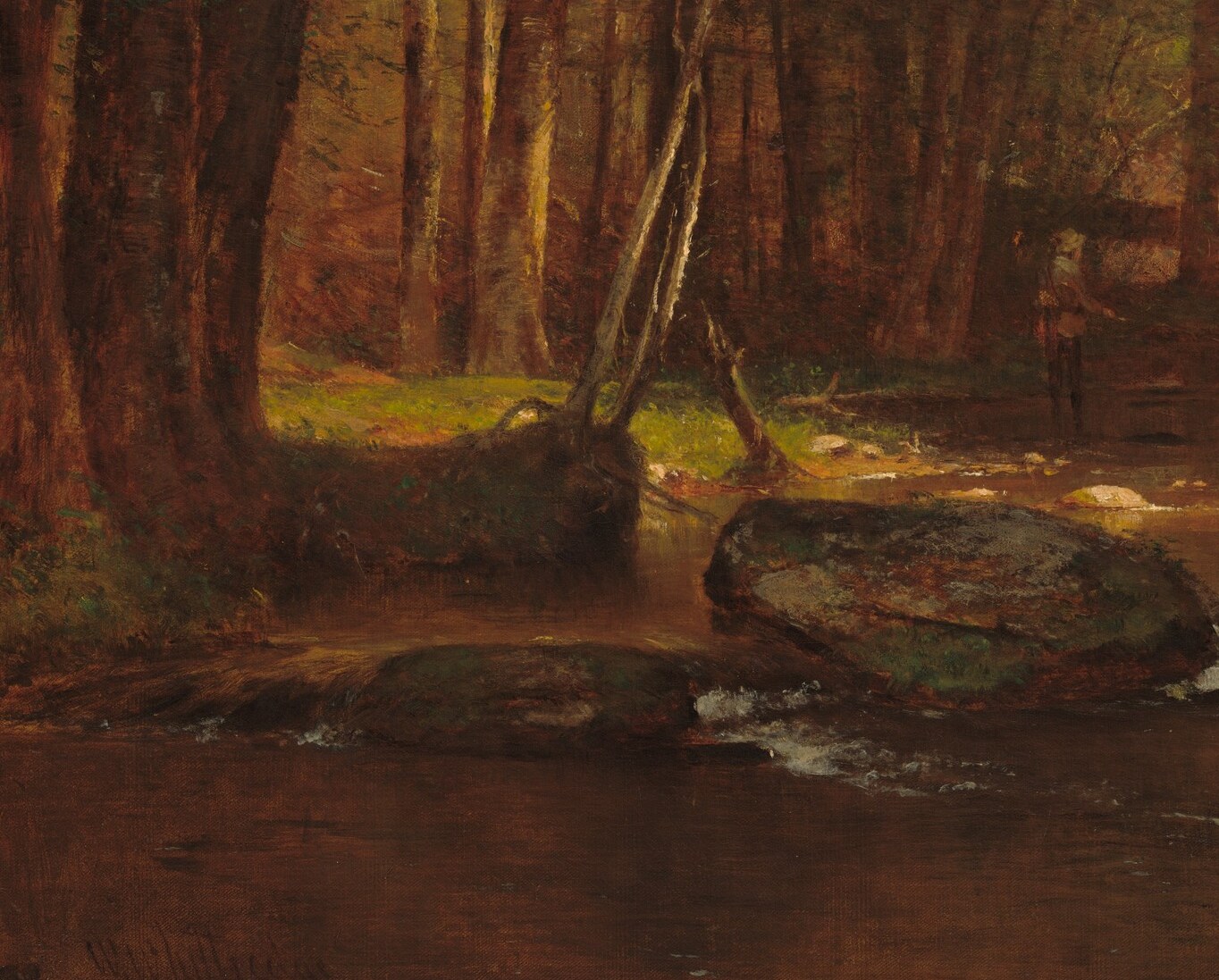
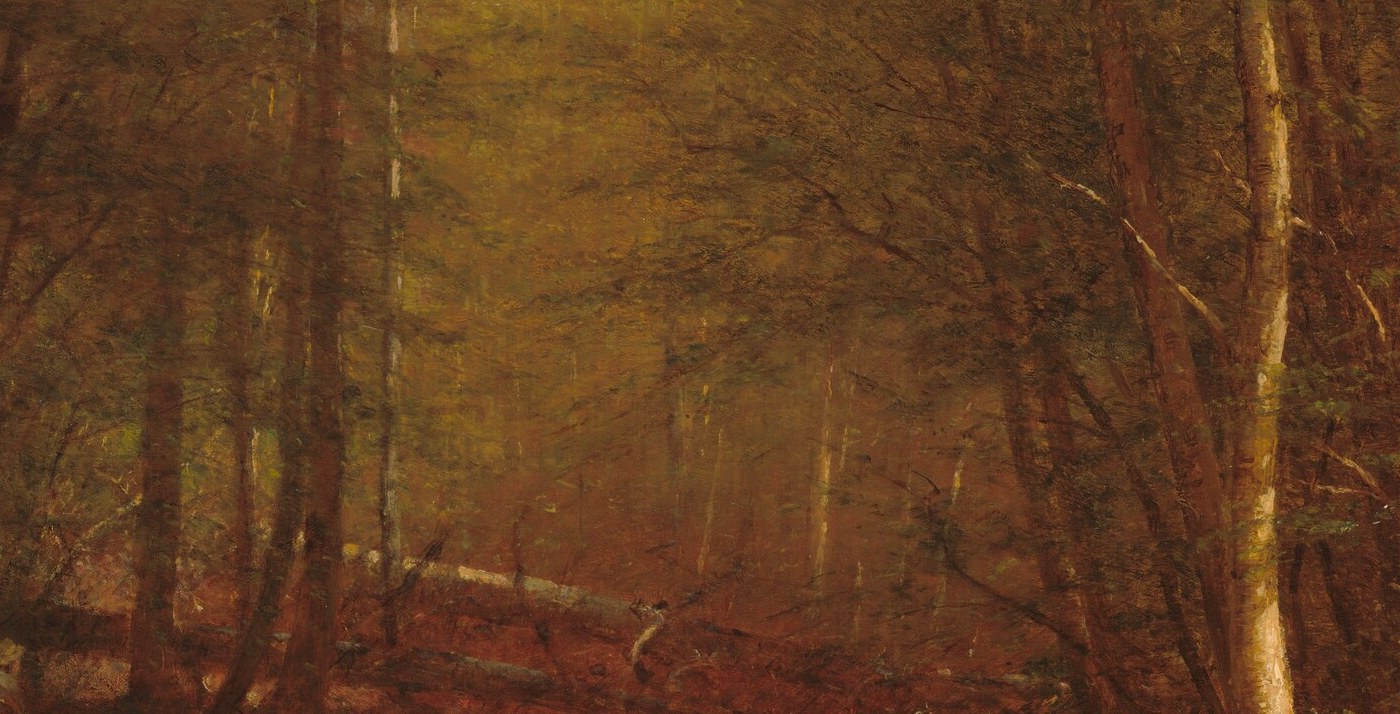
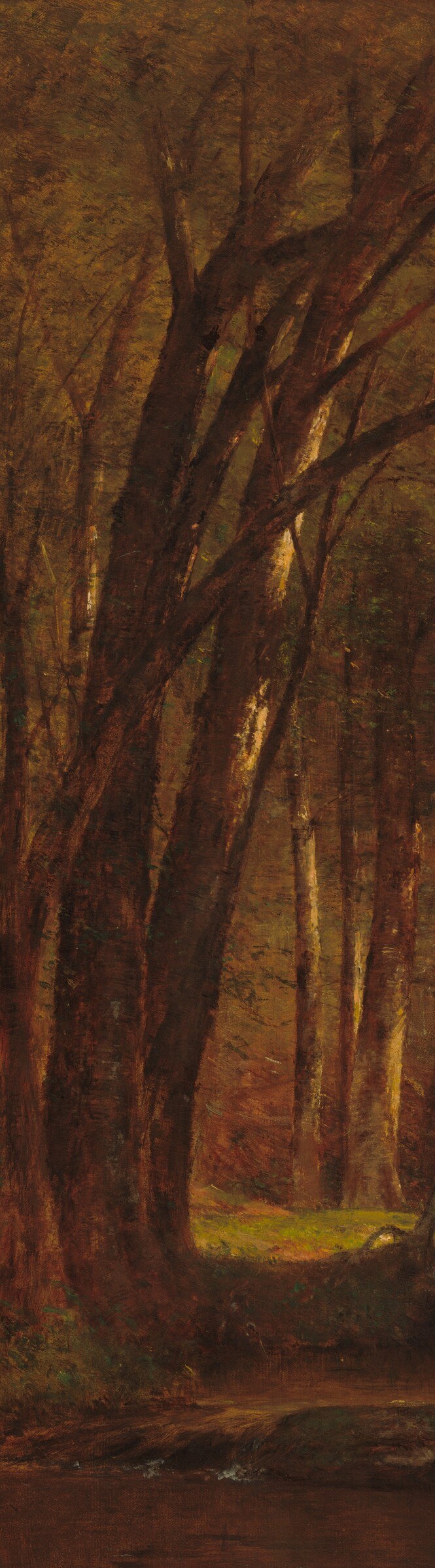
Look at the ferns on the far bank. Whittredge applied his paint thickly there, a technique called impasto, so the raised strokes would catch actual gallery light and glow. The stream itself acts as a mirror, pulling a shaft of golden light from the unseen clearing directly toward you. The dark tree trunks on the left and right were not a casual choice; they form a natural proscenium arch, a framing device that makes the forest feel like a sacred space.
Whittredge was born in Ohio in 1820 and spent years in Europe before returning to America, determined to paint his own country with the same seriousness the Old Masters gave to theirs. By 1875, railroads were already snaking through the Catskills. A painting like this was not a fantasy. It was a precise, urgent record of what the light looked like on a particular bend of water, in a particular year, before the trees came down.
The composition invites you to walk past those framing trunks and disappear around the bend of the brook. What do you think you would hear, standing on that mossy bank?
Details
Transcript
The Catskills, 1875. A raw American wilderness. No smoke. No telegraph wires. Just a brook. Worthington Whittredge painted this entirely outdoors. He used thick paint where the sun hits. The trees frame it like a cathedral built of light. It was a record of a place, fast disappearing.