Woman in a Park by Renoir, Auguste
This is Auguste Renoir's Woman in a Park, painted in 1866 when the artist was just twenty-five. It is an early portrait, made before the loose, sun-drenched brushwork that would define Impressionism, and it captures a specific moment in Parisian social history.
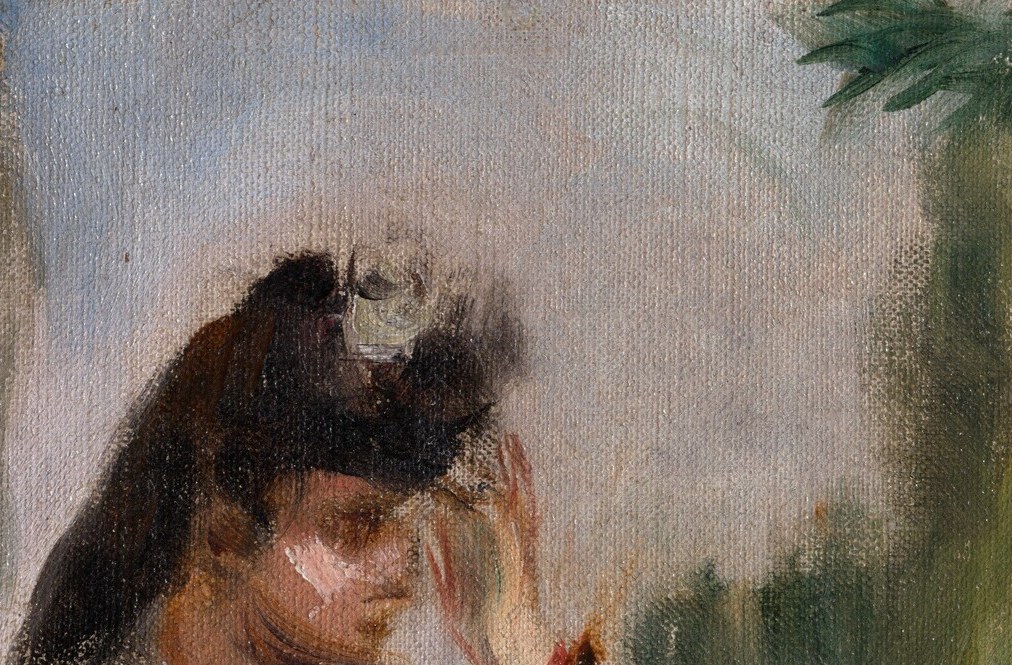
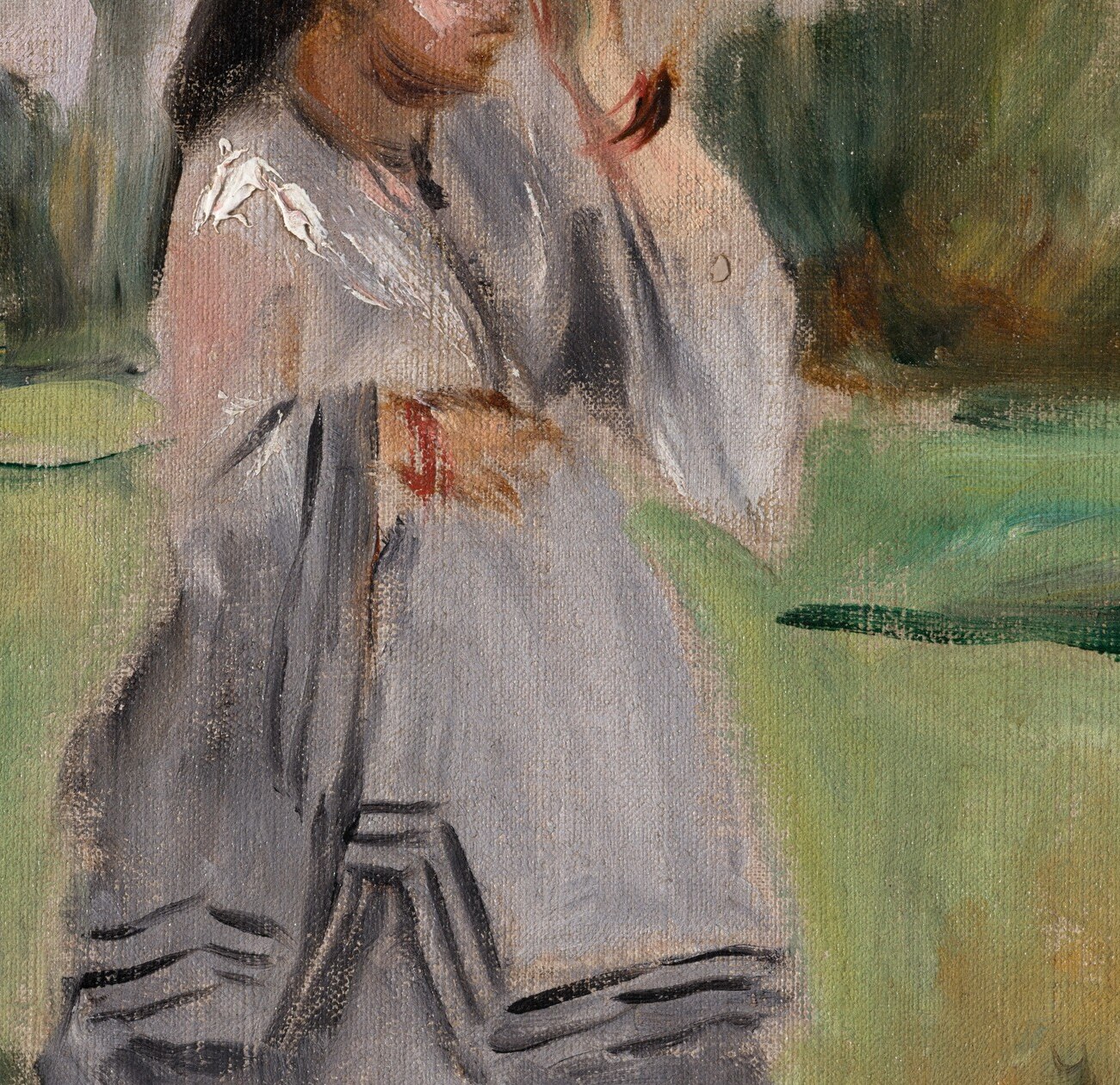
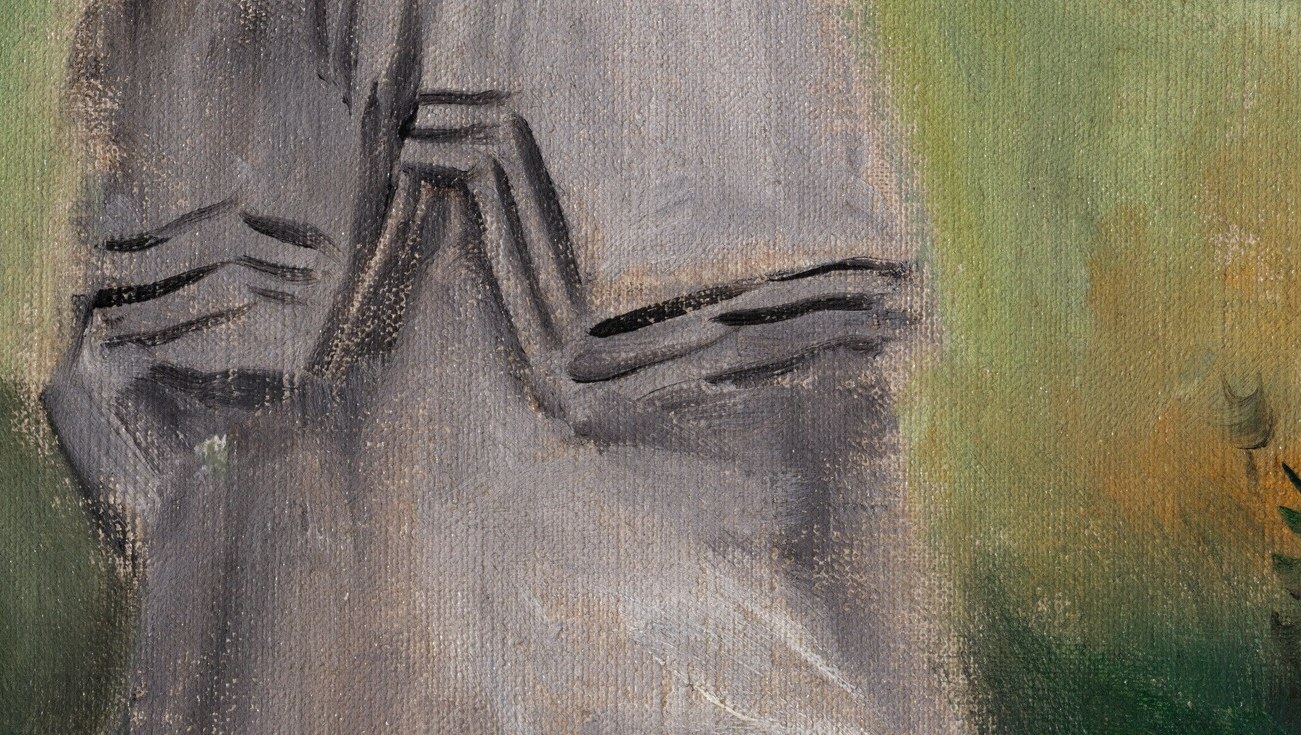
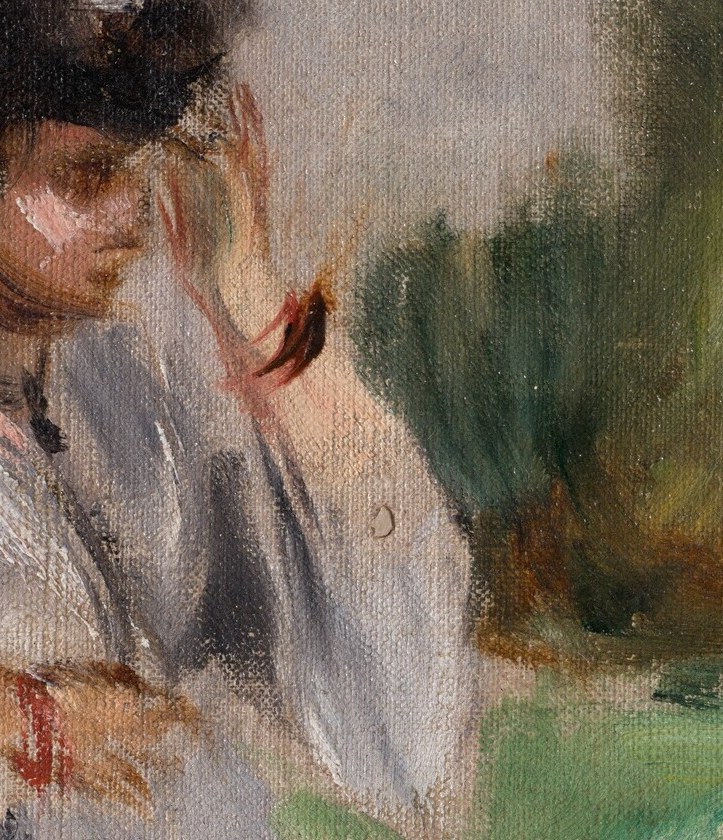
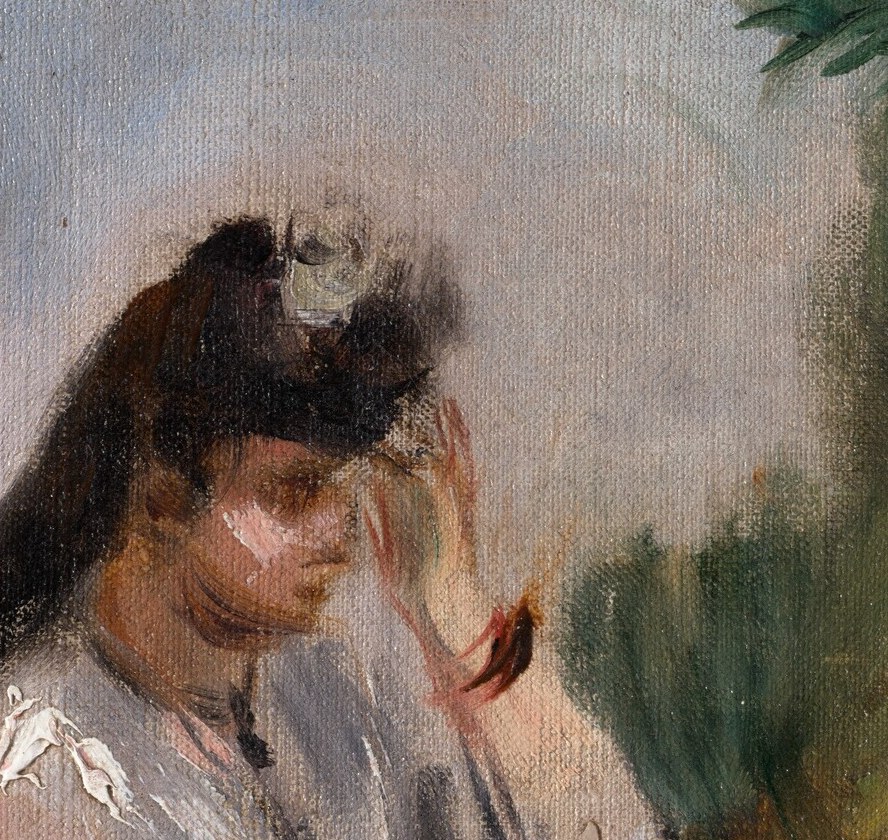
Look at the dress. The horizontal dark bands across the grey-lavender silk are not generic decoration, they mark the precise fashion of 1866, when ribbons and trim articulated the transition from bodice to the wide crinoline-supported skirt. The tilt of her wide-brimmed hat and her raised hand, probably shielding her eyes from the sun or steadying a parasol, give the scene the feel of an informal instant rather than a stiff studio pose.
Renoir was still finding his way when he painted this. He had recently left his apprenticeship painting porcelain and was studying at Charles Gleyre's studio, where he met Monet and Sisley. You can see the split in his technique: the figure is rendered with careful, almost academic precision, while the trees behind her are already freer, looser, pointing toward where he would go.
Her face is the quiet center of the whole composition. She looks downward, slightly averted, fully present in the park but entirely uninterested in us. What do you make of that expression, weariness, thought, or simply a private moment the painter happened to see?
Details
Transcript
Paris, 1866. A woman steps into a park. Her hat tilts with the informality of a caught moment. The stripes on her dress mark the precise fashion of the year. Each horizontal band is a record of Second Empire dressmaking. Her raised hand suggests a parasol shielding her from the sun. She looks away. She is present but does not meet our gaze. Renoir was twenty-five, still half an apprentice, painting porcelain before this. In the sunlit grass, his interest in open-air light first flickers.