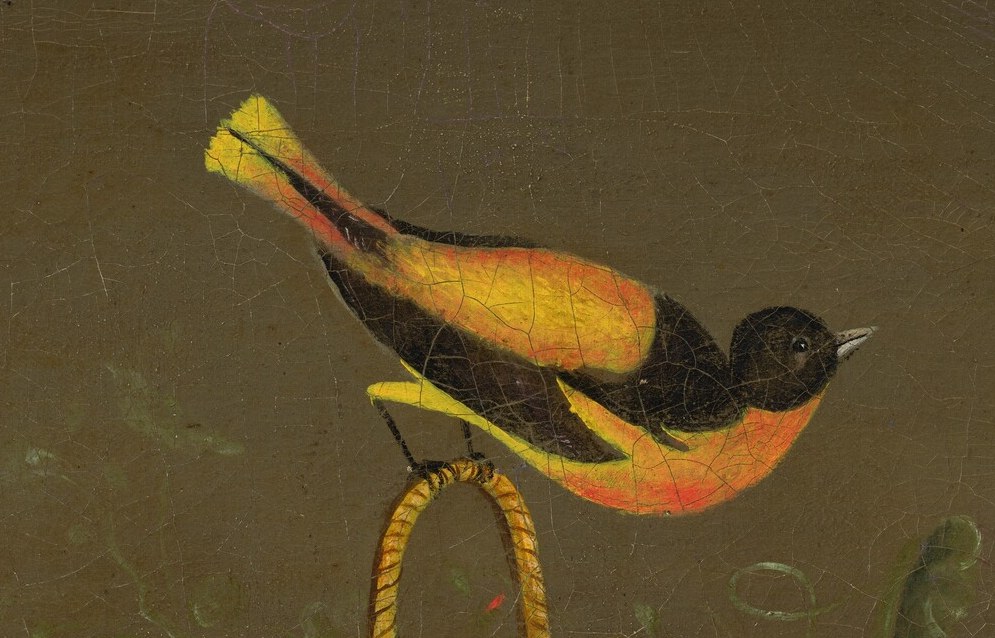
Fruit and Baltimore Oriole by Wagguno
This is Wagguno's "Fruit and Baltimore Oriole," painted in 1858. It is his only known work. The artist is an almost complete historical blank, no record of his birth, no record of his death, no other canvases. Just this one painting, dated 1858, and a name.
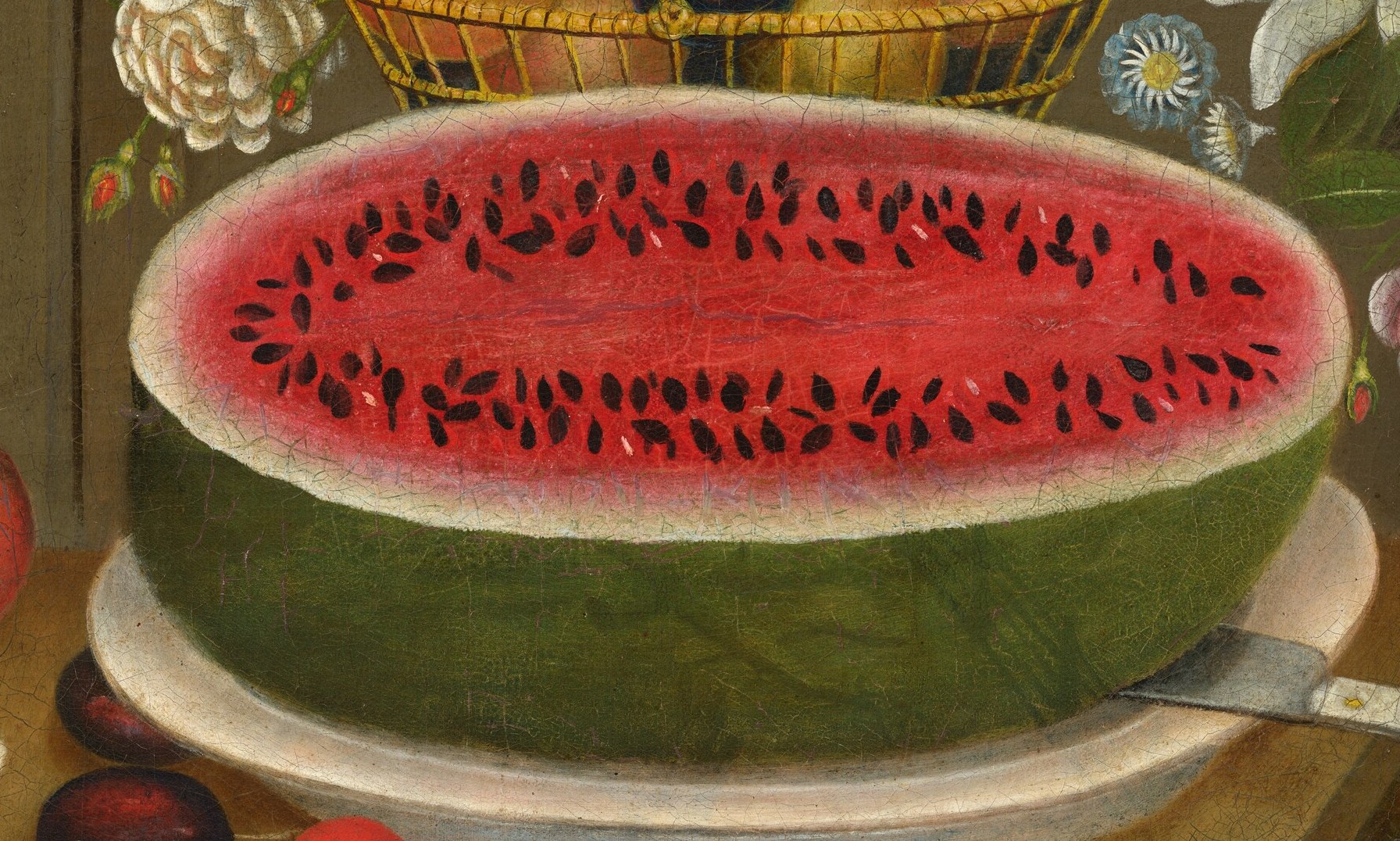
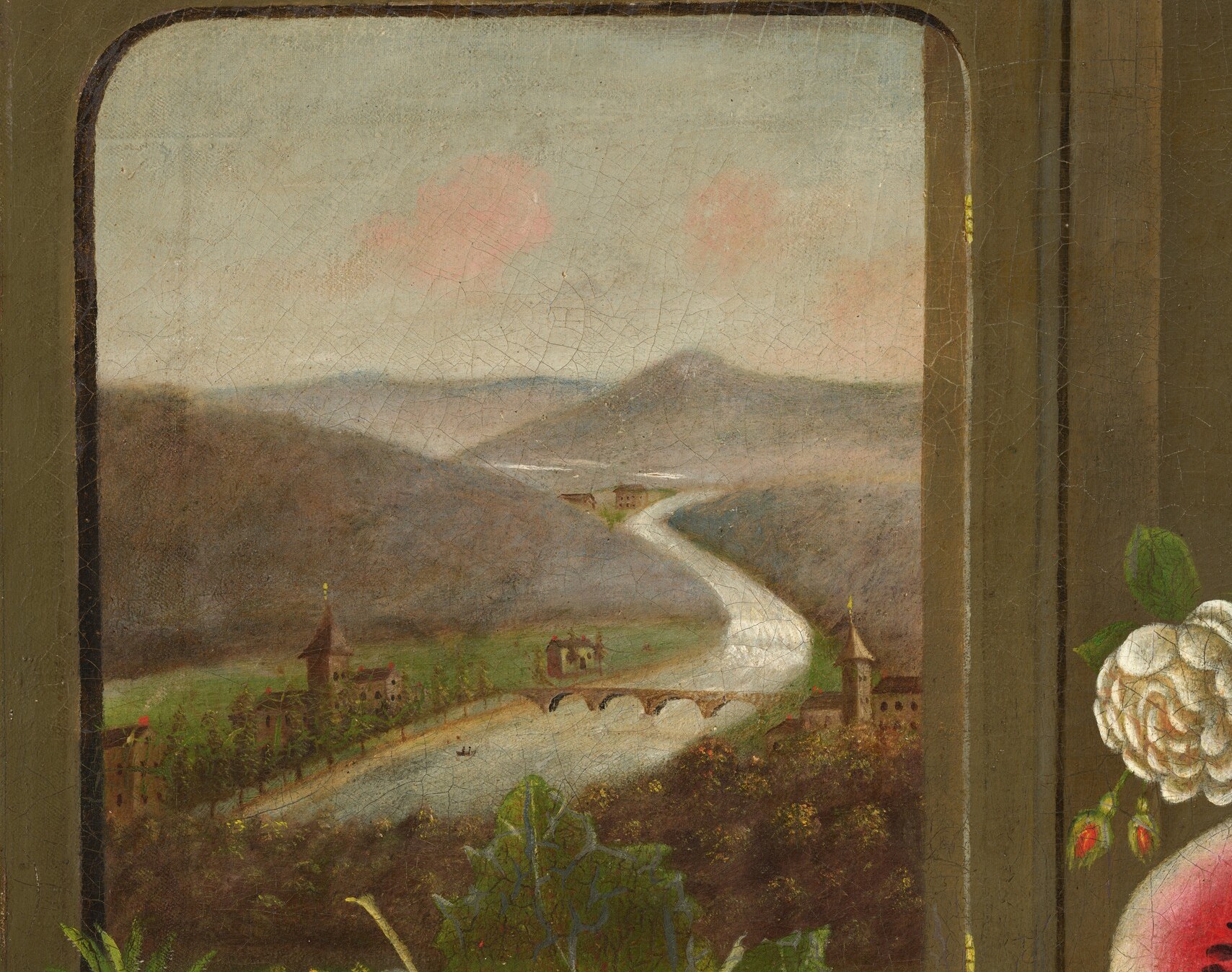
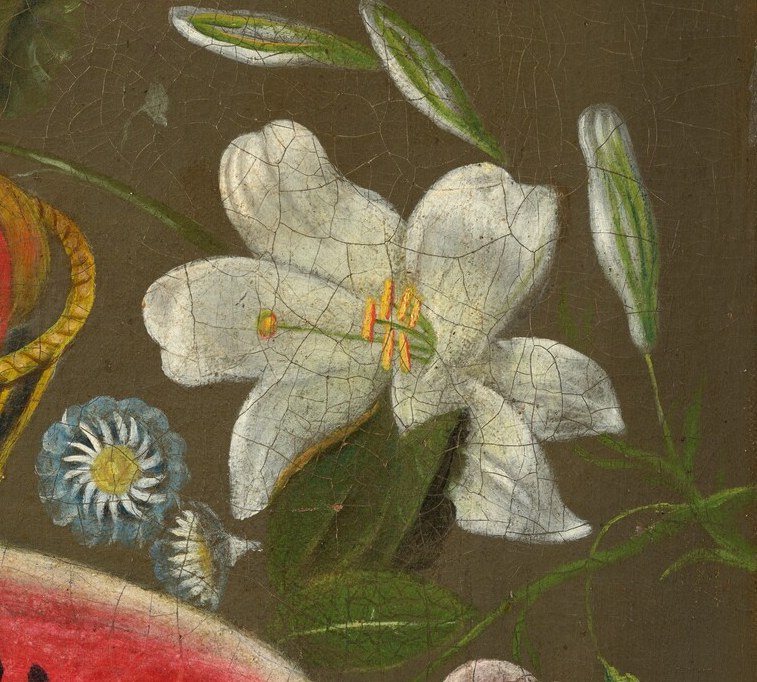
Look at the way he handles light. The translucent grapes, the glistening cut watermelon, the soft white petals of the lily, these are the marks of a trained hand. Notice the landscape through the window: a miniature world of a winding river and a bridge, painted with the same care as the oriole in the foreground. He was showing everything he could do.
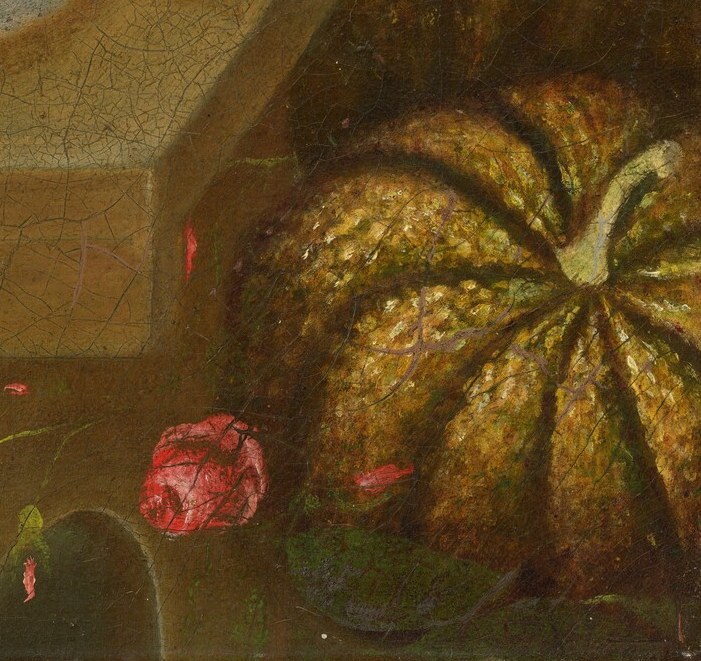
The painting mixes seasons, a ribbed autumn pumpkin sits beside ripe summer peaches. It is a constructed vision of abundance, not a single moment observed. For a 19th-century still life painter, this was a portfolio piece, a demonstration of range meant to secure commissions or entry into an academy.
We do not know if he succeeded. All we have is the object he made. A single year, 1858, and a single canvas, holding a lifetime of ambition in the space between a bird's bright feathers and the cool skin of a plum.
Details
Transcript
1858. The artist Wagguno set out to paint abundance itself. A Baltimore oriole, vivid and alert, pauses on a woven basket. The watermelon is sliced open, its flesh glistening and precise. An autumn pumpkin and summer watermelon share the same table. Through the window, a painted landscape extends the room into a distant river valley. Wagguno is an enigma. No birth record, no death date. Only 1858. This single canvas is his entire known life.