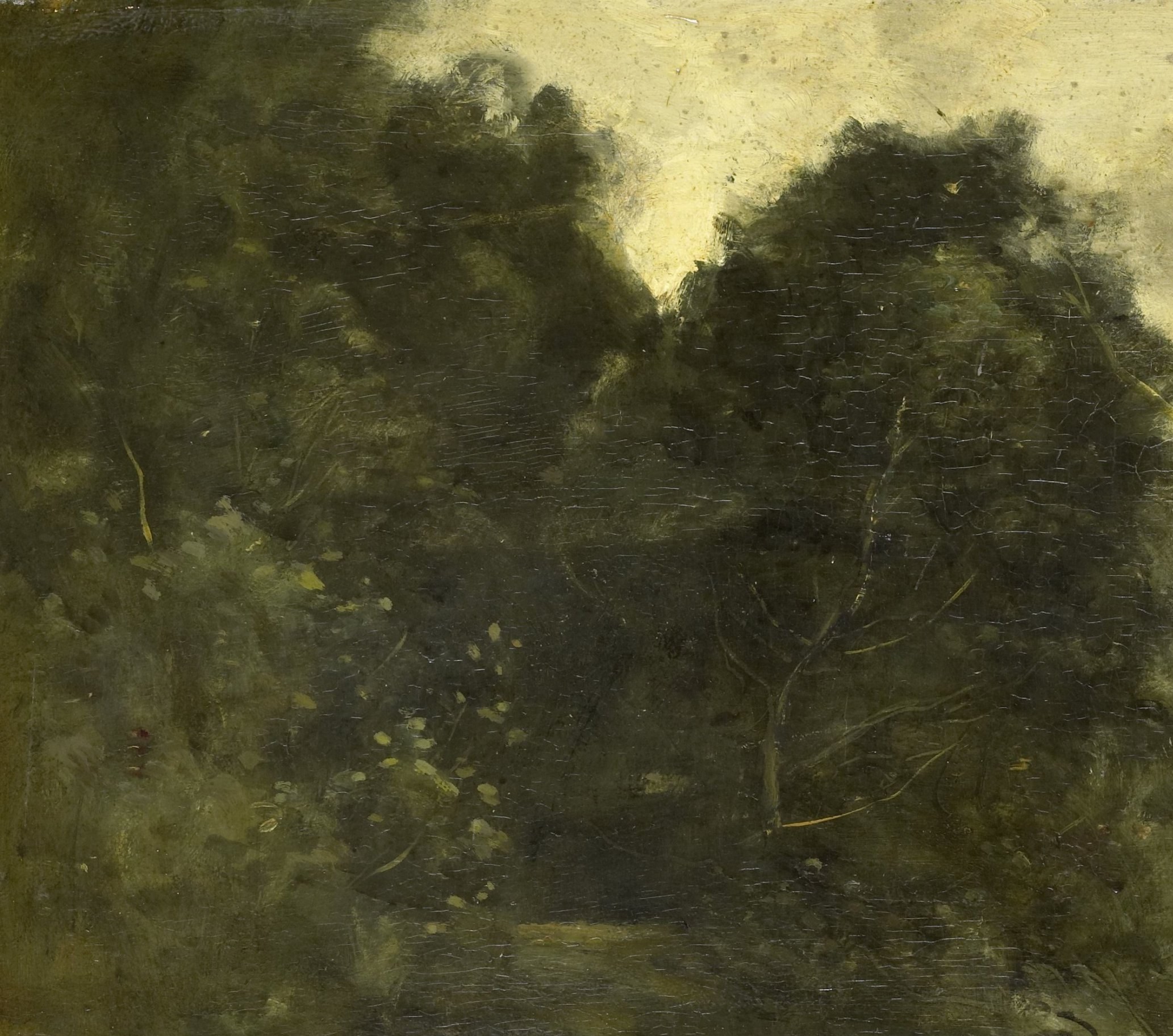
Pond in the Woods by Camille Corot
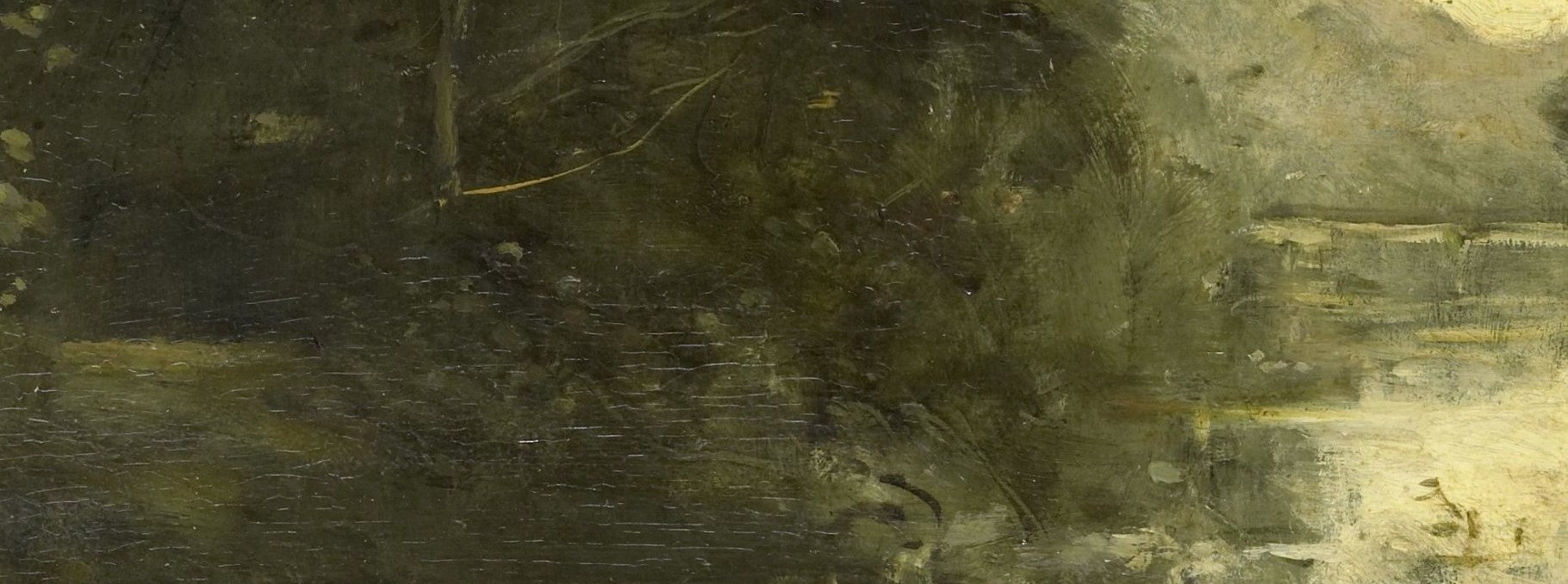
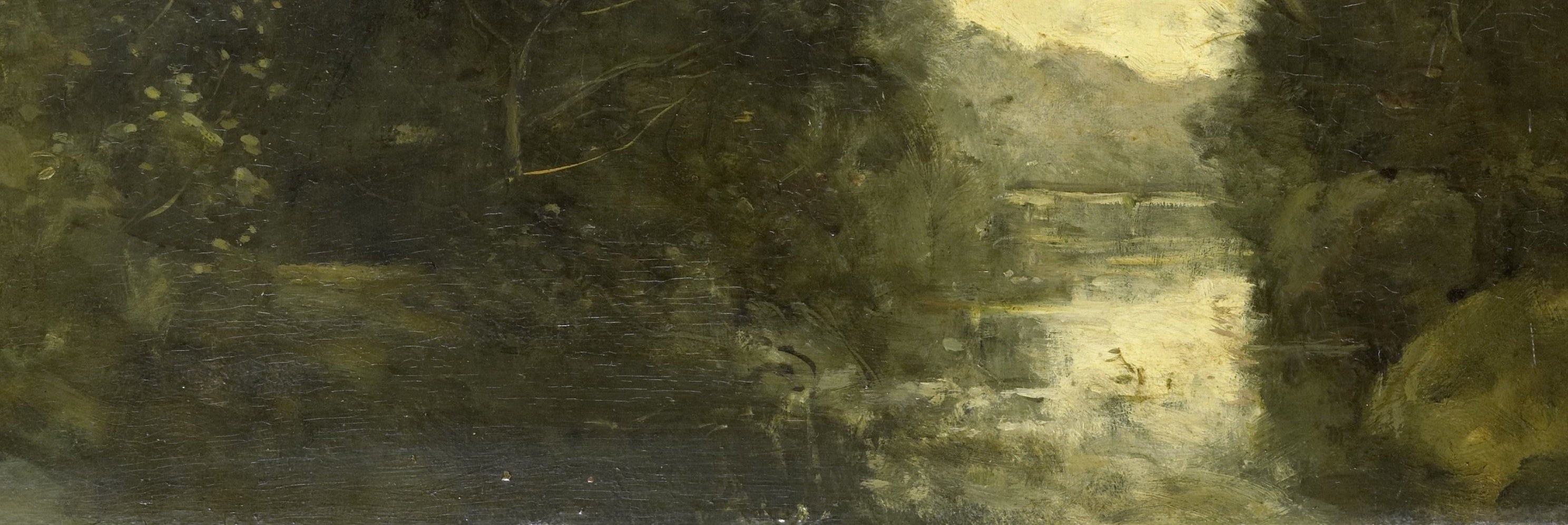
Camille Corot's 'Pond in the Woods,' painted sometime between 1840 and 1875, is a masterclass in understatement. It shows a still forest pond, a dense canopy, and a soft grey sky, nothing more. Today Corot is celebrated as a bridge between the Neo-Classical tradition and the plein-air innovations of Impressionism, but his path there wasn't always smooth.
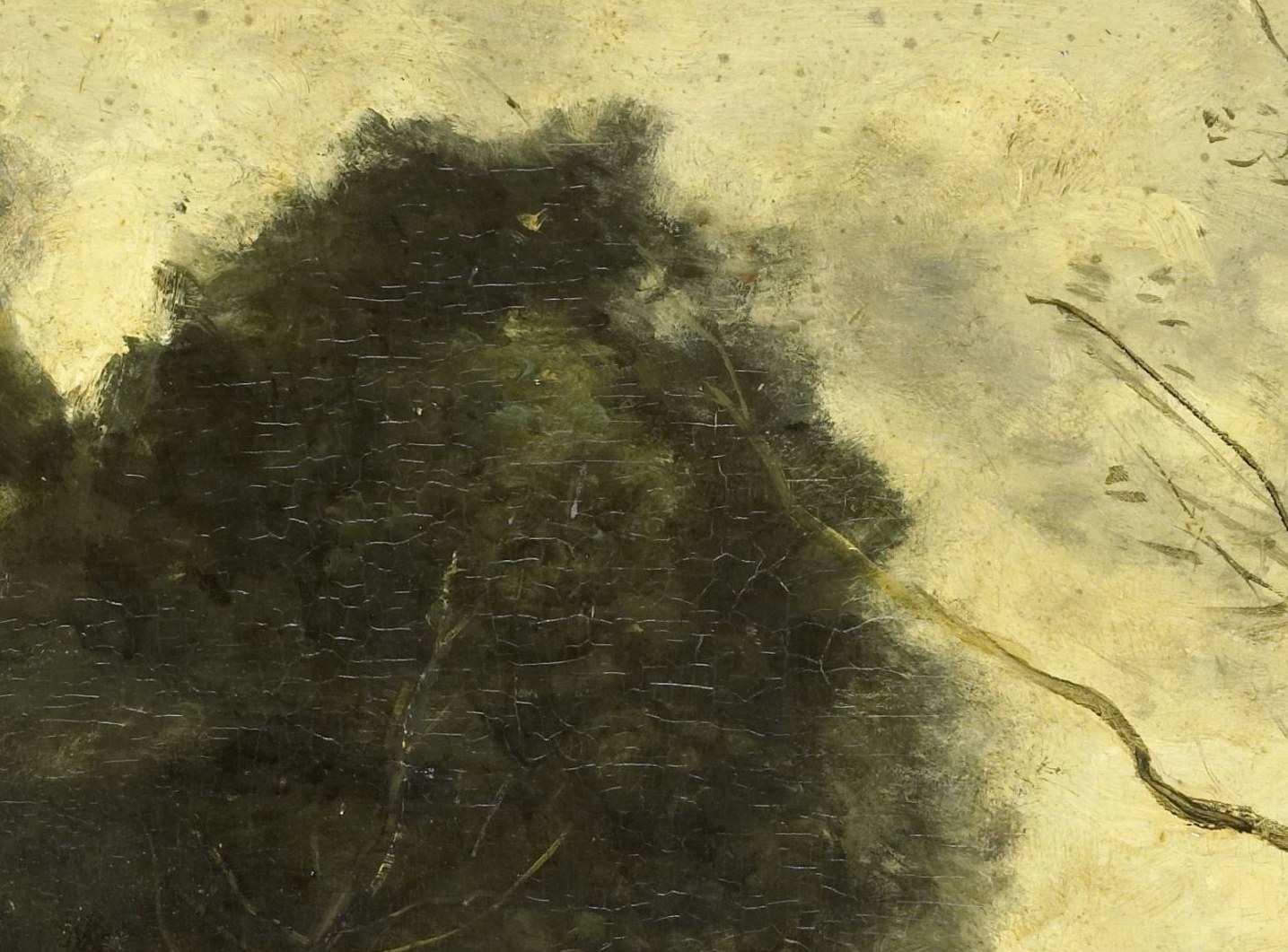
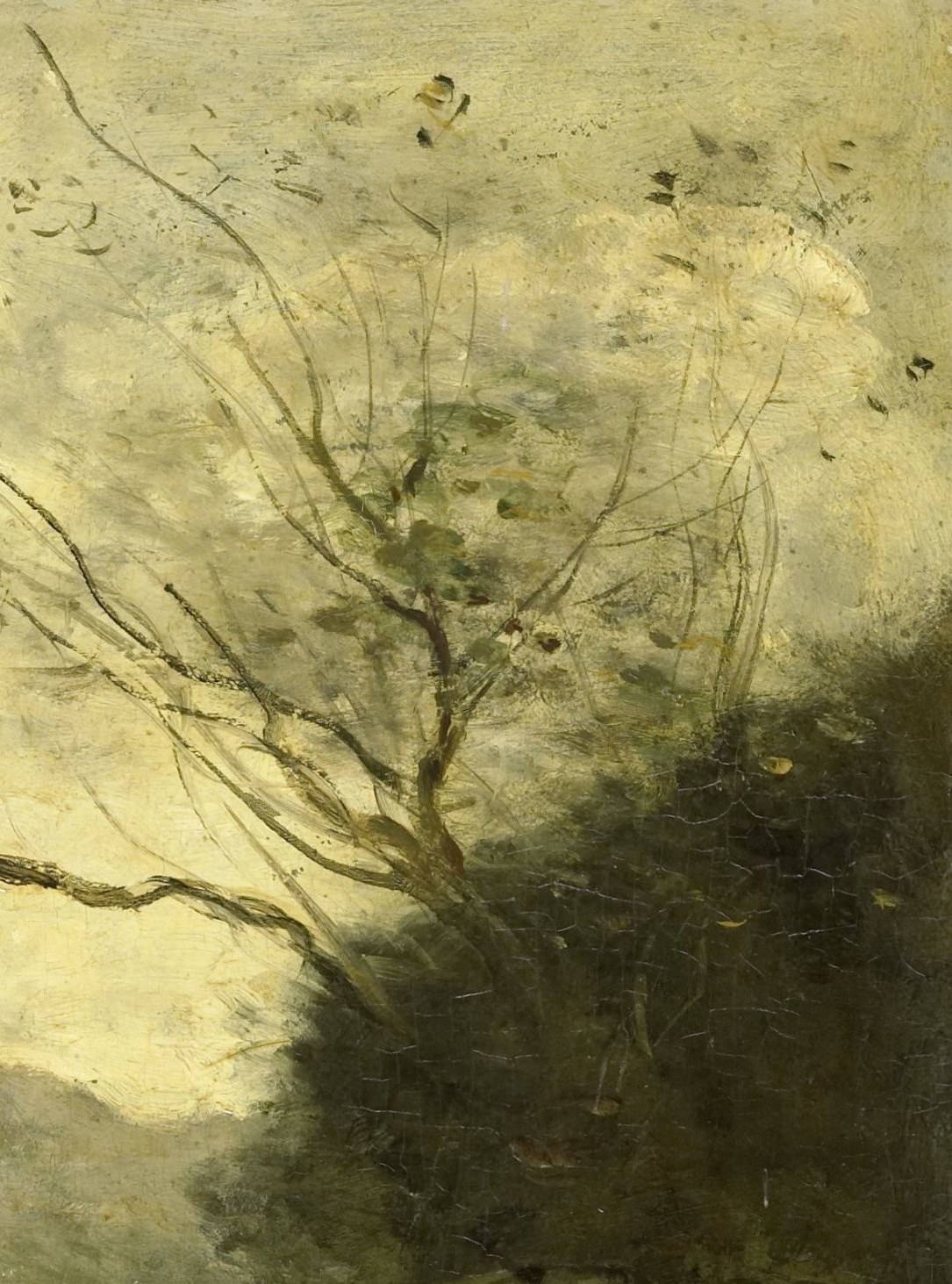
Look closely at the dark mass of trees on the left. Corot built his foliage not by painting individual leaves, but with broad, dabbing strokes that suggest volume and weight. Critics of the time found this technique baffling and accused his work of looking unfinished. The central area of soft, diffuse light is classic Corot: he treated light as a substance that fills the air, not just something that lands on surfaces.
Corot's commitment to painting the landscape honestly, without dramatic narratives or idealization, aligned him with the Barbizon school. He went directly into the woods to paint, an approach that was still somewhat radical. His quiet, unembellished scenes eventually won over the art world, and his way of seeing directly paved the road for the Impressionists who followed.
When a painting this quiet has behind it a story of artistic rebellion and eventual triumph, does it change how you see its stillness?
Details
Transcript
He painted the French countryside as he saw it. But in the 1860s, critics called his work unfinished. A solid mass of trees, built with soft strokes. A mirror of still water beneath a grey sky. This quiet realism would inspire the Impressionists. Corot was vindicated. The Salon critics were wrong.