Landscape with the temptation of St Antony by Joachim Patinir
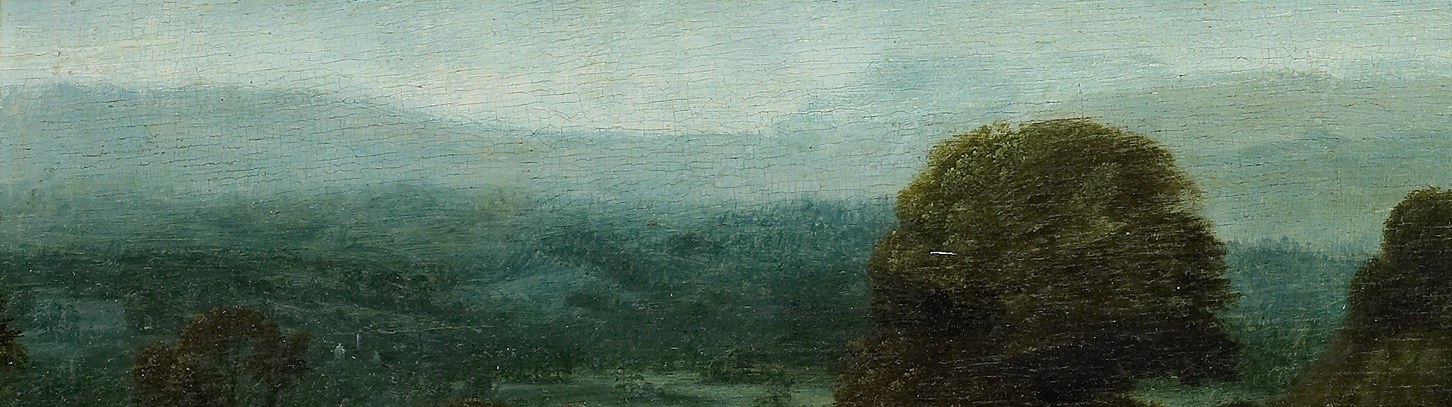
Joachim Patinir, a pioneer of the "world landscape" genre, created this fascinating work in 1515. Titled "Landscape with the Temptation of St Antony," this oil painting at the Rijksmuseum blends real-world observation with imagined, expansive terrains.
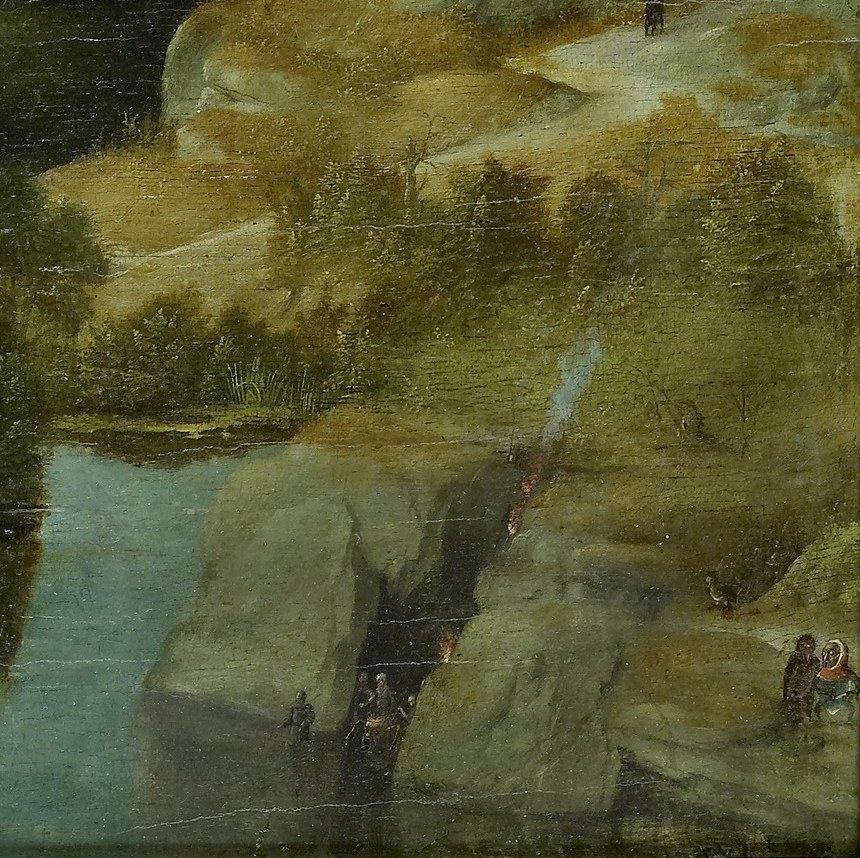
Look for the tiny, solitary figure of St. Anthony at the water's edge, seemingly dwarfed by the dramatic landscape. The imposing rocky outcrop and the barely visible figures within a dark cave hint at the spiritual trials he faced, as depicted in the legends.
Patinir was one of the first Netherlandish painters to truly focus on landscape as an independent subject, elevating it beyond a mere backdrop. His detailed observation of nature, combined with allegorical elements, offers a unique window into early 16th-century artistic innovation and spiritual thought. He effectively invented a style that profoundly influenced later landscape artists.
This painting invites us to consider both the vastness of the world and the intensity of the human spirit's inner battles. What details do you notice first?
Details
Transcript
This artist pioneered the 'world landscape' style. He blended real-world elements with imagined, vast terrains. Look closely at this solitary figure by the water. This is St. Anthony, facing spiritual temptations alone. The dramatic rocky outcrop hints at these unseen dangers. And in this dark cave, tiny figures confirm the legend. Painted in 1515, it captures a moment of inner struggle.