Figures in a Landscape by Seurat, Georges
Before he developed Pointillism, Georges Seurat was already exploring how figures inhabit their environments. His 1883 oil painting, "Figures in a Landscape," now at a private collection, offers a glimpse into his early artistic preoccupations.
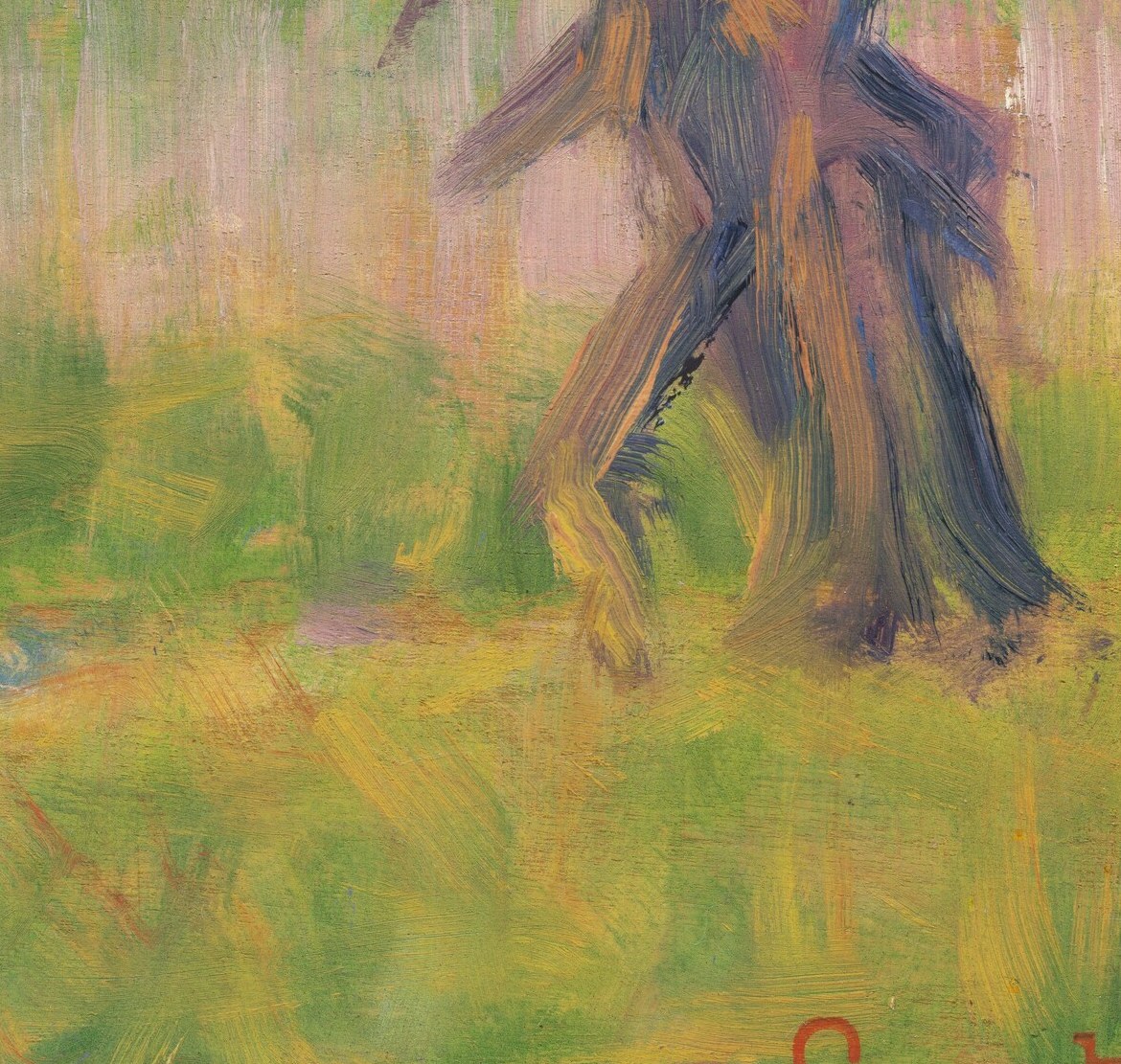
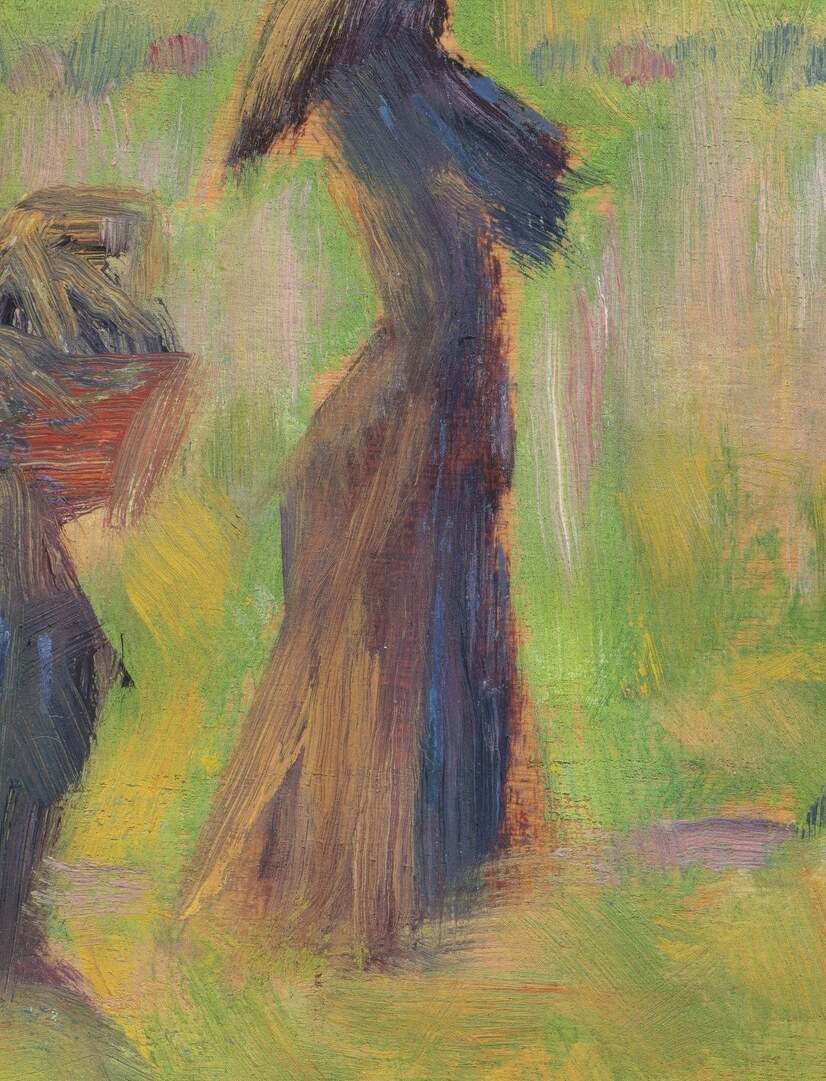
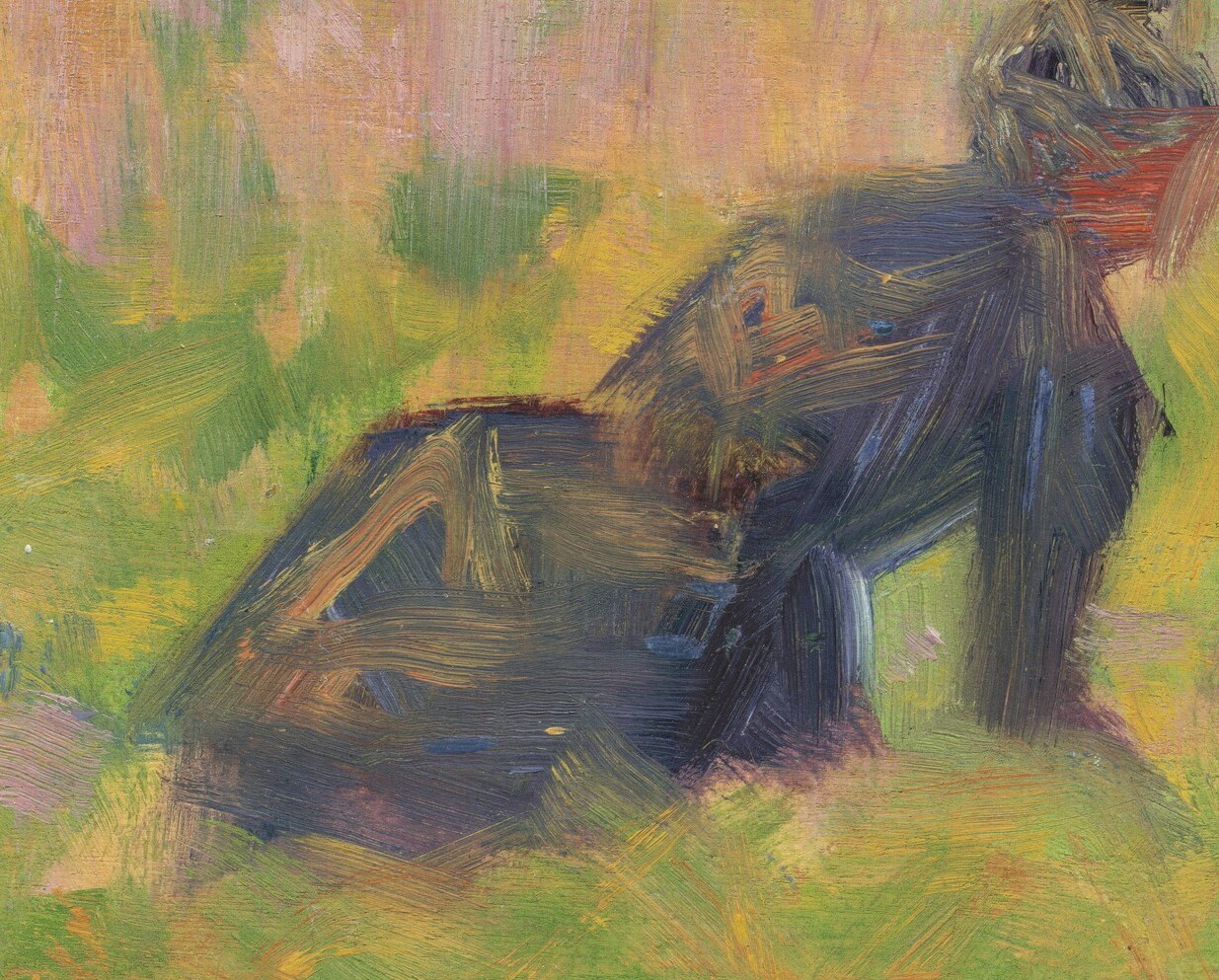
Observe the three distinct individuals in this scene. Each seems absorbed in their own world, creating a sense of solitude even in shared space. The turned heads and obscured faces invite viewers to imagine their stories and their interactions, or lack thereof, with the landscape and each other.
This early work on wood shows Seurat's developing approach to light, form, and the human presence within a natural setting. The subdued palette contributes to a contemplative atmosphere, characteristic of the artist's foundational explorations before his revolutionary color theories.
What do these figures suggest to you about human connection, or its absence, in a quiet moment?
Details
Transcript
Before Pointillism, Seurat explored human presence in landscapes. Here, three figures exist in their own private worlds. This figure on the right moves with purpose, umbrella in hand. Their head is turned, lost in thought or focused elsewhere. The central figure, shielded by an umbrella, feels entirely alone. Their turned head creates a profound sense of isolation. And this figure crouches, their purpose ambiguous, their face obscured. This early work reveals Seurat's interest in form and light.