Martin Luther by Kemmelmeyer, Frederick
Frederick Kemmelmeyer's "Martin Luther," painted around 1800, is a fascinating object: an early American painter, working in a young republic, reaching back three centuries to depict the German theologian who split Western Christianity.
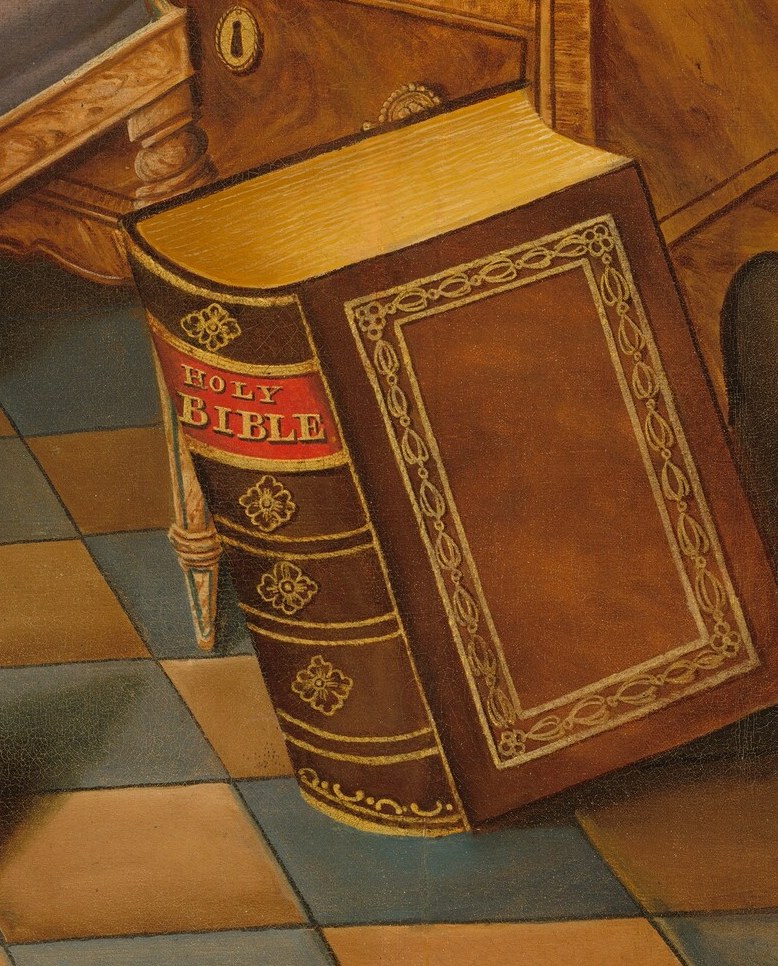
Kemmelmeyer fills the room with objects that do the explaining. Luther holds an open book, his hands carefully rendered around the text. A heavy Bible lies open on the checkerboard floor. On the desk behind him sit an inkwell and an hourglass, the tools of a life spent writing against time.
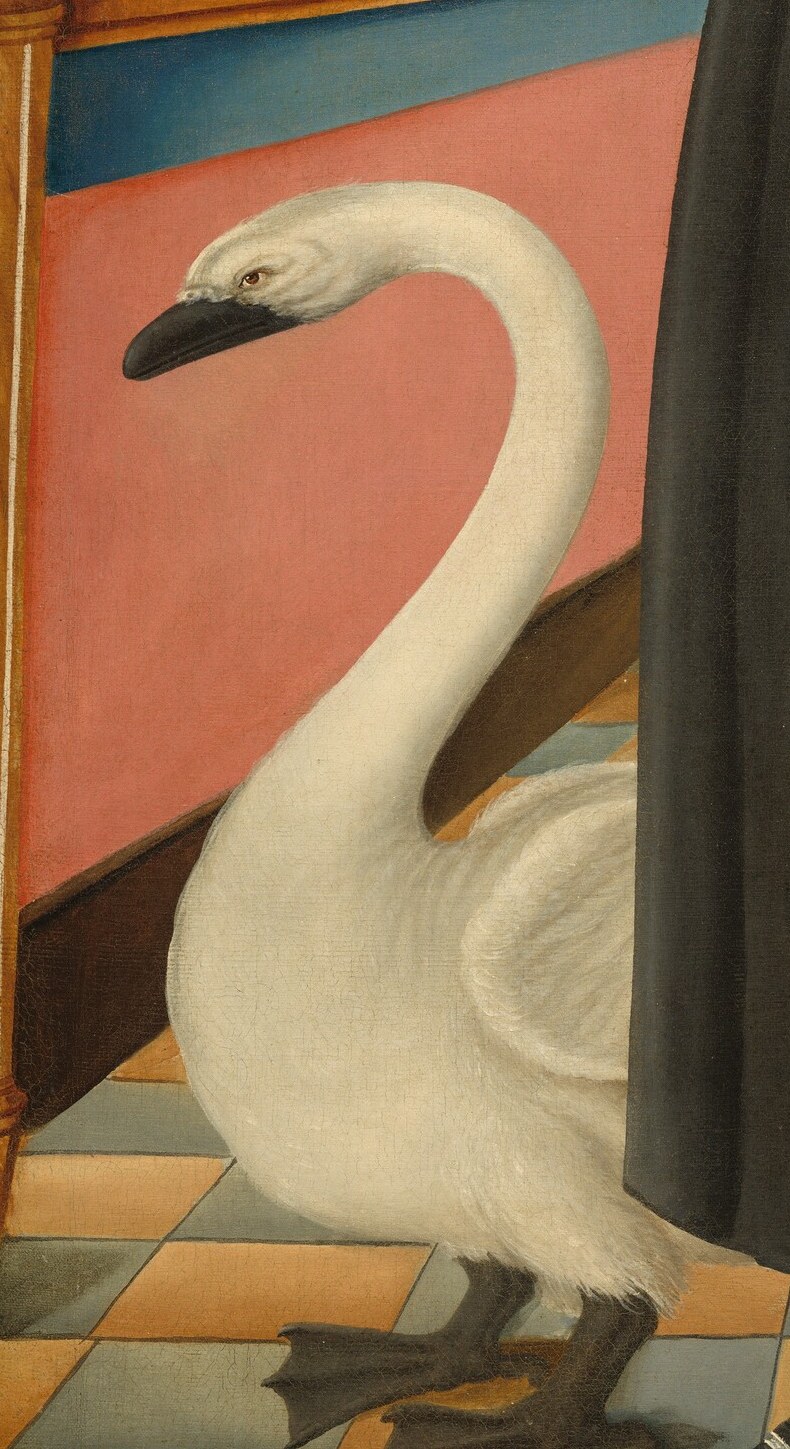
And then there is the swan. It rests on the floorboards, white and unmistakable. Luther told the story of Jan Hus, a Czech reformer burned at the stake a century before him, who is said to have declared: "You may roast a goose, but a swan will come after me." Luther believed he was that swan. Placing the bird in the portrait with him is a quiet, personal act of self-definition.
What other details in this painted room would have spoken clearly to a viewer in 1800, that we might miss today?
Details
Transcript
An American painter, around 1800, imagines Martin Luther. He sits in a scholar's room. The light falls on an open book. A Bible rests open on the floor. Scripture grounded his world. Now look at the floor. Not just geometry. A white swan. In Luther's iconography, it was his personal symbol. The story he told: a martyr burned, and I will rise after him. Everything in this room is a quiet argument about his life's work.