宋/元 佚名 百牛圖 卷|One hundred water buffalo by After Jiangcan
This is One Hundred Water Buffalo, an ink-on-paper handscroll attributed to an artist working after Jiangcan, painted in 1249 during the late Song or early Yuan dynasty. The title promises a multitude, but the scroll itself does something quieter: it asks you to look the way a herder watches his animals, with patience and no rush.
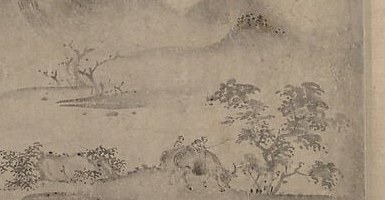
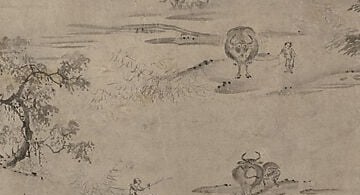
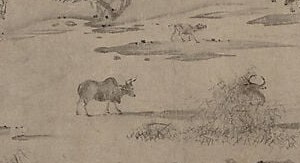
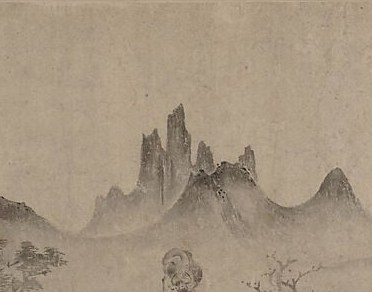
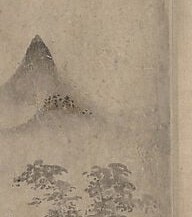
Look first at how each buffalo is an individual. The animals vary in build from lean to stocky, their horn shapes differ, and they are never arranged as a formal composition. They drink, graze, and rest along the riverbank as if no one is watching. The pale wash of the water is made entirely from the unpainted paper, and the misty hills on the far left dissolve so completely into the paper that they become almost atmosphere itself.
Created in 1249 during the transition between the Song and Yuan dynasties, this handscroll reflects a moment when Chinese painters were turning toward direct observation of nature rather than repeating established formulas. The artist’s identity is not confirmed, but the work passes down a specific artistic value: the idea that a scroll should not end abruptly but trail off into the margins with a few nearly invisible brushstrokes, rewarding only the viewer who stays.
If you look all the way to the far right, past the dramatic peaks and the last cluster of buffalo, you will find the margin trees. They are so small and pale they vanish at normal viewing distance. That is the gift the painter left for you there.
Details
Transcript
You could scroll past this landscape in three seconds. The title promises a hundred water buffalo. The artist gave each one a different build, a different horn shape. But count them. The number is not the point. The painter observed them drinking, grazing, resting, unposed. And then the scroll does something Chinese painters loved. It trails off. Almost nothing. A few tiny trees at the far margin. A 13th-century reminder that some things are only for the person who slows down.