Southern Resort Town by Smith, Dana
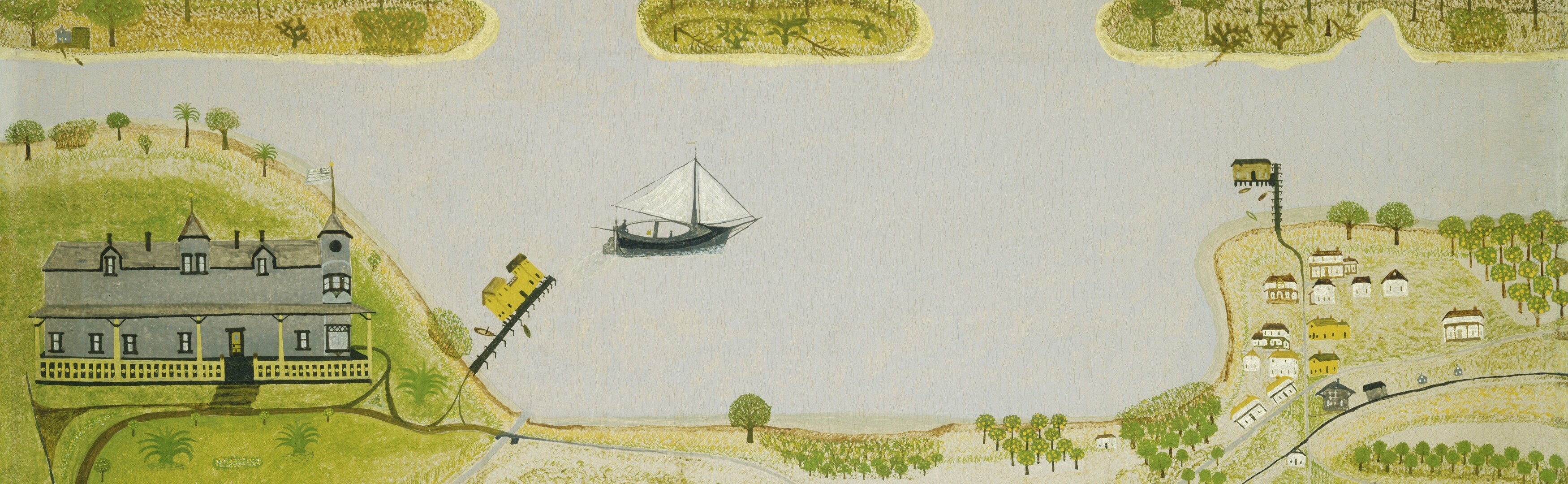
Southern Resort Town by Dana Smith, painted around 1880, is a view of a quiet coastal settlement. Most people scroll past it. The stillness of the water and the clusters of modest houses feel like a generic landscape, but the painting is really a document of one specific transformation in American life.
Let your eye move from the calm water to the wooden pier on the right. Resting on the pier is a single yellow train car. It is the brightest, most sharply painted object in the entire composition. Smith gave it a clarity that the sailboat, the houses, and the trees do not have.
That little car is the whole reason the resort exists. In the decades after the Civil War, expanding rail networks reached the southern Atlantic coast for the first time, making seaside vacations possible for a new class of travelers. Towns like this one appeared almost overnight, built around a single rail stop that brought visitors from the interior to the water. Smith painted the architecture of access, not just the landscape.
The artist himself remains obscure, but his decision to include that car was precise. The painting is not really about the view. It is about the arrival.
Details
Transcript
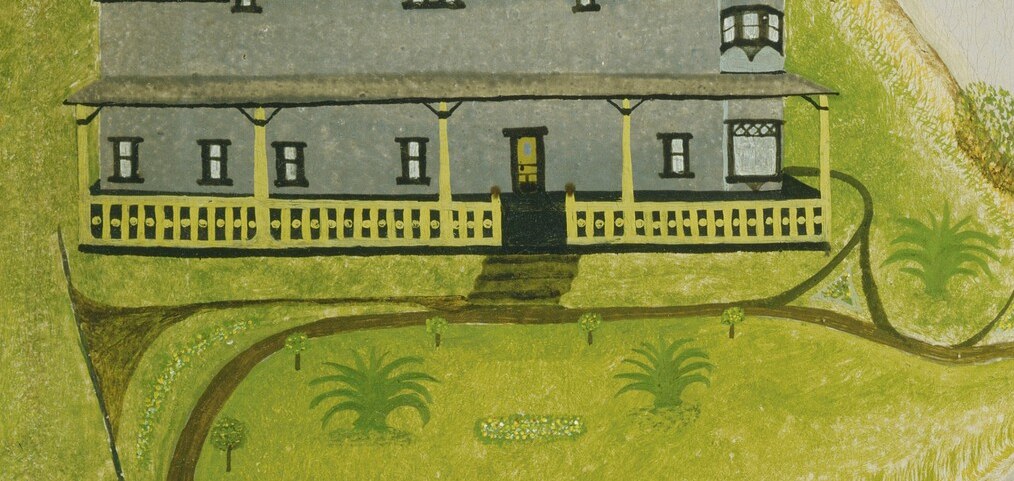
A sleepy resort town, somewhere on the southern coast. Wealthy visitors arrived by rail, seeking calm water and sea air. A sailboat drifts alone. The whole scene feels suspended in stillness. There is one thing in this painting that is not quiet. Look at the pier. A single yellow train car, bright and hard-edged. The resort only exists because that rail line reached the shore.