Paintings after Ancient Masters: Autumn Landscape by Chen Hongshou|Chen Zi
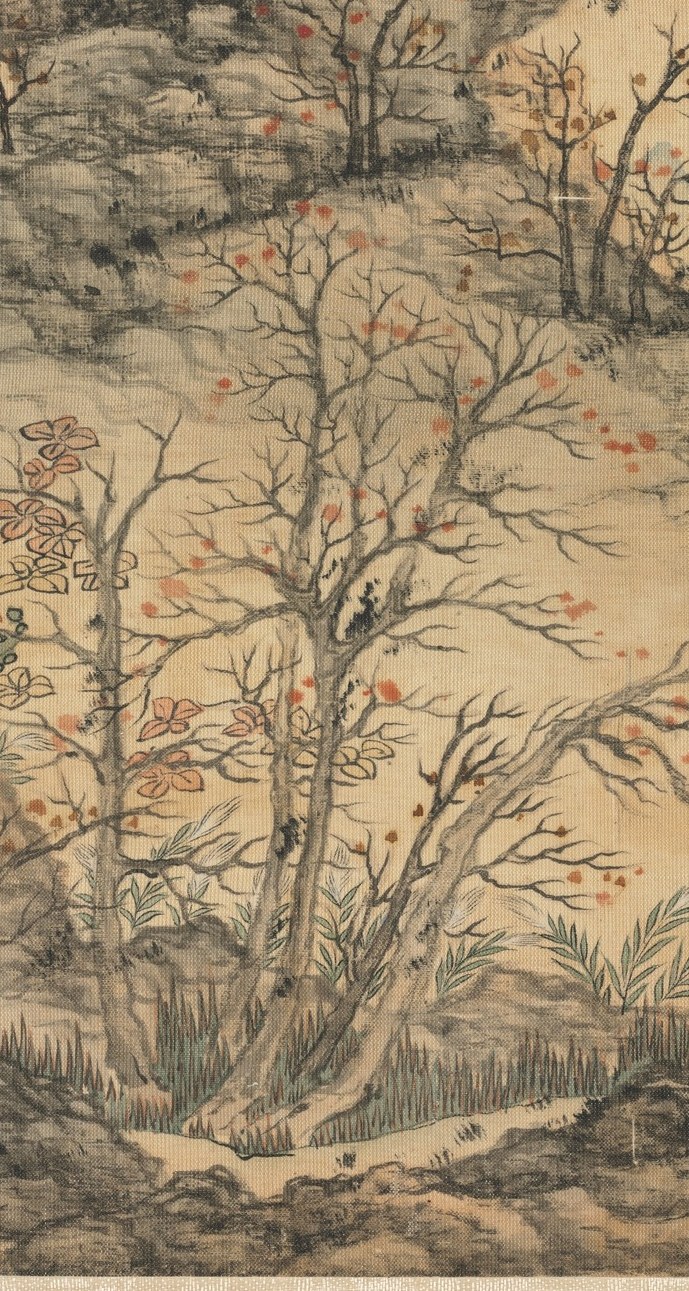
Chen Hongshou's "Paintings after Ancient Masters: Autumn Landscape," created in 1625 and held at The Cleveland Museum of Art, subtly weaves human presence into a vast, serene natural setting. While the landscape appears empty at first glance, the true focus lies in its small, carefully placed figures.
Look for the two tiny people on a distant bridge and a lone figure with a long pole. These elements are characteristic of Chen Hongshou's work during the Ming dynasty, where human interaction with nature, even in contemplation or travel, adds depth to expansive scenes.
The artist used loose, sketchy lines and a subdued palette of browns, grays, and subtle blues for the distant mountains. This technique creates a quiet, reflective mood, inviting viewers to ponder the journey of the figures within this ancient, rugged landscape.
What stories do these small figures, almost hidden within the grandeur of nature, tell you?
Details
Transcript
This quiet landscape, painted in 1625, feels almost empty. Yet two small figures cross a bridge in the distance. The artist, Chen Hongshou, often included tiny people in vast scenes. They suggest human stories unfolding, even in solitude. Look closer at the man with the long pole. He walks toward the unknown, a journey of quiet contemplation.