An Opalescent River by George Gardner Symons
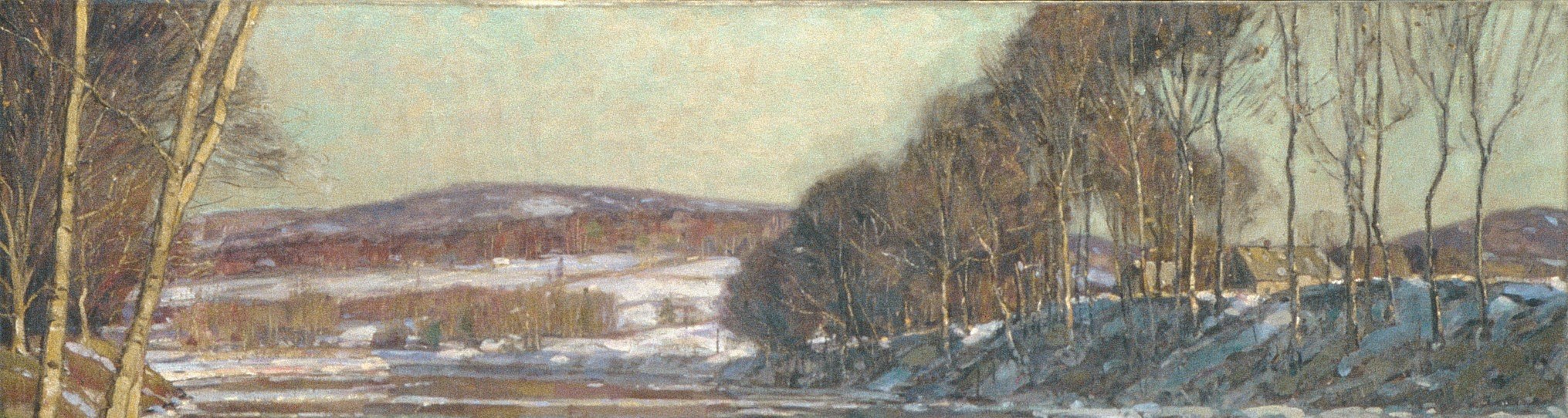
This is An Opalescent River by George Gardner Symons, painted around 1905 and held at The Metropolitan Museum of Art. It is a winter landscape that rewards the patient viewer with one of the quietest payoffs in the American wing: two tiny birds.
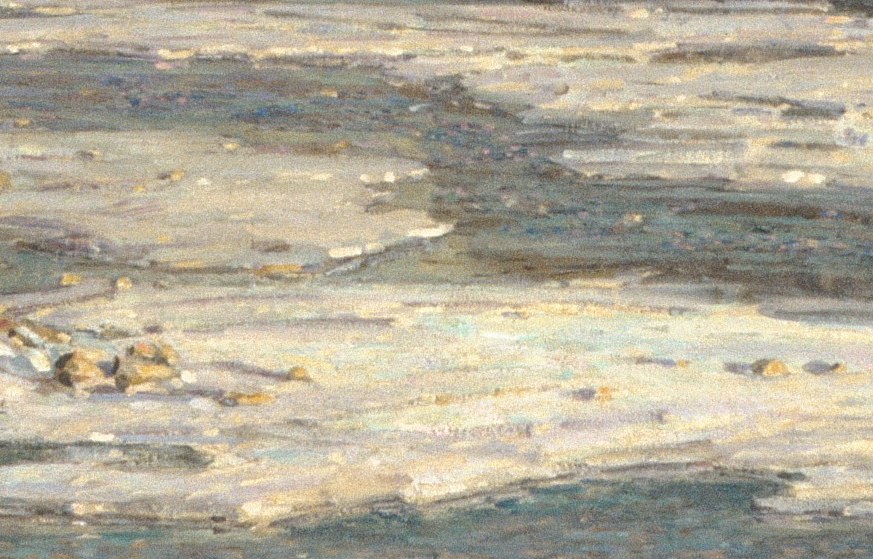
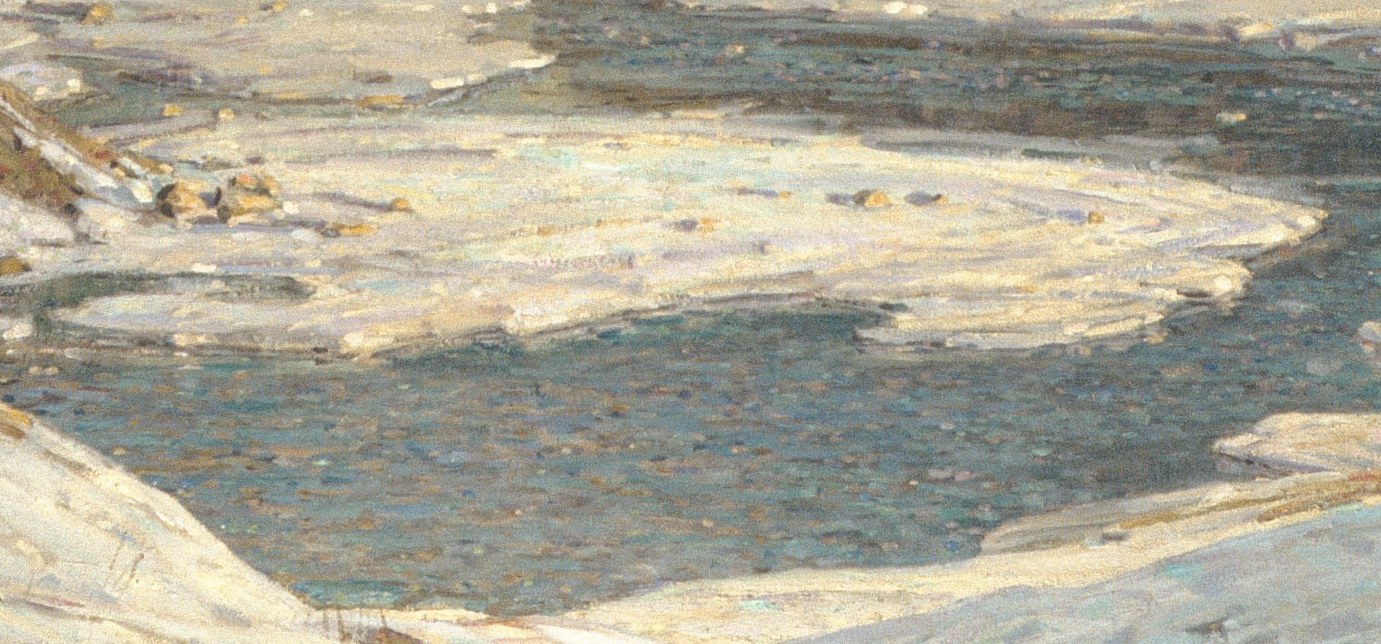
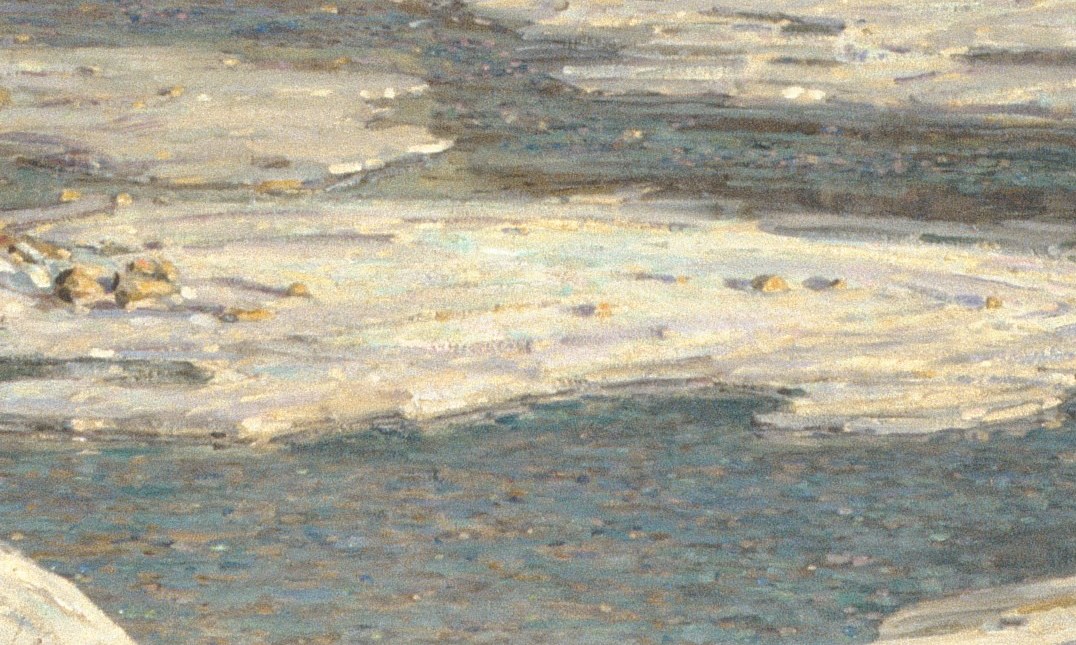
Symons built the entire foreground with thick, ridged impasto, oil paint laid on so heavily it physically mimics the way river ice cracks and plates apart. The water between the floes carries a faint iridescence, the namesake opalescent effect that gives the painting its title.
Symons was born in Chicago in 1861 and became known, almost against the grain of his era, as the dean of the American winter landscape. While his contemporaries chased modernism, Symons kept going back to snow and ice, painting outdoors in conditions most artists avoided.
Next time you scroll past a landscape, look for the birds. Painters put them there to tell you how big everything else really is.
Details
Transcript
This is not a photograph of a river. George Gardner Symons built the ice with thick ridges of paint. He was called the dean of the American winter landscape. Look for the thing most people scroll past. Two small dark waterfowl, standing on the ice. Without them, the river has no scale. They make it vast.