Courtesan and her Attendant under a Cherry Tree by Utagawa Toyoharu
A high-ranking courtesan never hurries, and Utagawa Toyoharu's 'Courtesan and her Attendant under a Cherry Tree' at the Metropolitan Museum of Art makes sure you know it. Painted near the end of his life in 1816, this work is a quiet, lavish document of the pleasure quarters' economic hierarchy.
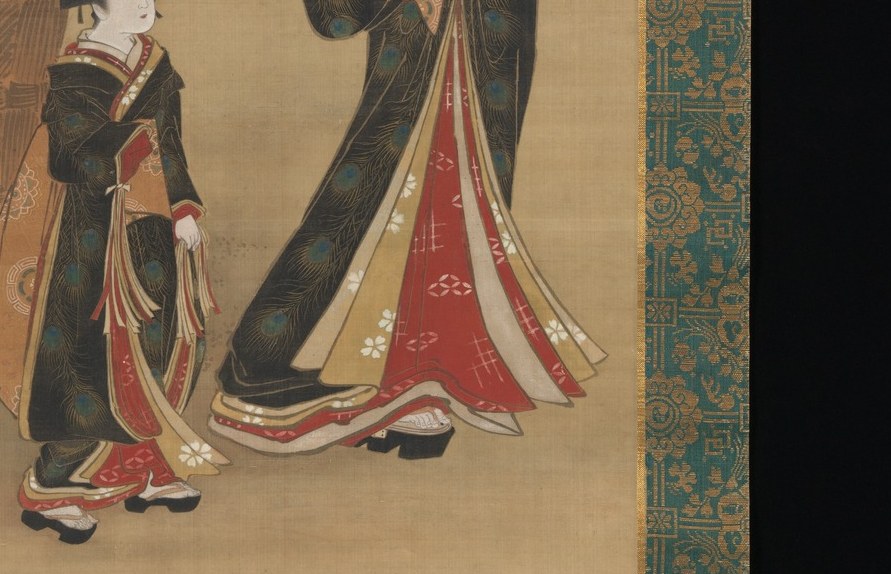
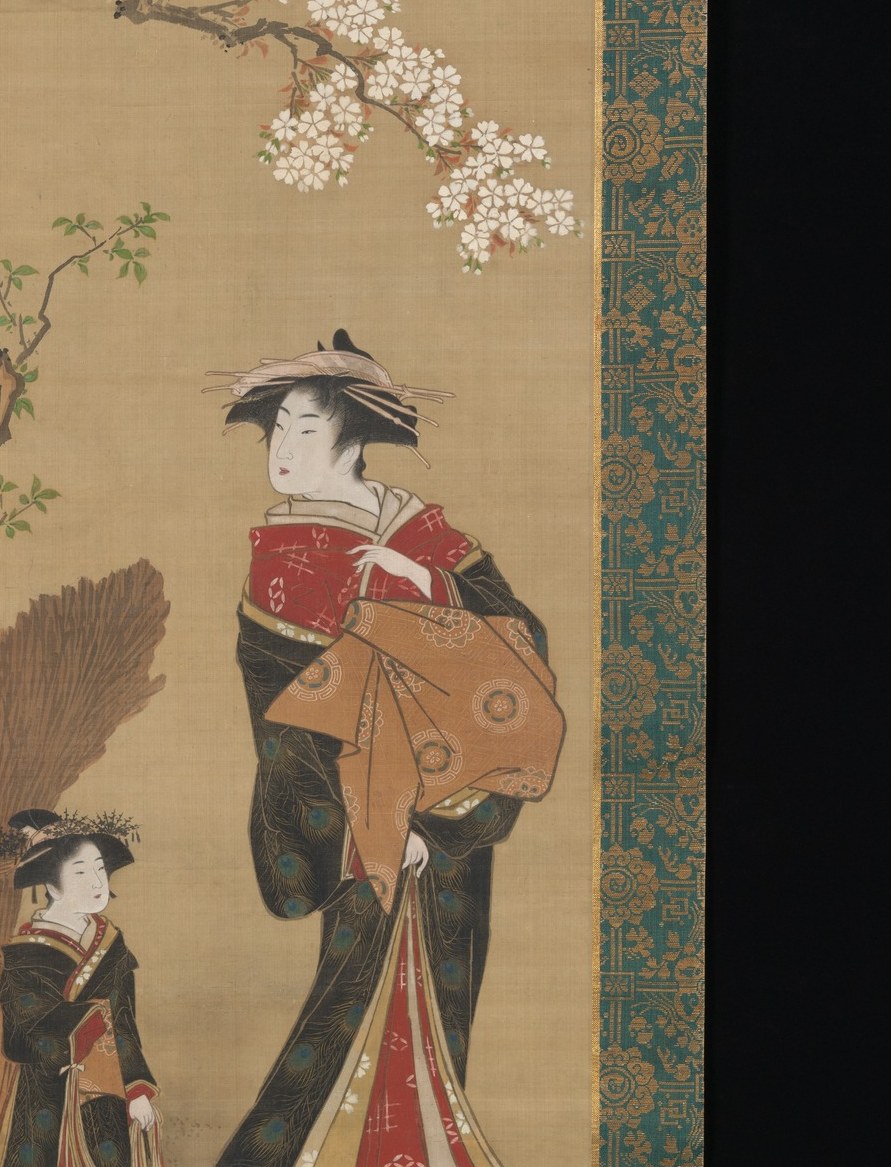
Look at the hem of her outer robe. That dramatic pool of red silk on the ground is a luxury gesture: it means she does not need to walk briskly, and the fabric was ruinously expensive. An uchikake like this could cost more than a laborer earned in a year. Count the layers at the hem, each visible textile is different, a deliberate display of wealth. Then shift your eye to the elaborate tortoiseshell combs and layered kanzashi hairpins. These were not merely decorative. They were a precise, legible code of rank and price, understood instantly by anyone in Edo's Yoshiwara district.
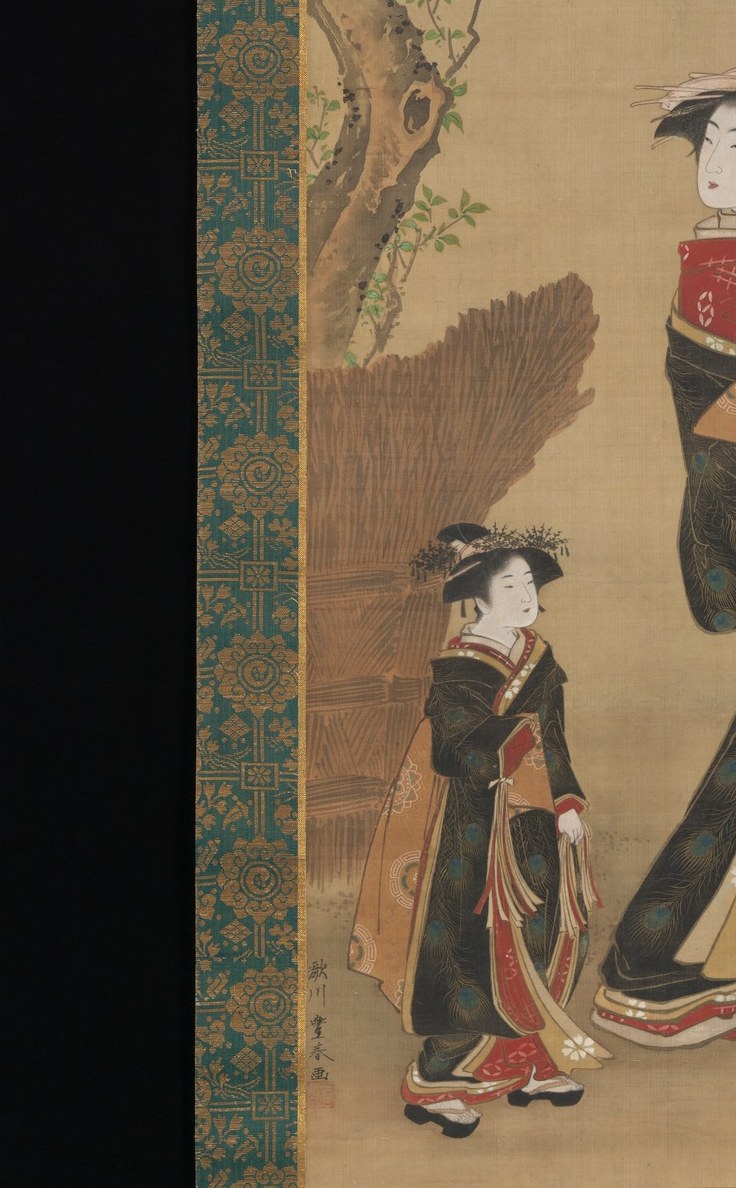
Toyoharu was a key figure in ukiyo-e, credited with introducing Western-style perspective to Japanese printmaking. Here, though, he works in a flatter, more decorative mode suited to the subject. The real structure of the painting is social, not spatial. The attendant's upward gaze and her dark, simple robes set off the courtesan's brilliance, encoding their relationship without a single written word.
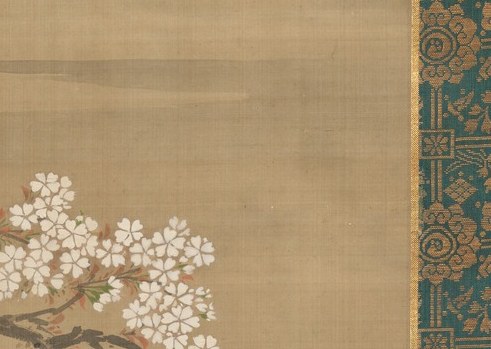
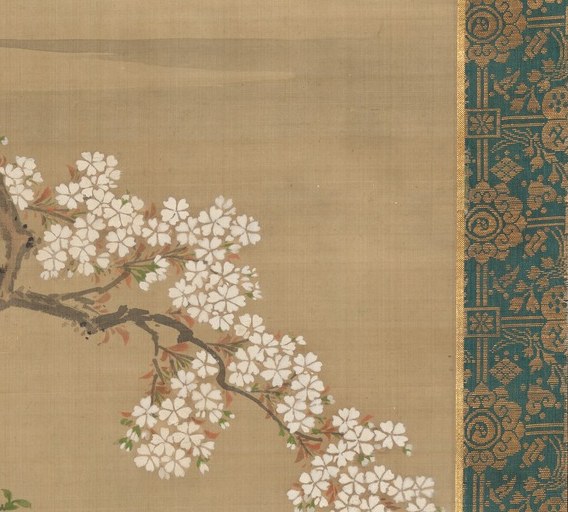
Everything in this frame, the silk, the pins, the paused posture, was priced. Even the cherry blossoms overhead, beautiful and fleeting, nod to the mono no aware logic of the floating world: pleasure is transient, so spend now.
Details
Transcript
A high-ranking courtesan never hurries. Her outer robe pools on the ground behind her. A single uchikake could cost more than a laborer earned in a year. Count the layers at the hem. Every textile is different. Now look at her hair. The kanzashi are not just ornaments. Tortoiseshell combs and layered pins announced her rank to everyone who saw her. The attendant below her wears dark, simple robes. The gap is written in silk. This was painted near the end of the artist's life, in 1816.