Leaving the Manor House by American 19th Century
This is "Leaving the Manor House," a mysterious American folk painting from around 1850, now in the National Gallery of Art in Washington. The title is descriptive, a guess. No one knows who painted it, or who the woman is. It remains unsigned, an orphaned masterpiece of nineteenth-century American life.
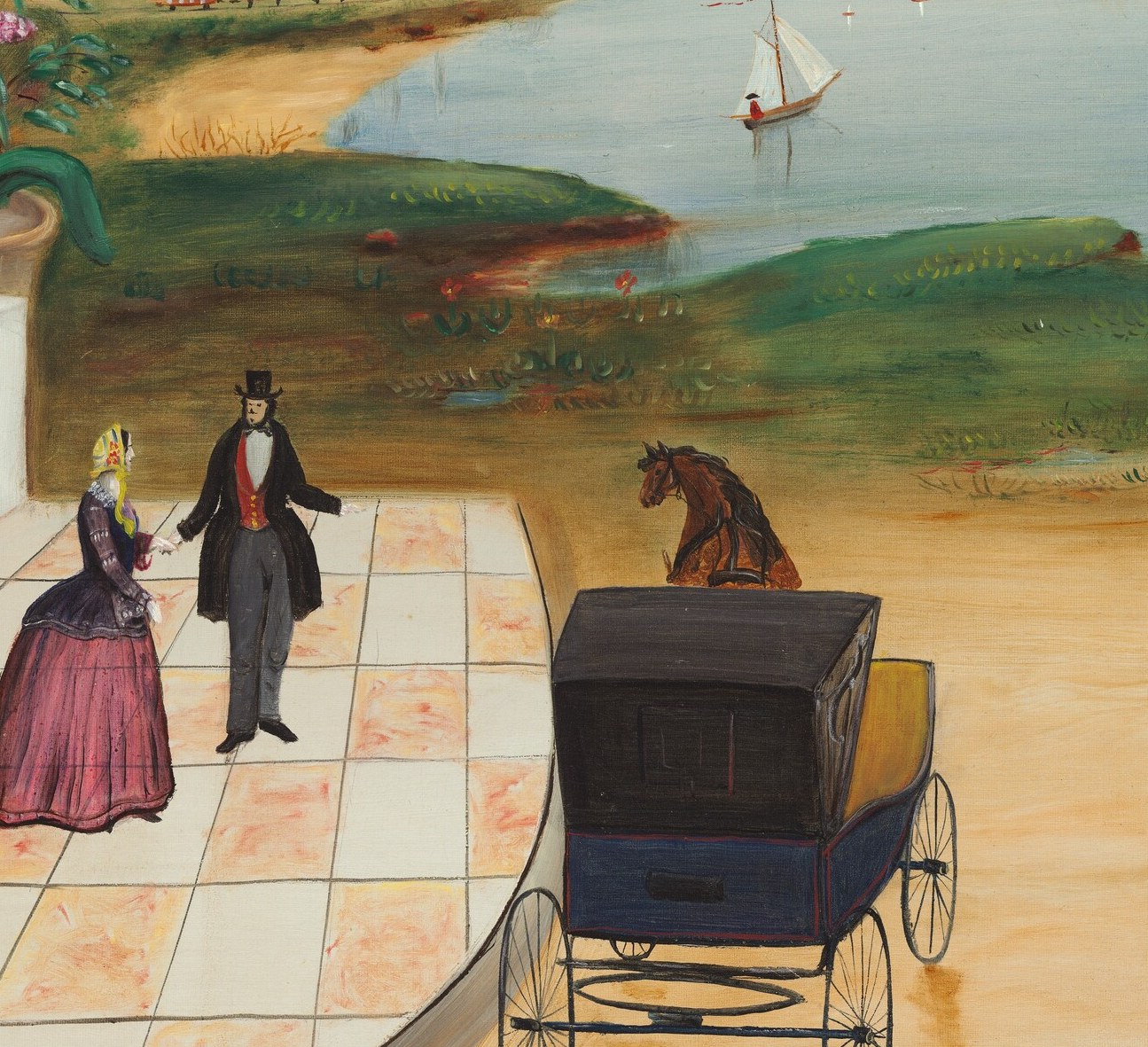
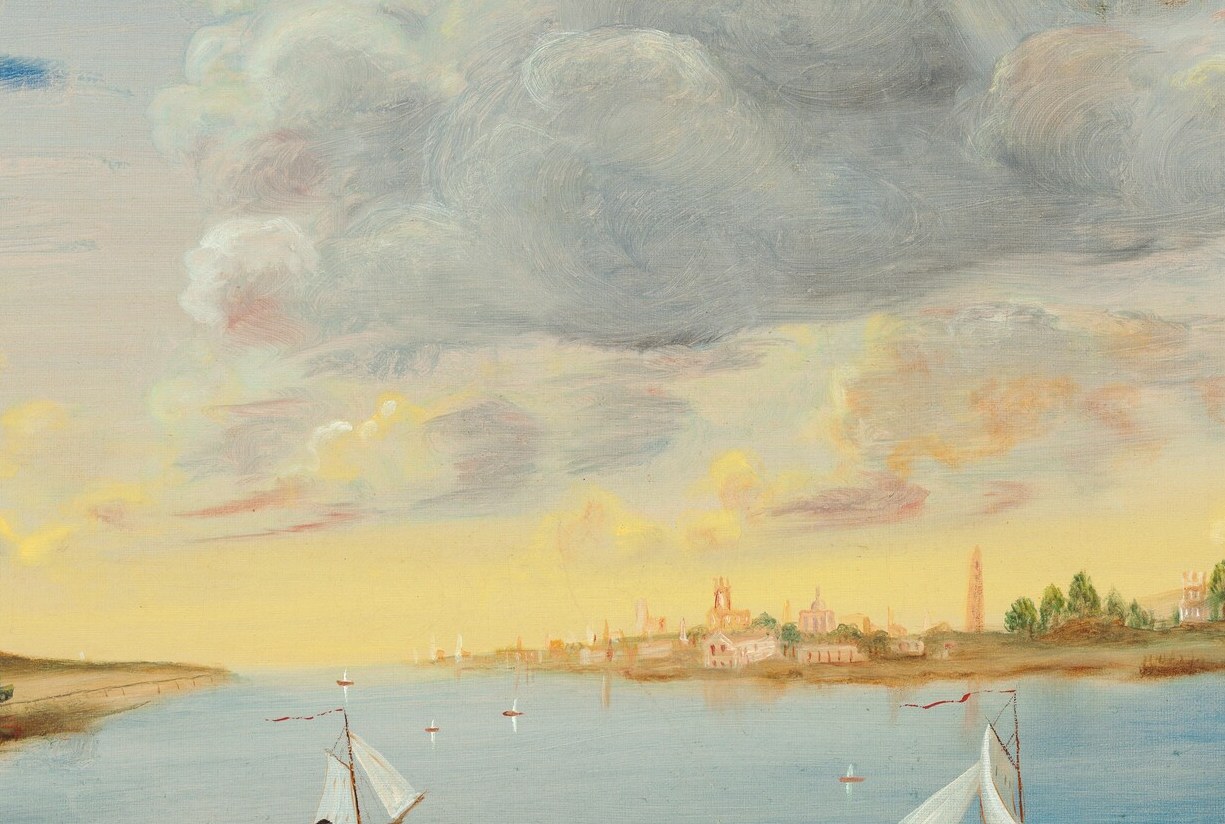
The painting is full of departures. A woman in a dark formal dress stands on the manor porch as a horse and carriage wait on the gravel. A dog bounds ahead, the only real motion in the frame. But the real clue is on the water: two sailboats. For all the wealth on display, in mid-19th-century America, the smoothest routes were still rivers and bays, not rutted dirt roads.
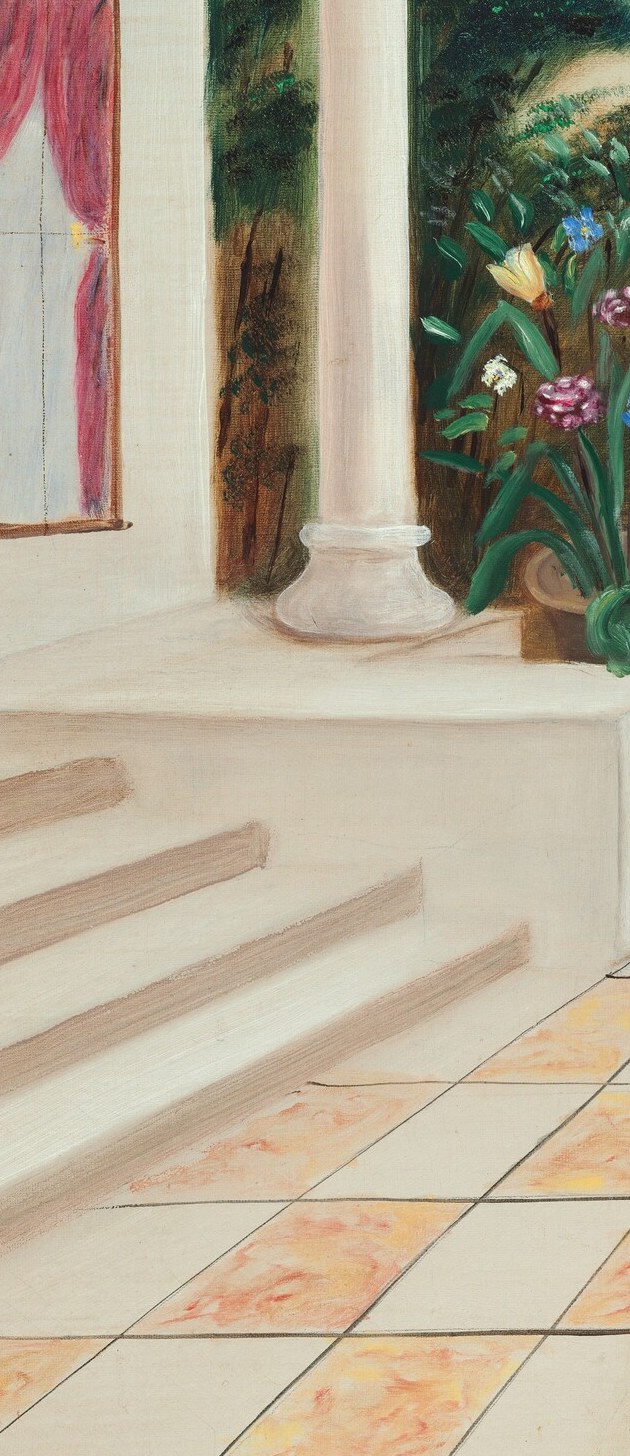
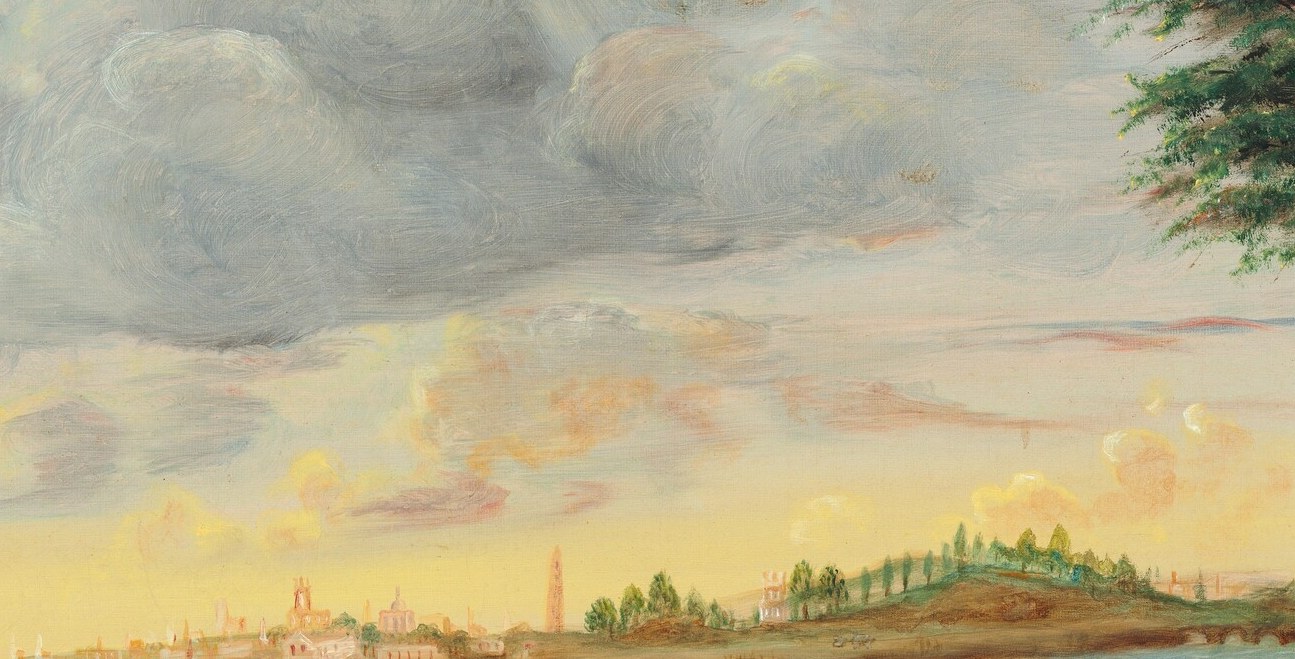
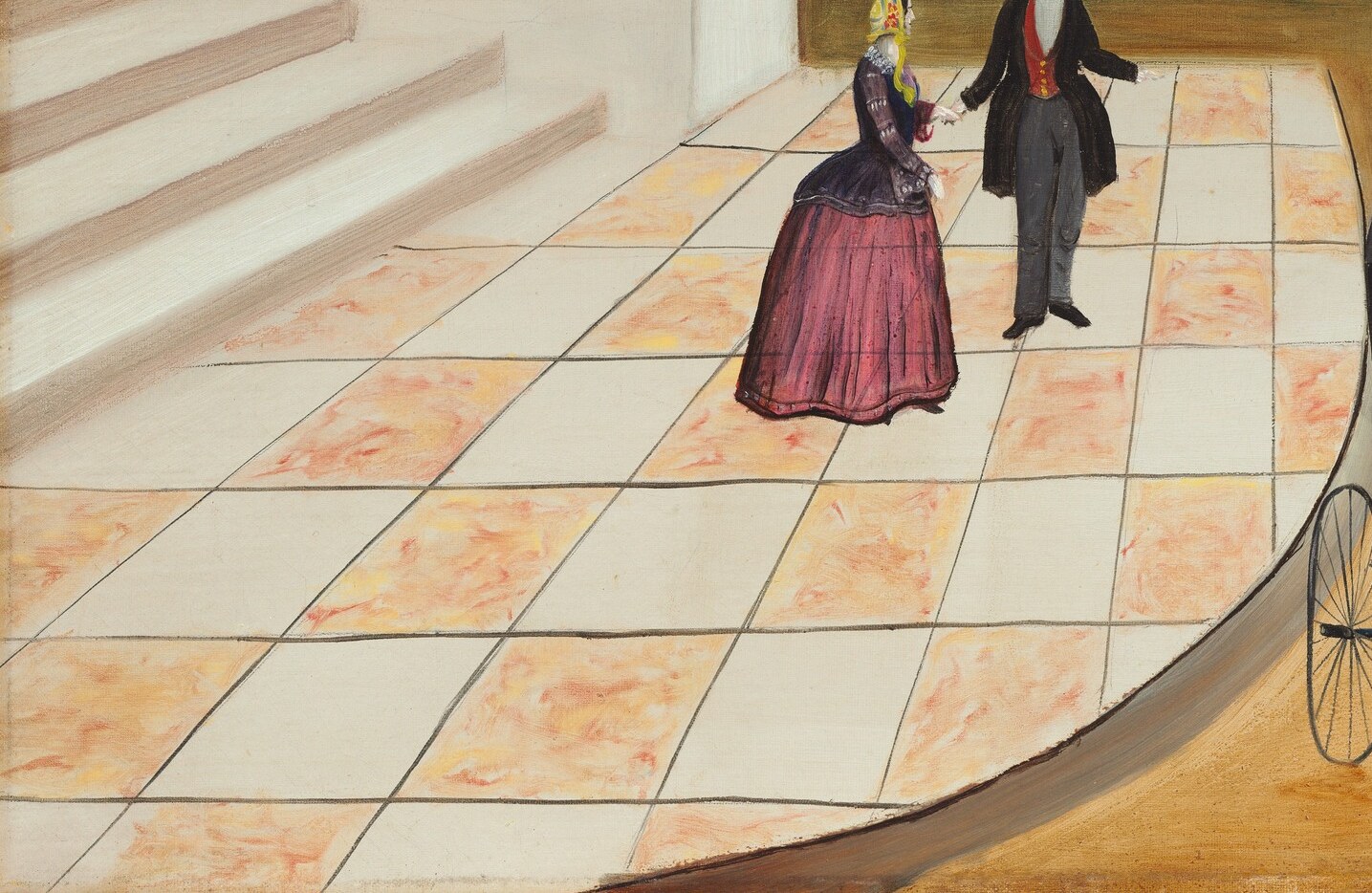
Look at the details the unknown painter loved: the black-and-white checkerboard tiles of the porch, drawn flat and slightly off, a hallmark of folk art. The ornamental iron fence and fountain that declare the family's status. The columned facade partly hidden by climbing roses. And the sky, huge and theatrical, making a small farewell feel ceremonious.
Someone stood in front of an American manor house around 1850 and decided this quiet moment of leaving was worth a canvas. We still look at it, 175 years later. What do you think she was going toward?
Details
Transcript
She stands on the porch in her best black dress. The carriage waits. The dog runs. A journey is starting. But look past the gravel drive, across the water. Sailboats. That is how she will actually travel. In 1850, waterways were smoother than American roads. No artist signed it. The name is lost. Only this moment remains.