The Marriage of Strongbow and Aoife by Daniel Maclise
"The Marriage of Strongbow and Aoife" by Daniel Maclise (1854) fills an entire wall of the National Gallery of Ireland: over sixteen square metres of oil on canvas. It depicts the 1170 marriage that sealed the Norman invasion of Ireland, but the real feat is how Maclise made paint itself seem to glow.
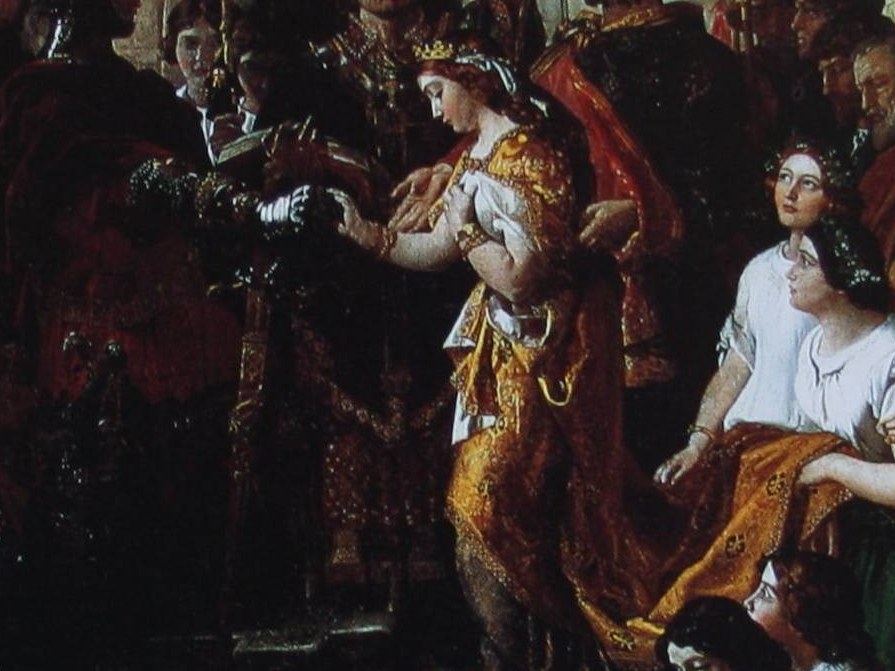
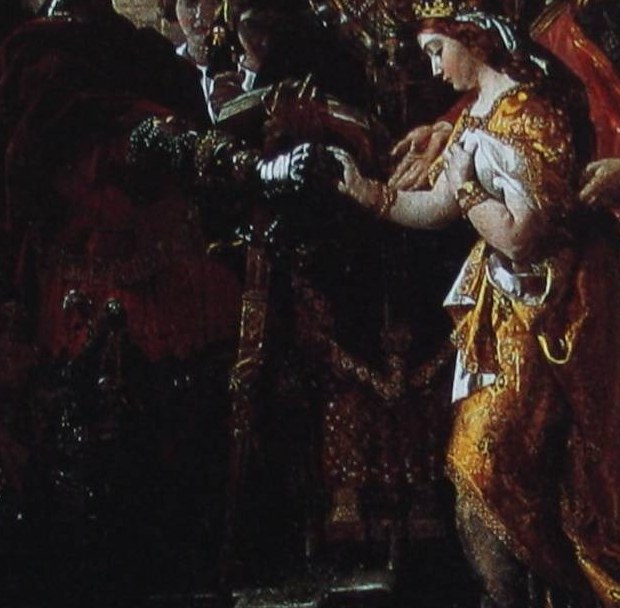
Look at the bride's red dress. It appears luminous, yet there is no light source in the painting. The secret is chiaroscuro: by keeping the surrounding scene in deep shadow, Maclise made the red pigments seem to burn from within. The knight's armor shows the complementary trick, with thick ridges of impasto catching whatever light pierces the darkness.
Maclise was an Irish painter working in London, and this canvas reflects the mid-nineteenth-century impulse to revisit Ireland's medieval past through a dramatic, Romantic lens. The work was acquired by the National Gallery of Ireland, where it remains on public display.
Next time you see a painting that seems to emit its own light, look at the shadows. They are doing the work.
Details
Transcript
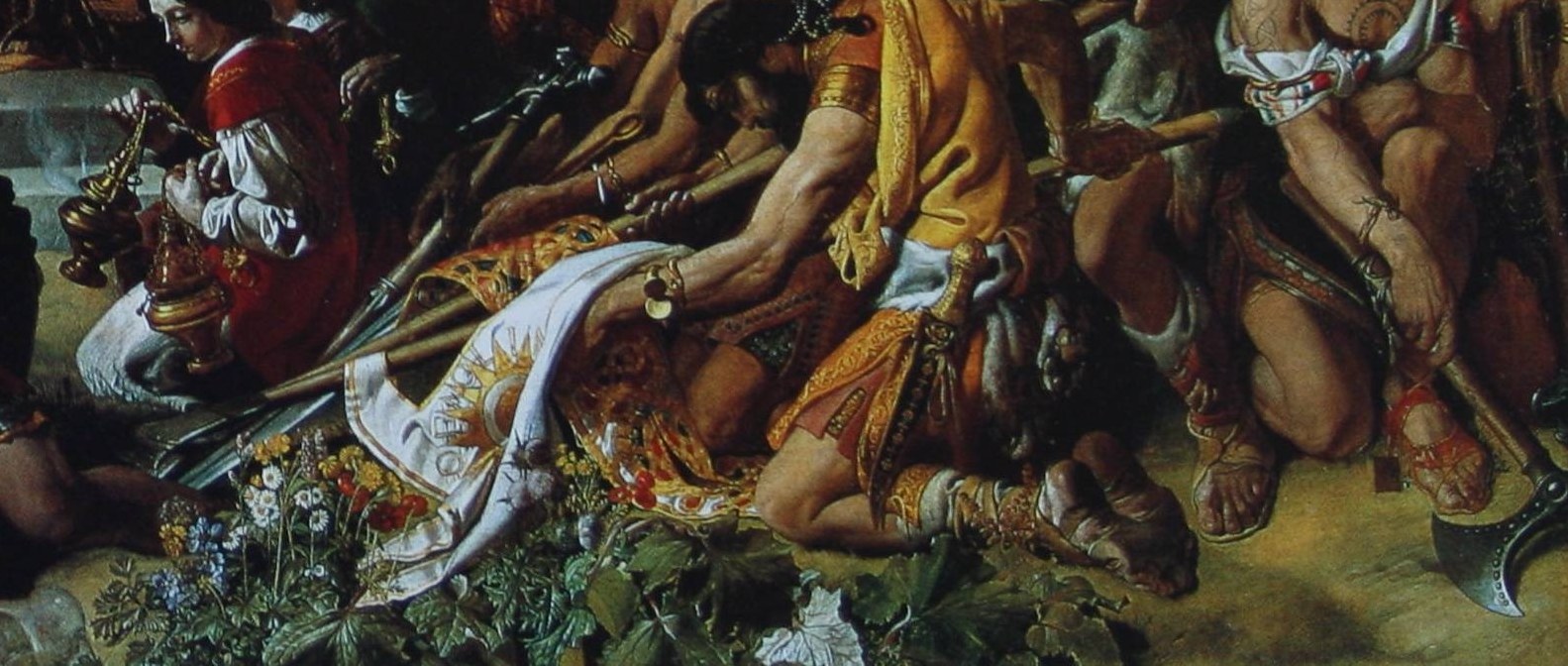
This painting covers more than sixteen square metres. A Norman knight marries an Irish princess, among the fallen. Her dress glows red against the surrounding darkness. The armor is thick impasto, built up to catch the light. The trick was chiaroscuro: deep shadow makes red luminous.