Breakfast with Ham by Pieter Claesz
Pieter Claesz's "Breakfast with Ham" (1647) at the State Hermitage Museum is a superb example of Dutch Golden Age still life, renowned for its meticulous detail. While many still lifes are admired for their grand compositions, Claesz invites us to appreciate the subtle, almost overlooked elements.
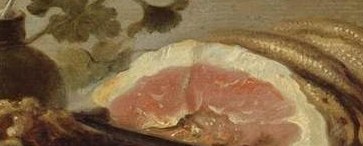
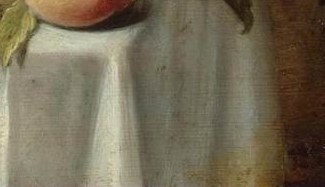
Notice the incredible realism in the textures, from the glistening ham and the soft peaches to the detailed walnuts and the folds of the tablecloth. The artist's skill makes each object feel tangible and lifelike.
Claesz's still lifes often encouraged contemplation on daily life and the transient nature of existence. This painting, created in the mid-17th century, is a testament to the artist's keen observational skills and his mastery of light and shadow, making common objects extraordinary.
What other small details do you notice that bring this scene to life?
Details
Transcript
This painter was a master of the everyday still life. Look how he captures textures, like this slice of ham. Or the soft, velvety skin of these ripe peaches. Every object feels real, right down to the tablecloth. Now, look closely on the table, near the knife. A tiny fragment of a nut shell, left behind. It's a small detail, but it speaks to a meal in progress.