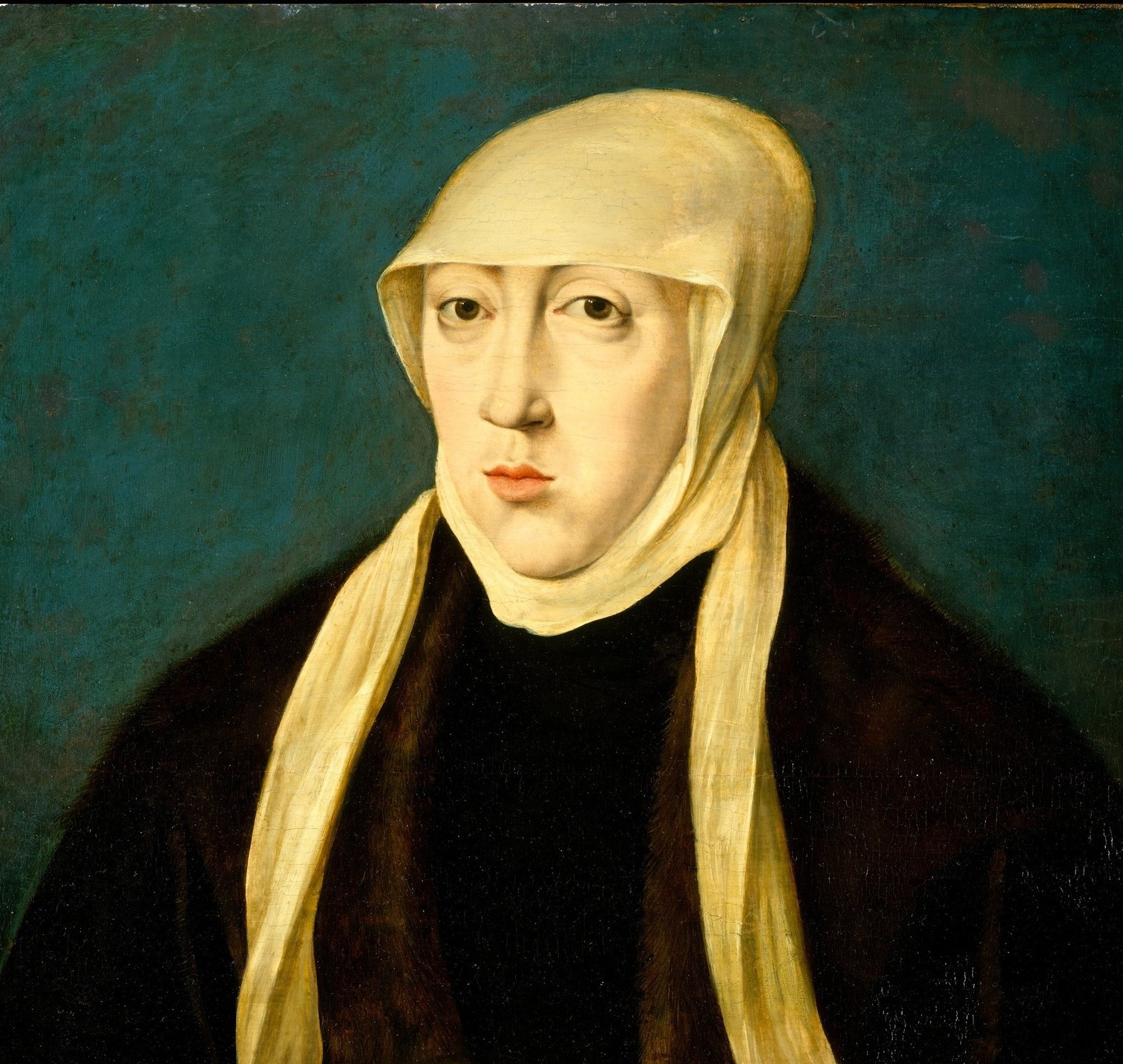
Mary (1505–1558), Queen of Hungary by Jan Cornelisz Vermeyen
This is Mary of Hungary (1505-1558), painted around 1600 by Jan Cornelisz Vermeyen. It hangs at The Metropolitan Museum of Art. The face is a ledger of loss: she was twenty when her husband, Louis II, died on the battlefield at Mohács in 1526. She put on black and never took it off. For the next thirty years she governed the Habsburg Netherlands, one of the most volatile territories in Europe, as regent for her brother Charles V.
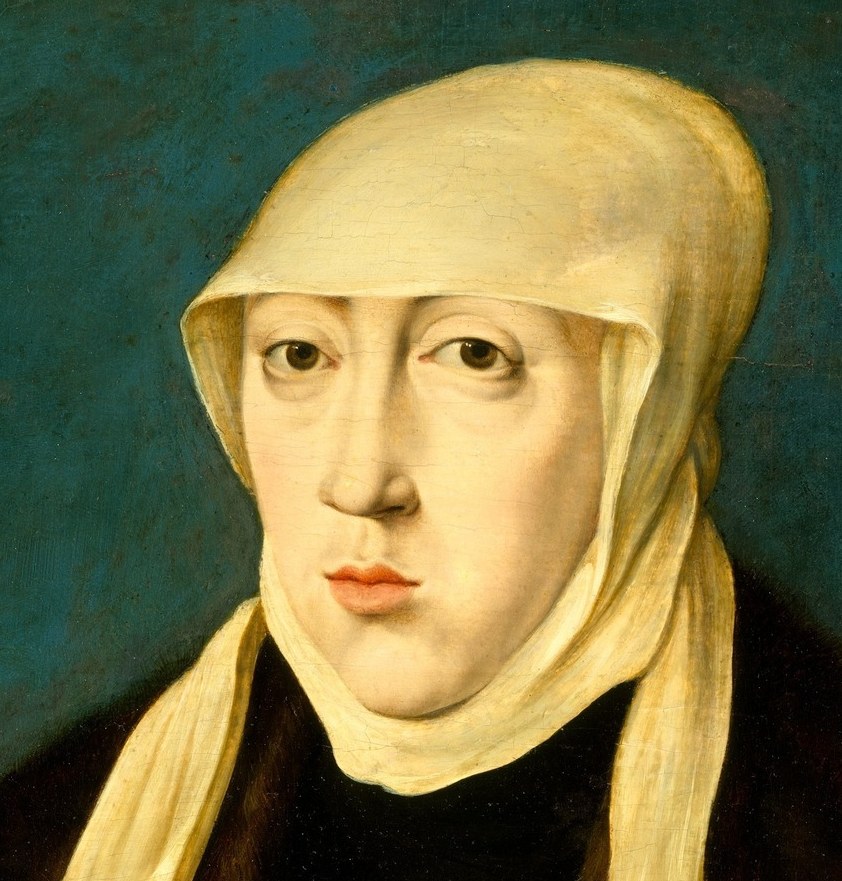
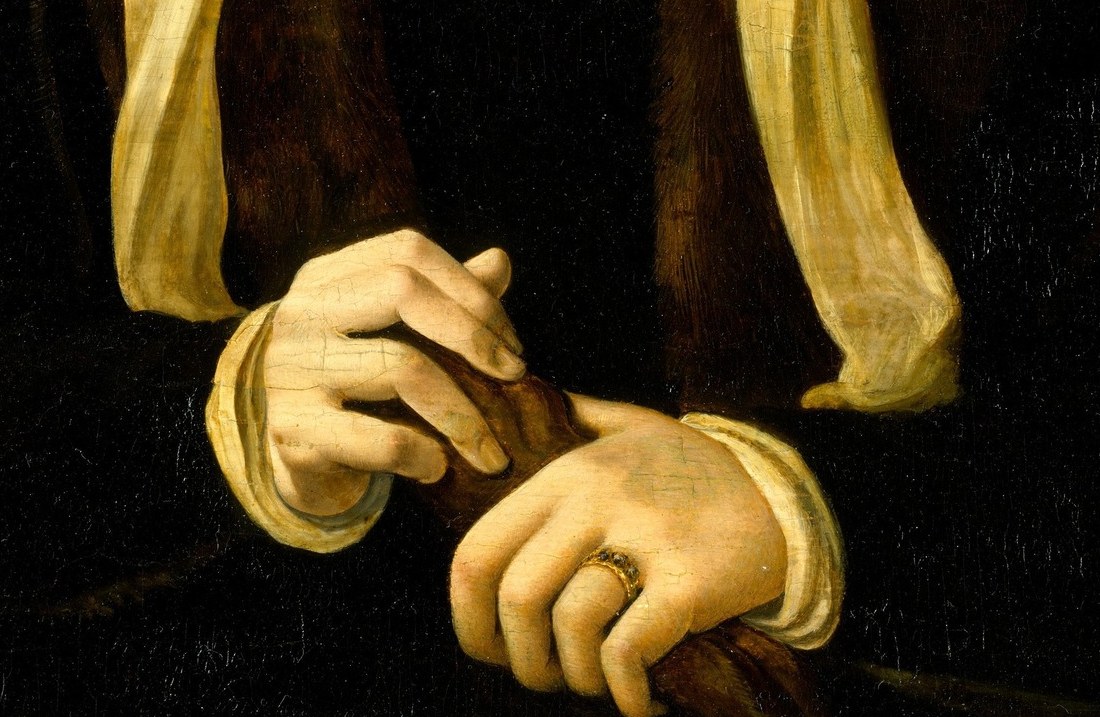
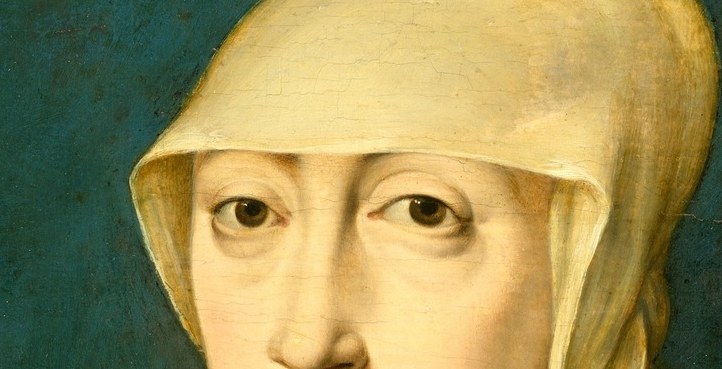
Vermeyen was her court portraitist and knew exactly what she needed to project. The white wimple signals widowhood without a word. The clasped hands are a Habsburg formula, but the grip is unusually tight, fingers interlocked rather than resting. The direct gaze is the choice that matters most: she does not look away from you, because she could not afford to look away from anyone.
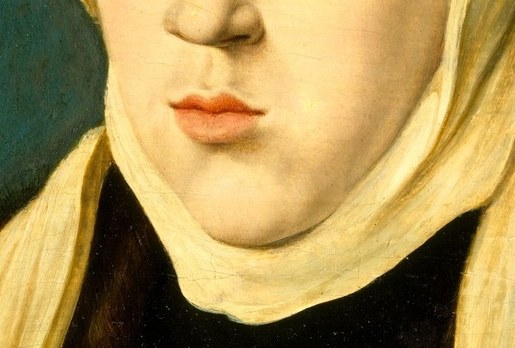
History remembers her as a capable, iron-nerved administrator who kept the Low Countries functioning through repeated French invasions and the rising tensions of the Reformation. This portrait records the cost, not in dramatic gestures, but in the set of a mouth and the stillness of a pair of hands that never had the luxury of letting go.
How many years must a person hold a grief before it shows up not as sadness, but as bone-deep composure?
Details
Transcript
She became a widow at twenty. She never wore color again. Her white headdress signals decades of mourning. Her husband died fighting the Ottomans at Mohács in 1526. Now look at her mouth. Controlled. Steady. She governed the Low Countries through war. Her fingers interlock harder than protocol required. She held herself together. And she held the realm together too.