Portrait of a Youth by Botticelli, Sandro
Sandro Botticelli's Portrait of a Youth (c. 1482) hangs in the National Gallery of Art in Washington, D.C. It was attributed to the master by the great art historian Bernard Berenson in 1922. For a century since, viewers have been drawn in by one small, specific detail: the young man's right hand pressed lightly to his chest.
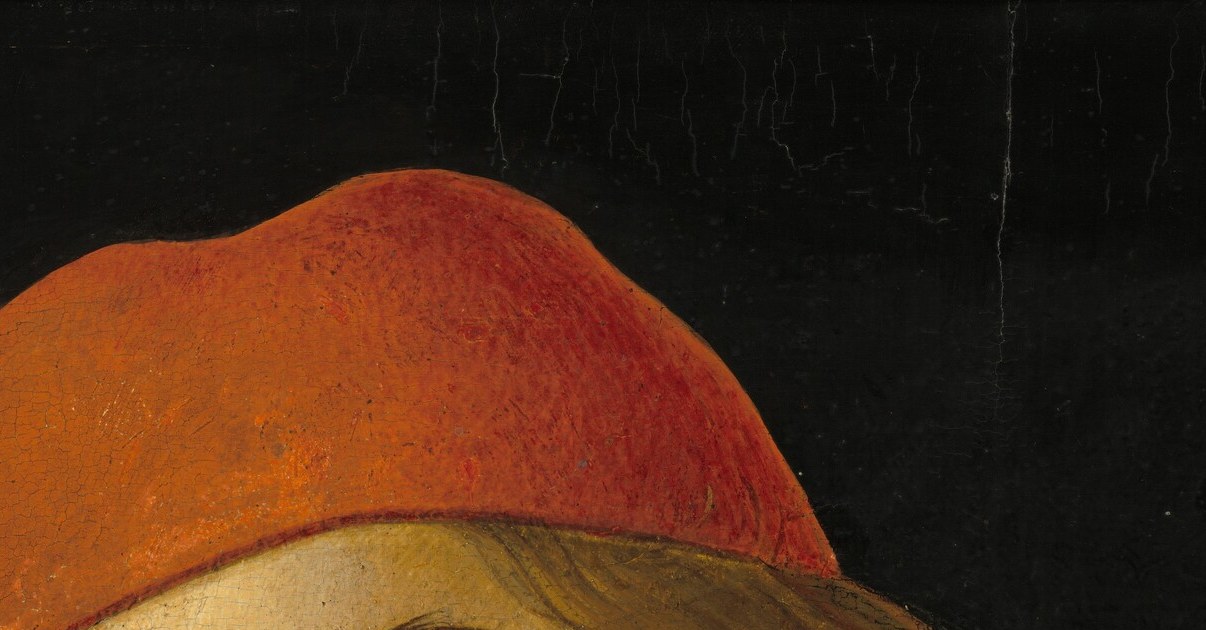
His eyes meet yours with a gentle but unreadable distance. Botticelli used egg-based tempera to build the face in soft, gradual tones; each strand of fair hair was laid down in a single deliberate stroke. The vivid red cap marks him as a Florentine of the merchant class, dressed simply but well.
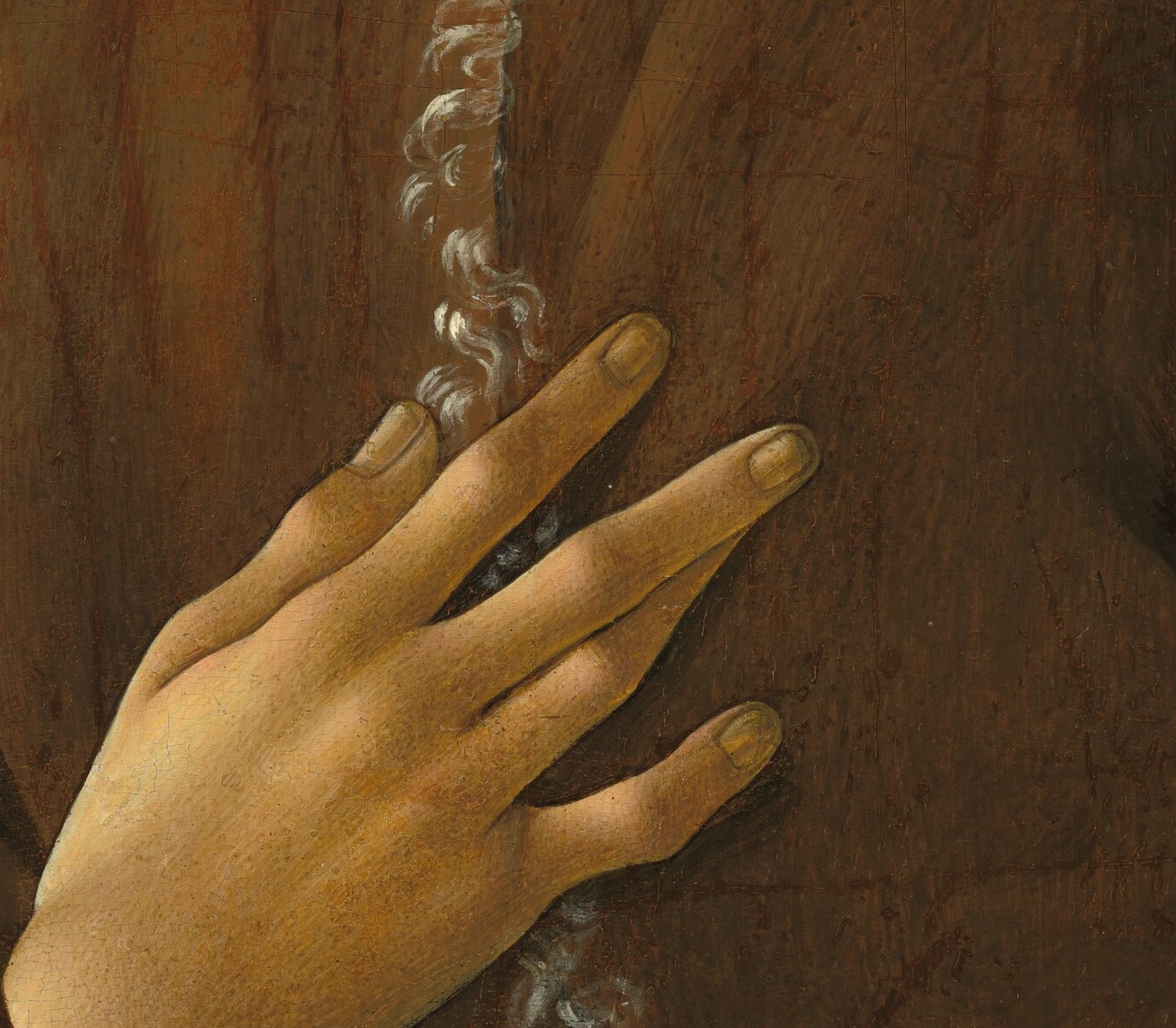
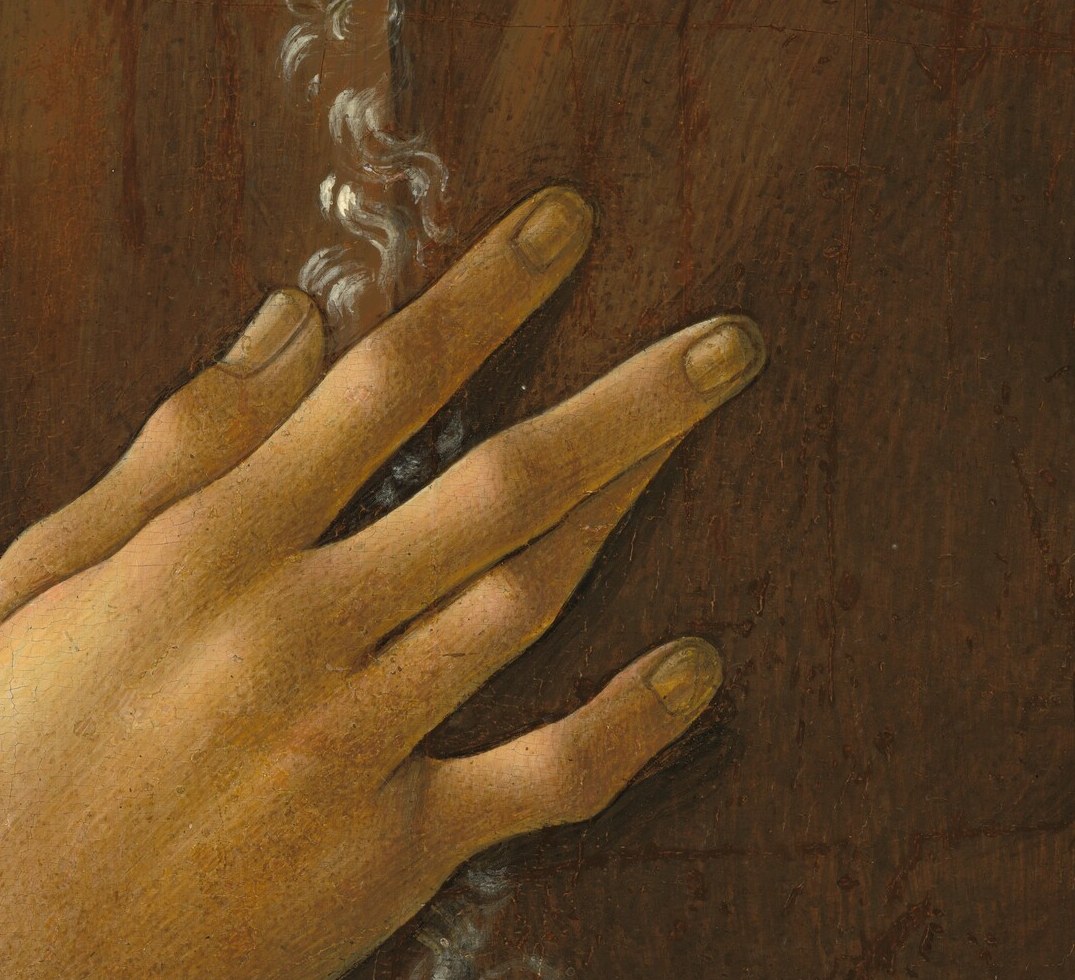
The elongated fingers of that hand remain the painting's single most discussed feature. Scholarly interpretations range from a conventional pledge of fidelity to a possible early depiction of Marfan syndrome or juvenile arthritis. We do not know whether Botticelli was recording a real physiological trait or simply an idealized aristocratic hand type. The ambiguity is the point.
What we do know is that the artist looked closely at this young man. He saw something worth keeping. Five hundred years later, so do we.
Details


Transcript
Florence, 1480s. A city of merchants and makers. This young man steps out of the dark, holding our gaze. Botticelli painted him with almond-shaped eyes that look back at you. This hand, pressed to his chest, has sparked a century of debate. Look at the fingers. Unusually long, unusually slender. Some see a gesture of loyalty. Others see a sign of Marfan syndrome. Botticelli may have painted a real man, a real body, exactly as he was.