The swine butcher by Jan Victors
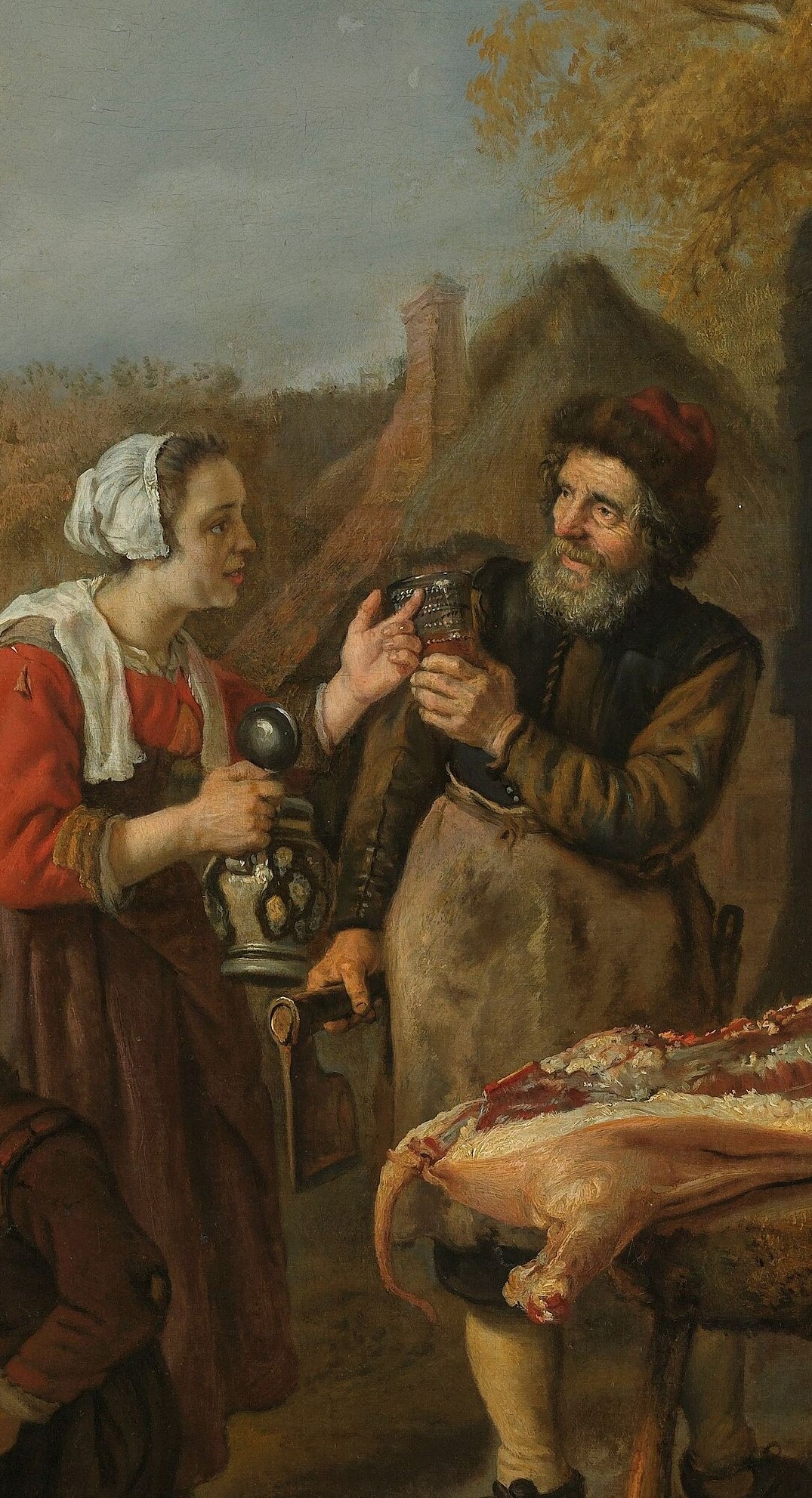
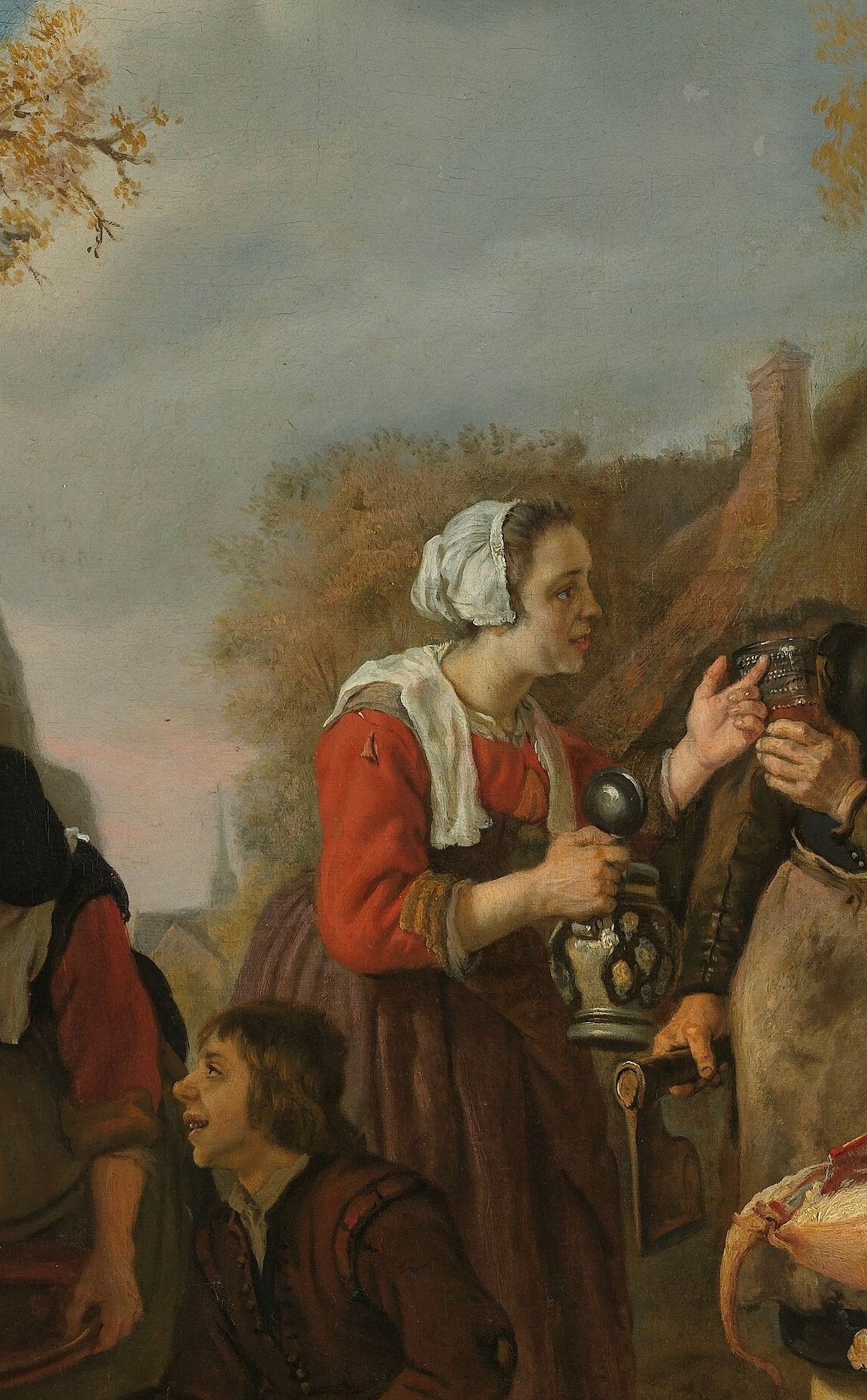
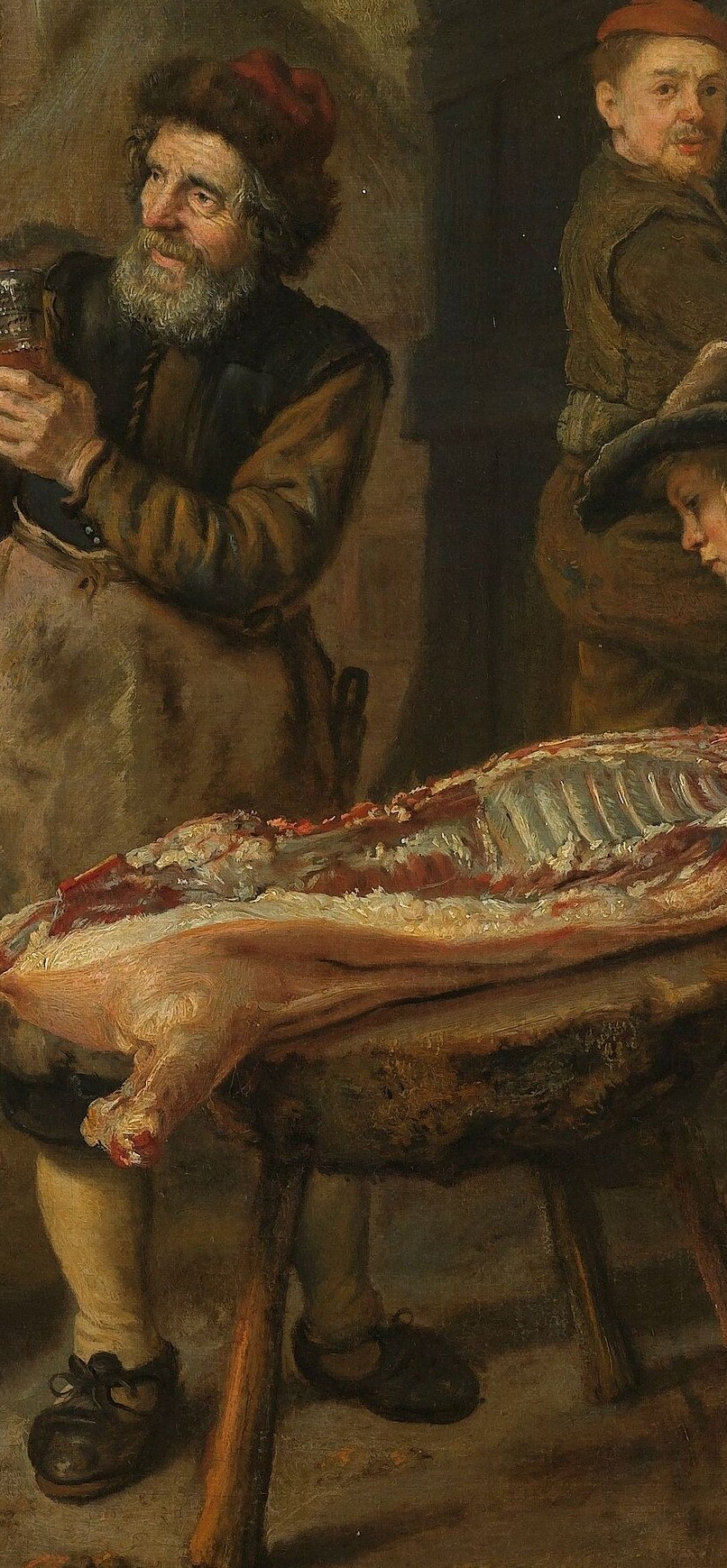
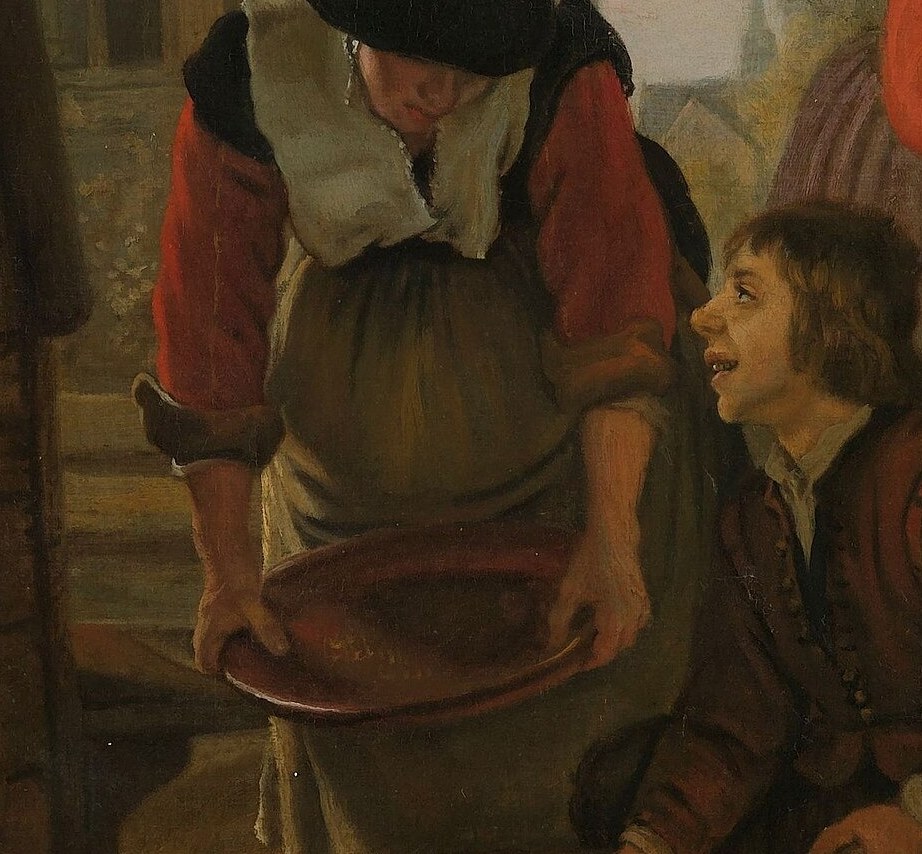
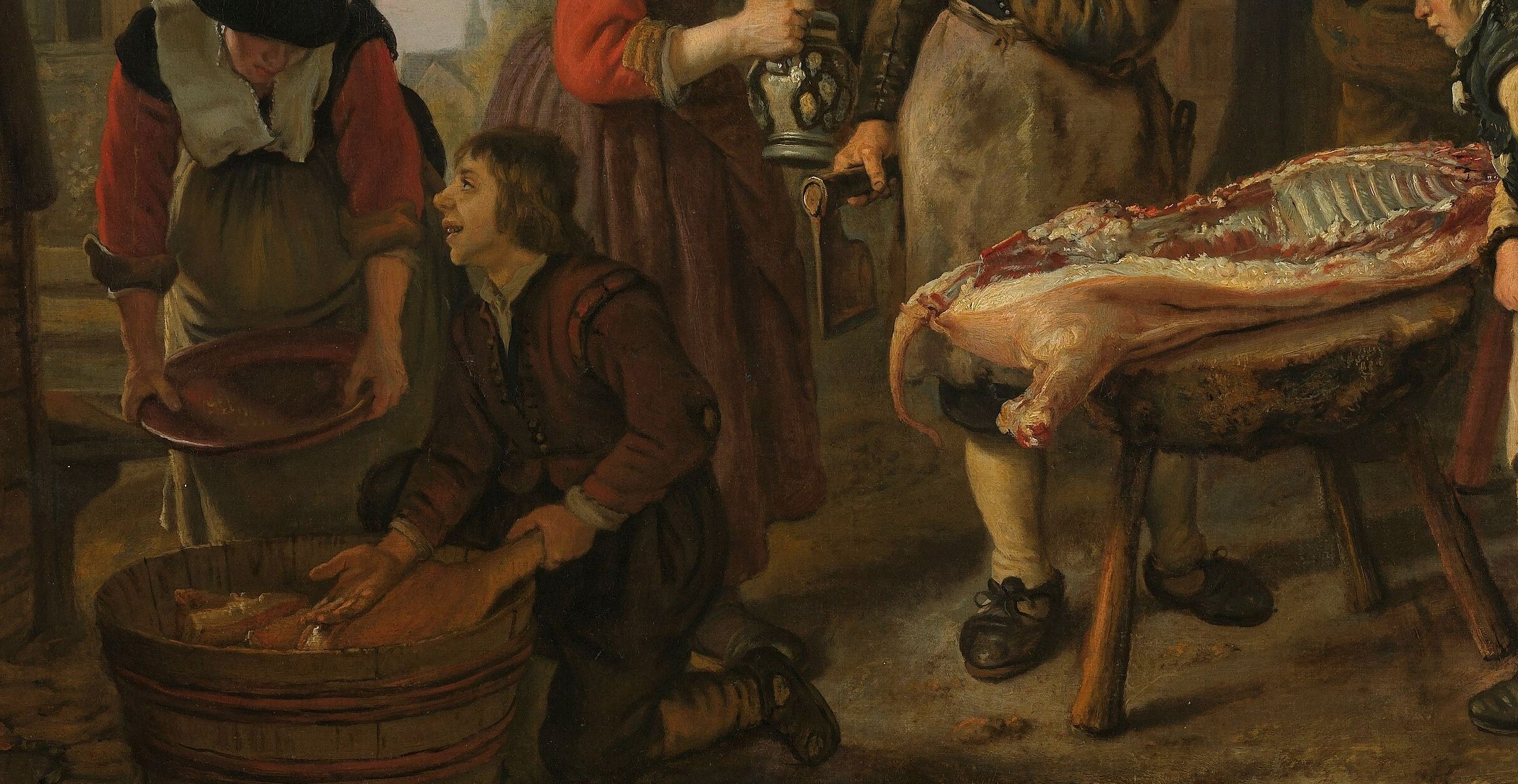
Jan Victors painted "The Swine Butcher" in 1648, and the most interesting thing about it is what it refuses to hide. Victors was a Calvinist who would not paint angels or nudes, so he trained his eye on the unvarnished mechanics of daily life. The result is a rare visual record of the actual guild craft of slaughter, now held in a private collection away from the usual museum circuit.
Let your eye settle on the pig's head at the left end of the trestle. Amid all the workmanlike activity, that face still reads as particular. Victors gave the animal a quiet individuality that a modern viewer is not conditioned to expect. Directly across from it, the small child in the wide-brimmed hat anchors the same curiosity. The boy's steady, unblinking gaze is the painting's emotional center.
The bare trees in the upper background confirm the season: late autumn, the traditional time for the November pig kill, called Sint-Maarten. The woman in the white bonnet directing the butcher with an open hand suggests a housewife or market customer with real authority over the transaction. The ladder against the wall, mentioned in early descriptions of the work, doubled as a drying rack.
This was ordinary life in the 17th-century Netherlands. Children grew up knowing exactly where their food came from, and a painter trained under Rembrandt's influence could find a kind of dignity in a scraped carcass and a blood barrel. What do you make of the child's expression?
Details
Transcript
It looks like a busy butcher's yard. The painter, Jan Victors, avoided angels and nudes. He gave his full attention to the everyday. The woman in white directs the labor. The child in the hat cannot look away. Now look at the pig. Its face still carries individuality amid the trade. This was ordinary. Children saw animals die.