José Costa y Bonells, Called Pepito by Francisco Goya
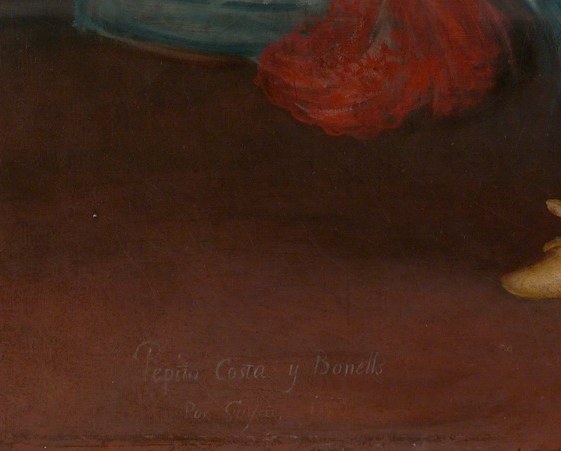
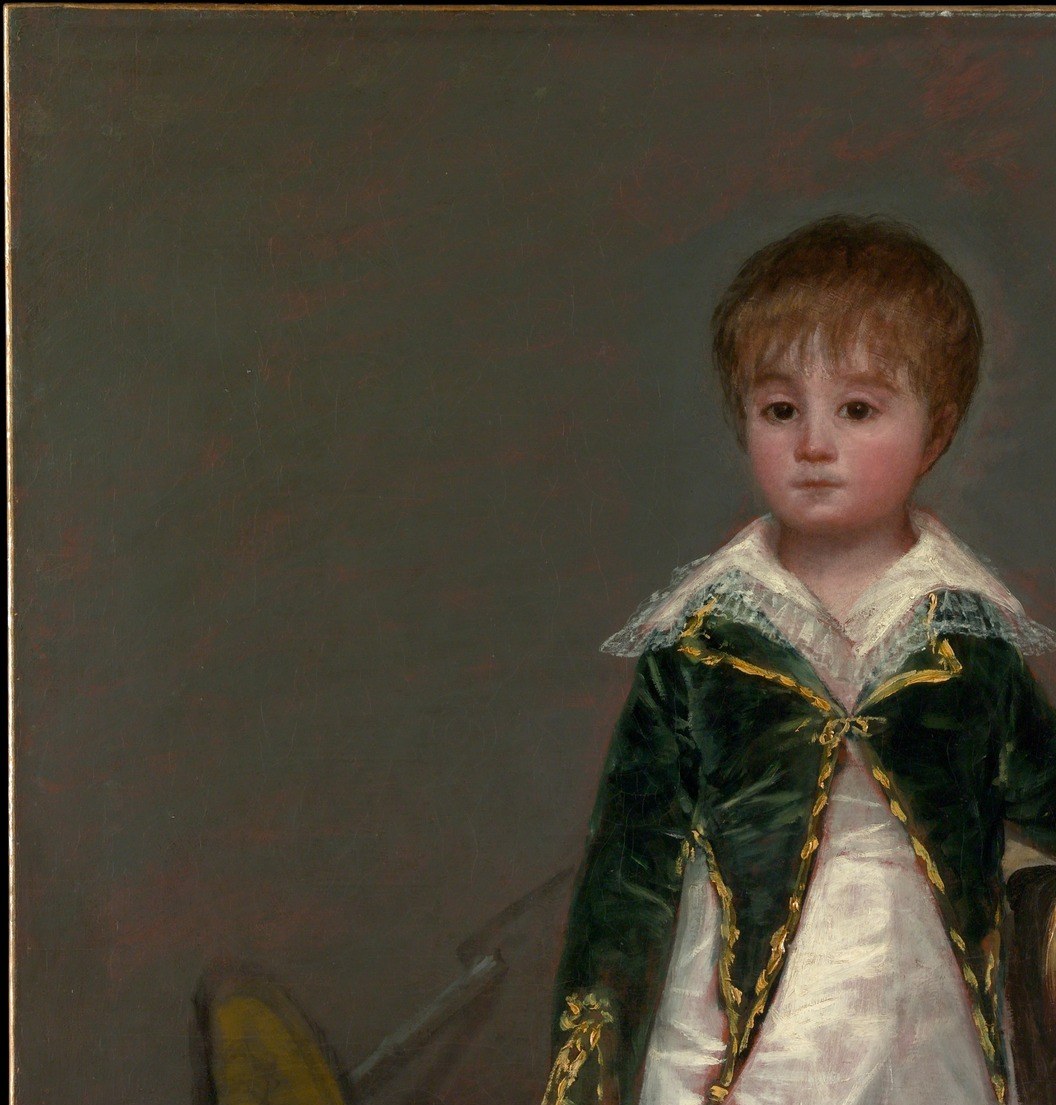
This is José Costa y Bonells, known as Pepito, painted by Francisco Goya in 1800. The portrait hangs in the Metropolitan Museum of Art. On its surface, it documents a single aristocratic childhood. Read against the date, it becomes a portrait of a world about to end.
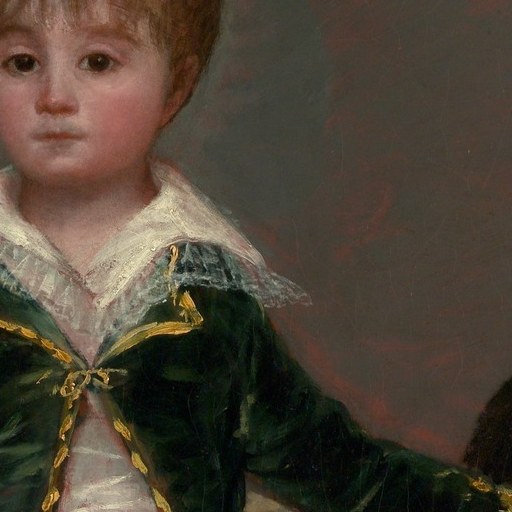
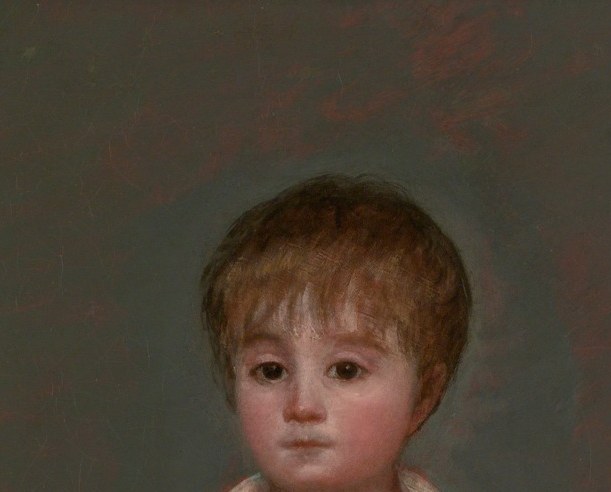
Look at the tension between the boy's face and his costume. The dark green velvet jacket, the gold epaulette, the white silk breeches are all rendered with the swaggering confidence Goya brought to his royal portraits. But the child's solemn expression cannot quite carry the adult dignity the uniform demands. The bicorne hat lies on the floor, far too large. The military drum is set aside. Everything is borrowed, and none of it quite fits.
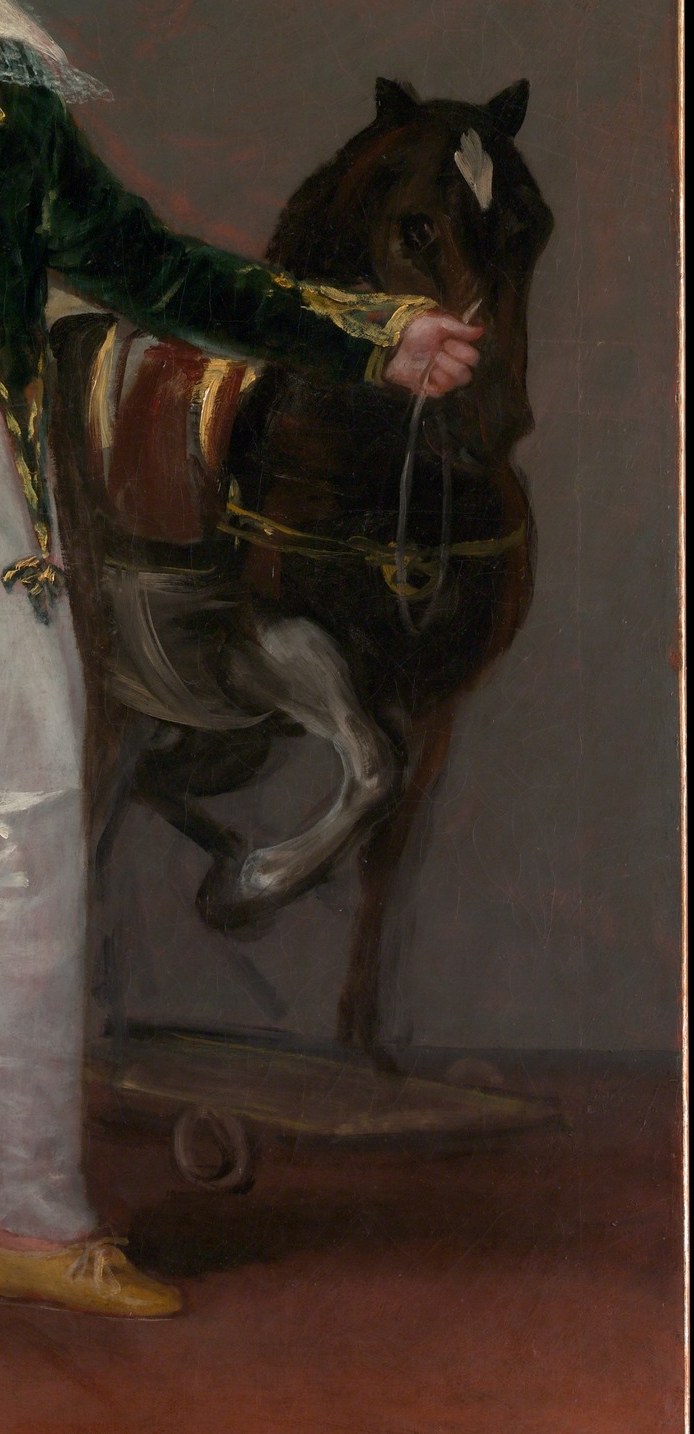
Goya painted this in the same year he completed the famous portrait of the royal family of Charles IV. He was at the height of his court career, Spain's most celebrated painter. Pepito was the son of a prominent Spanish physician serving the royal household. The commission was a statement of the family's standing. Within eight years, Napoleon Bonaparte would invade Spain, triggering the catastrophic Peninsular War. The aristocratic confidence this portrait performs, the military braid, the warhorse in miniature, would face a brutal real-world test.
The darkness gathering behind Pepito is not incidental. Goya's late work would plunge fully into it, through the disasters of war and into the Black Paintings. Here, in 1800, the shadow is still at the edges, pooled around a child who cannot see what is coming.
Details
Transcript
Madrid, 1800. Spain's old order is about to shatter. This boy wears a general's gold braid on his shoulder. It belongs to his father. The costume is not a costume yet. His face can't hold the gravity the uniform demands. The hat of an officer. Too large. Cast on the floor. A few years later, Napoleon's troops will enter this city. Goya painted the darkness already gathering behind him.