Muilezeldrijvers bij een herberg by Karel du Jardin
Karel du Jardin's 'Muleteers at an Inn' (c. 1658-1660) at the Rijksmuseum is a fascinating example of a Dutch Golden Age artist creating a convincing depiction of a foreign land without ever having been there.
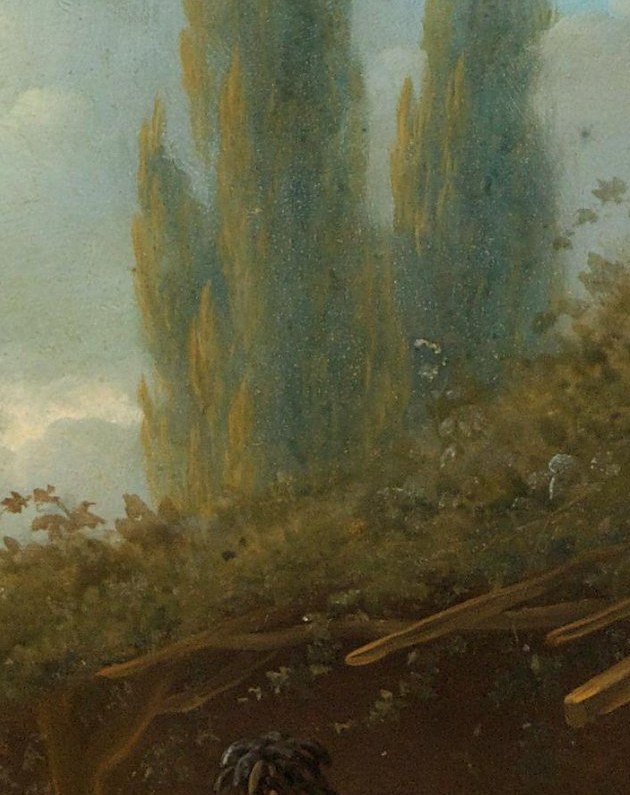
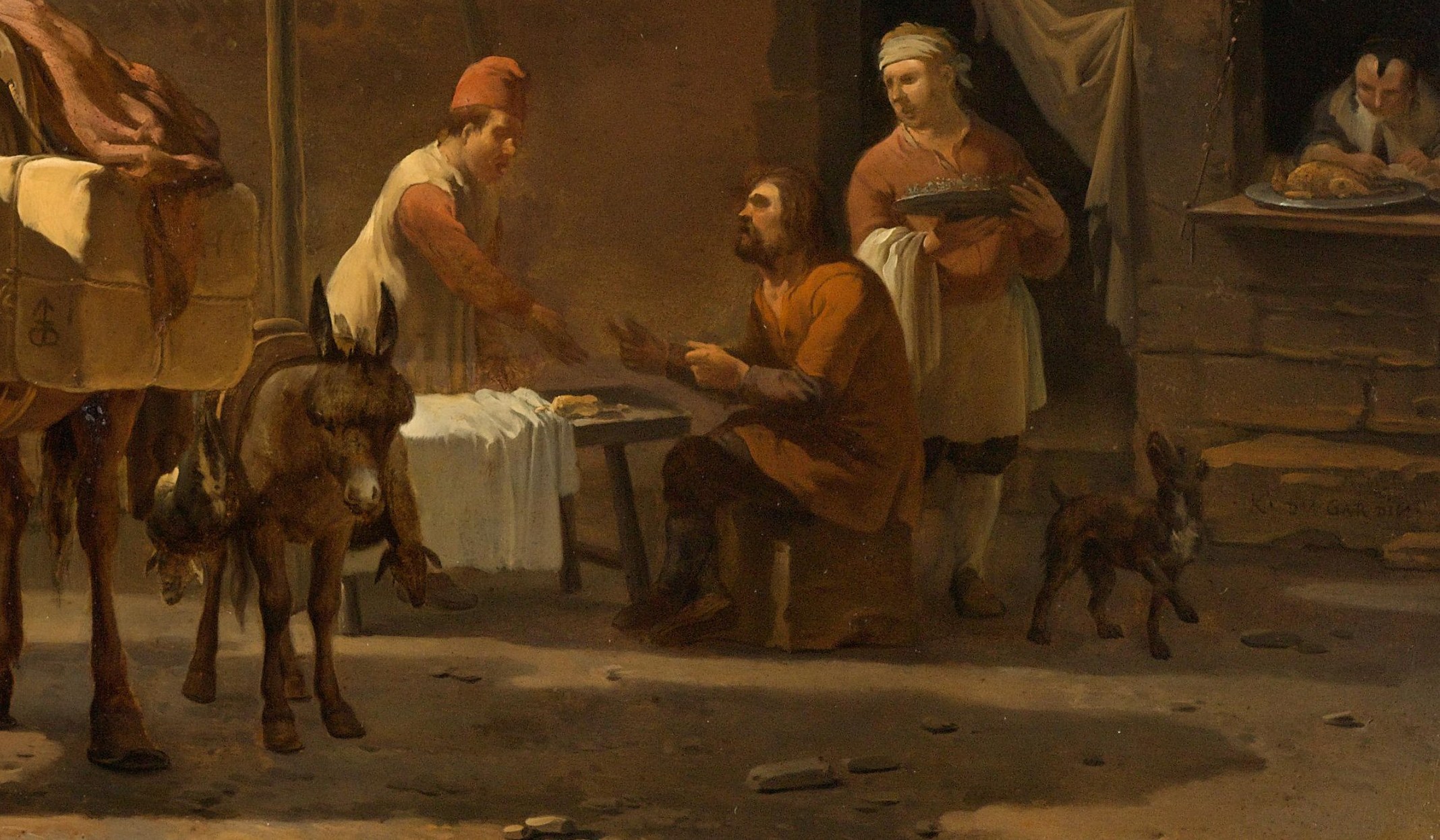
The painting transports the viewer to a sun-drenched Italian courtyard, where muleteers and their animals rest. Notice the empty fiaschi bottles hanging above the door, a strong visual cue for an Italian inn, and the tall, cypress-like trees in the distance, which evoke the classic Tuscan landscape.
Dujardin, though a Dutch painter, never actually traveled to Italy during the period this work was created. He masterfully used these specific visual elements to craft an imagined scene, demonstrating a remarkable ability to evoke distant locales through observation and artistic skill. His 'Italianate' landscapes were popular, allowing viewers to travel in their minds.
It's a testament to the power of imagination and the skill of an artist to create a vivid world from afar. What details make this scene feel so real to you?
Details
Transcript
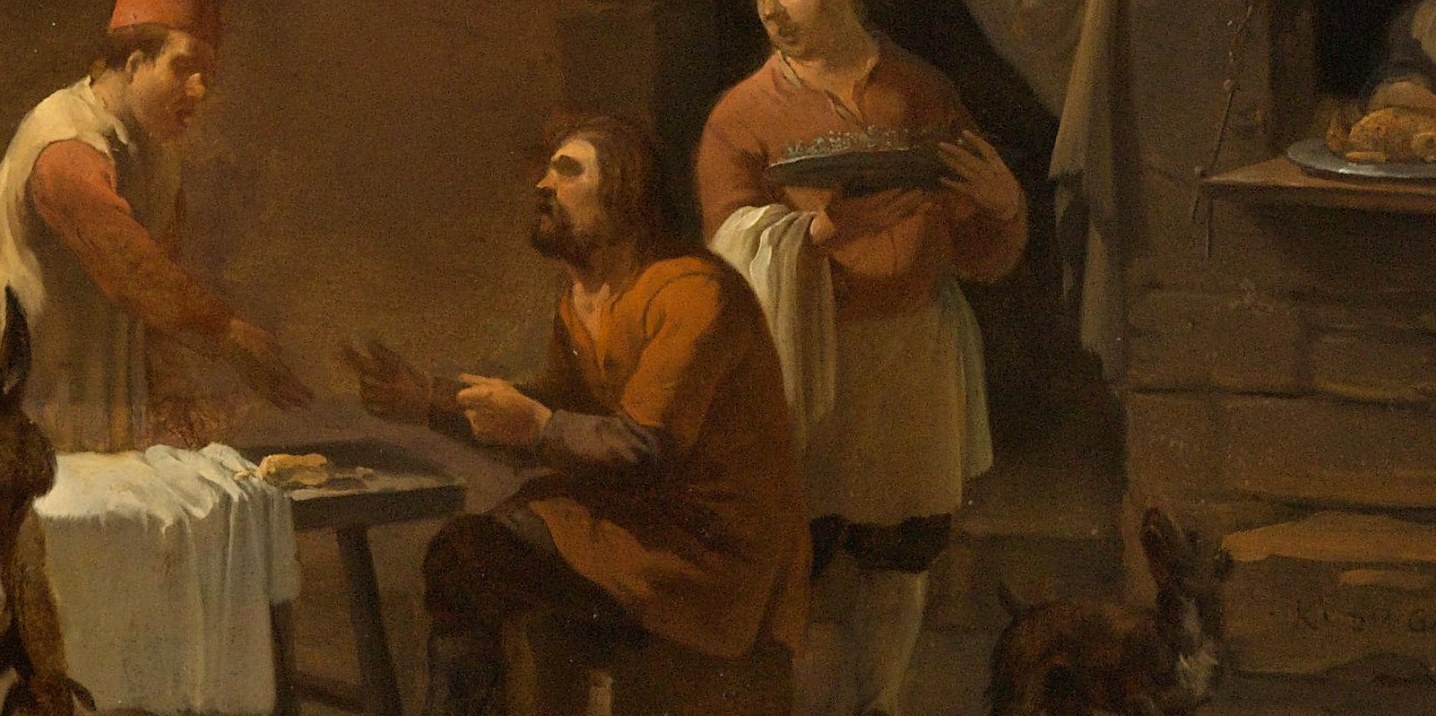
This looks like a sun-drenched Italian inn. But the painter, Karel du Jardin, never traveled to Italy. He created the illusion using familiar visual cues. These hanging bottles, called fiaschi, are quintessentially Italian. And these tall, dark trees evoke the Tuscan landscape. Every detail transports you to a place the artist only imagined.