A Classical Landscape by Sébastien Bourdon
This is Sébastien Bourdon's 'A Classical Landscape' (1664), held at The Metropolitan Museum of Art. For decades, it hid behind a different name.
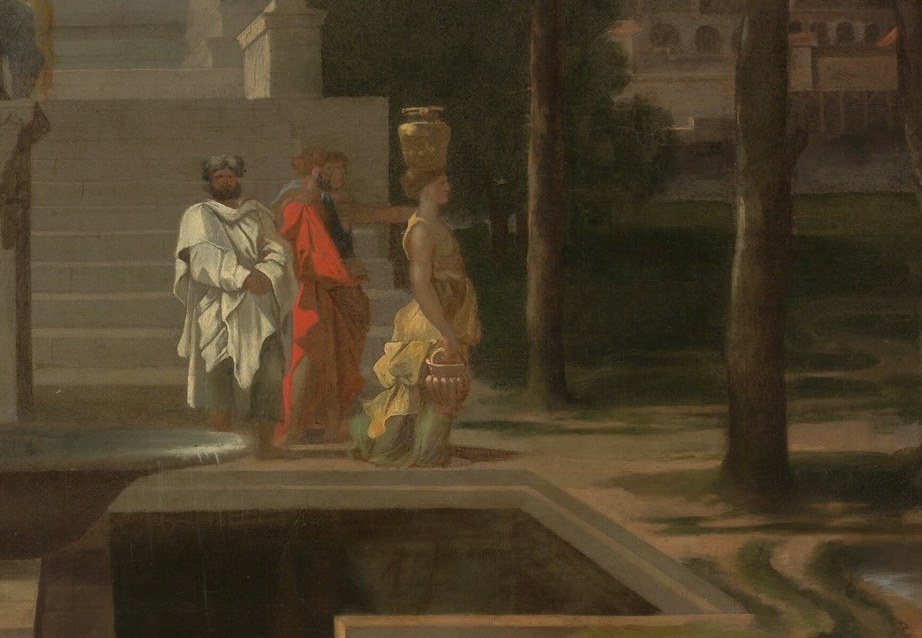
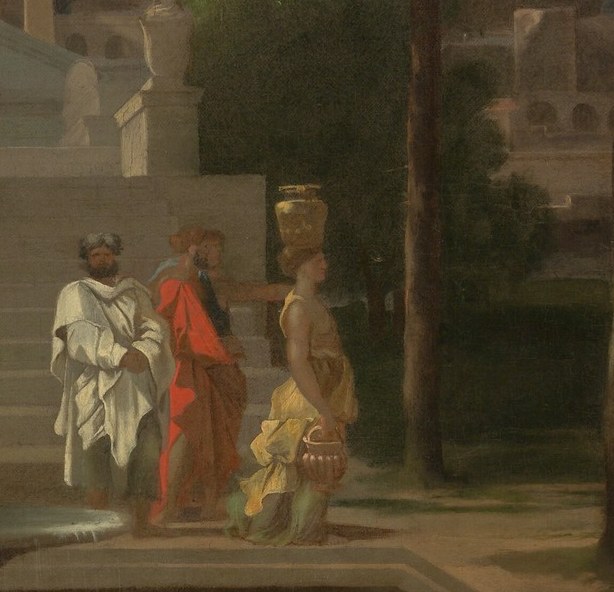
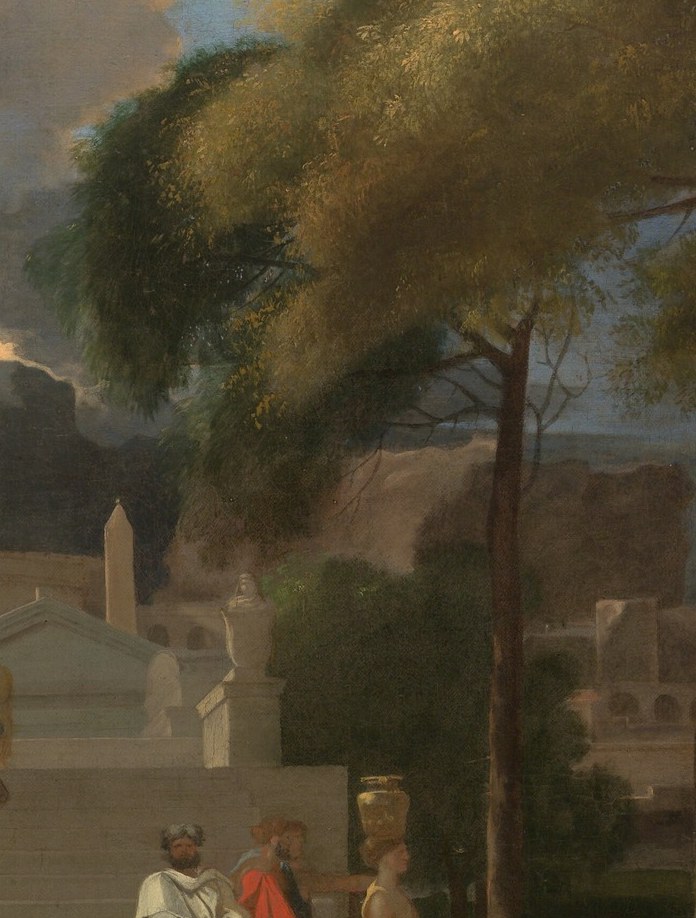
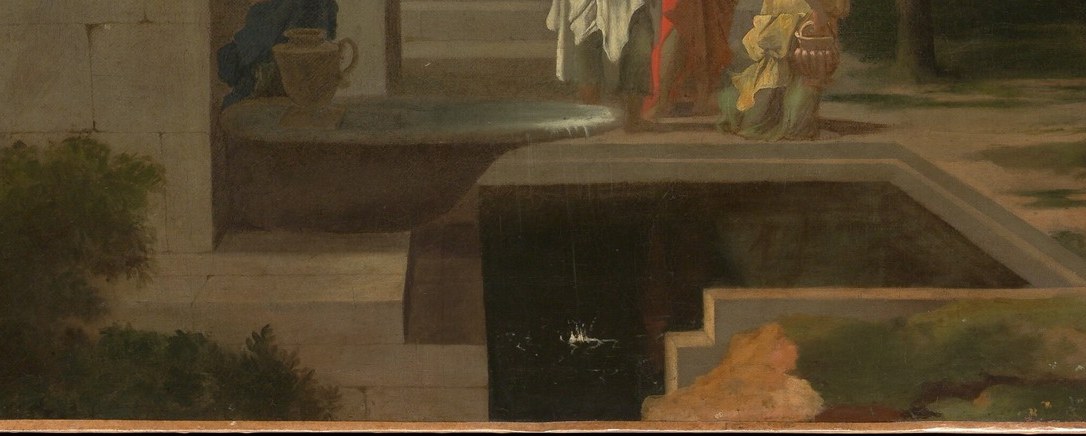
Look closely at the two-part sky. Bourdon splits the scene between a stormy shaft of light on the left and a warm amber canopy on the right. The crumbling classical ruins in the middle ground are a standard formula for the French Baroque paysage historique, but Bourdon painted them under unusual pressure. As a young French Protestant living in Catholic Rome, he was accused of heresy by a peer and had to flee the city, taking his training in the styles of Claude Lorrain and Nicolas Poussin with him.
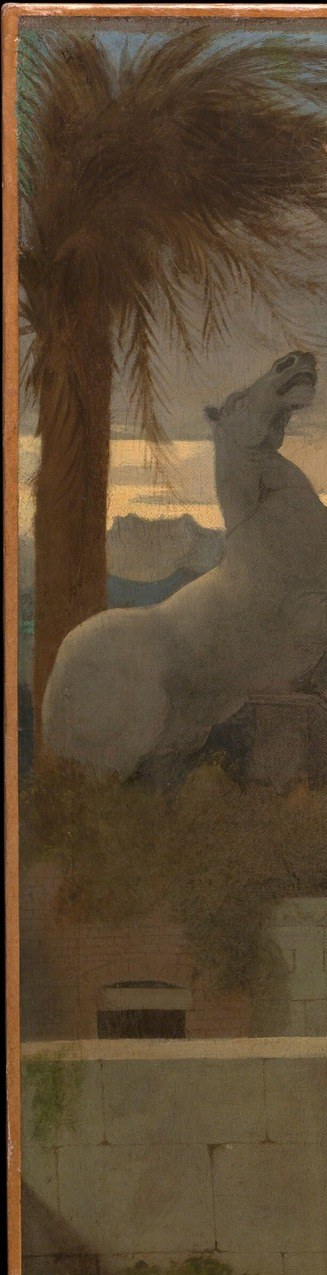
That training was so precise that later forgers scraped away Bourdon's signature and sold this painting as a work by the more famous Poussin. The Met discovered the truth only after cleaning the canvas and finding Bourdon's name still ghosted in the paint underneath. The horse you see here, the dominant dark form in the picture, is a direct compositional lift from Poussin's heroic landscapes.
Bourdon spent his life adapting to survive: switching styles, changing cities, even converting officially to Catholicism to secure his place at the French court. His greatest work, 'The Crucifixion of St. Peter,' hangs in Notre Dame. Have you ever seen a painting that spent more time as a fake than as the original?
Details
Transcript
This painter had a hard-won career in Rome. As a young Protestant in the Vatican, he lived in constant danger. He was forced to flee Rome after a fellow painter accused him as a heretic. To survive, he learned to imitate Claude Lorrain and Poussin perfectly. Forgers later scraped his signature off and sold this as a Poussin. The museum had to clean the canvas to find his name underneath. A quiet master who hid in plain sight.