Illustrated Legends of the Origins of the Kumano Shrines (Kumano engi emaki) by http://www.wikidata.org/.well-known/genid/e9678e7564b9683eeb677089e93dd5bb
This striking fragment, titled "Illustrated Legends of the Origins of the Kumano Shrines," is part of an emaki, a Japanese handscroll from 1591. These scrolls were created to narrate the foundational stories and myths of important religious sites.
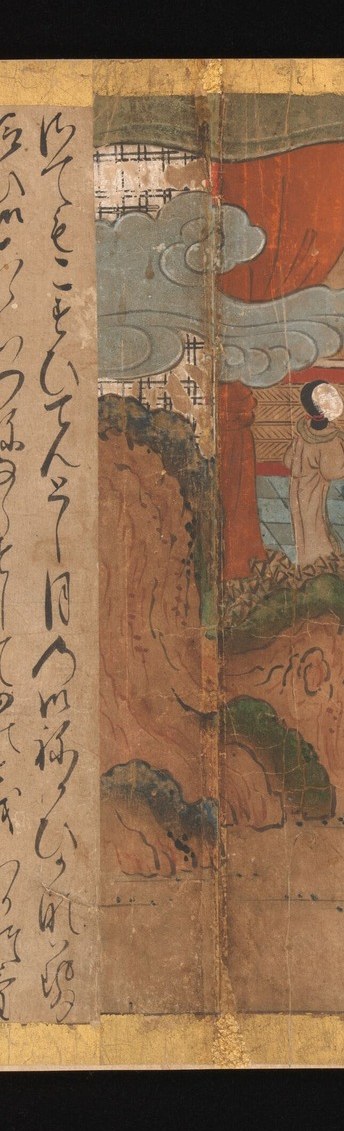
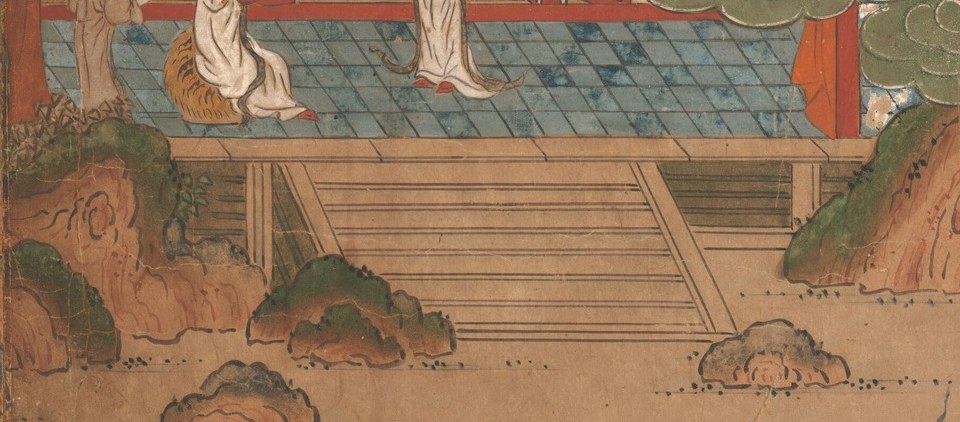
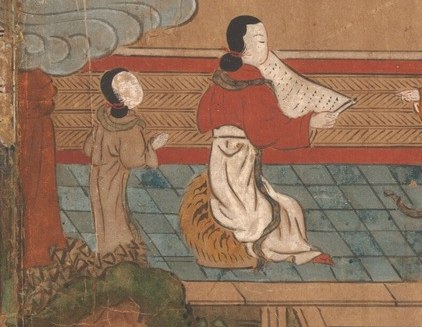
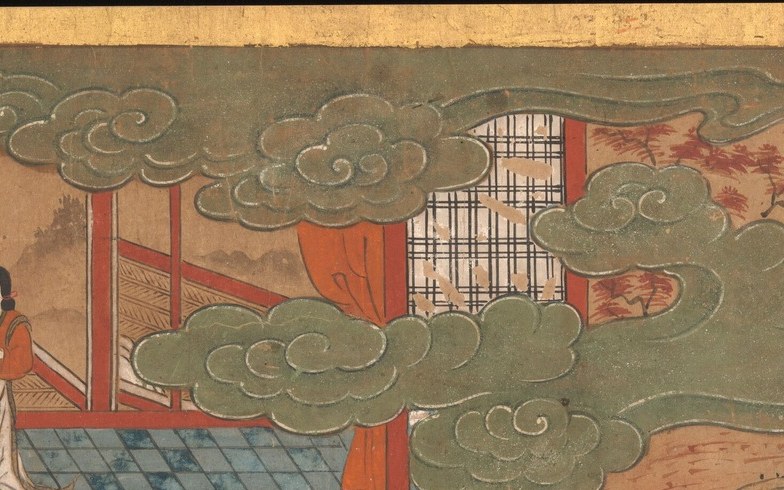
The scene depicts figures gathered on a wooden porch, overlooking a calm body of water. Notice the detailed calligraphy on both the left and right sides, which guides the viewer through the unfolding narrative. The man wrapped in a blanket is a central figure, likely an ascetic on a spiritual journey related to the Kumano shrines.
Such handscrolls combined visual art with text, serving devotional or educational purposes. They helped to preserve and disseminate the sacred lineage and significance of religious sites like the Kumano shrines, which remain important pilgrimage destinations today.
What details do you notice that hint at the story being told?
Details

Transcript
This scroll shows a legend of Japan's ancient Kumano shrines. The text on the left guides you through the unfolding story. Figures gather on a porch, overlooking a calm water surface. This man wrapped in a blanket is a key figure in the legend. He is likely an ascetic, undergoing a spiritual journey. The painting itself is part of a larger illustrated handscroll.