Lady Smith (Charlotte Delaval) and Her Children (George Henry, Louisa, and Charlotte) by Joshua Reynolds
Joshua Reynolds painted Lady Smith (Charlotte Delaval) and Her Children in 1787, and the sitter paid him 300 guineas for it, roughly £220,000 in today's money. It hangs now at the Metropolitan Museum of Art.
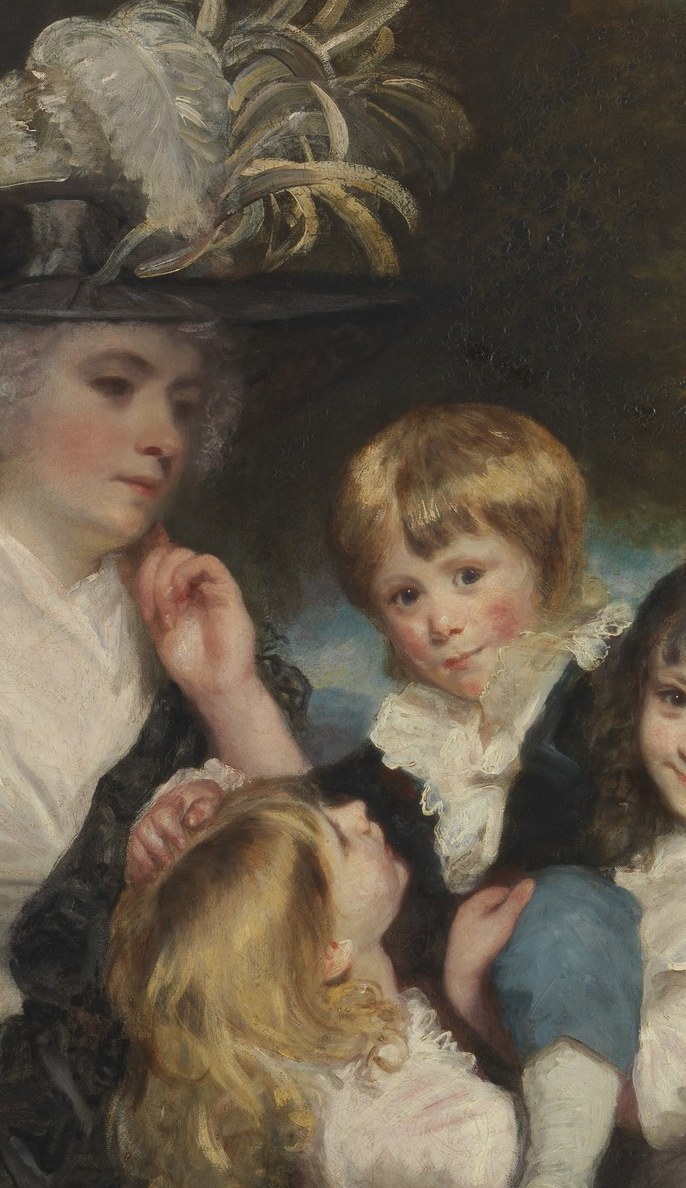
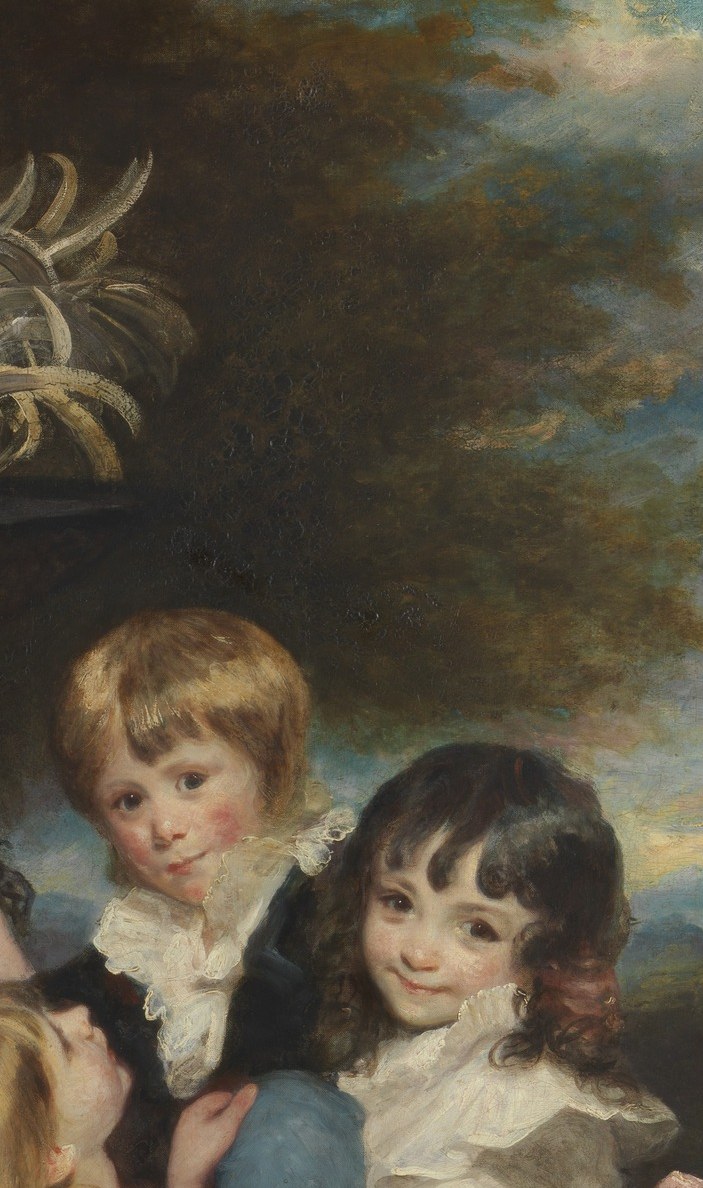
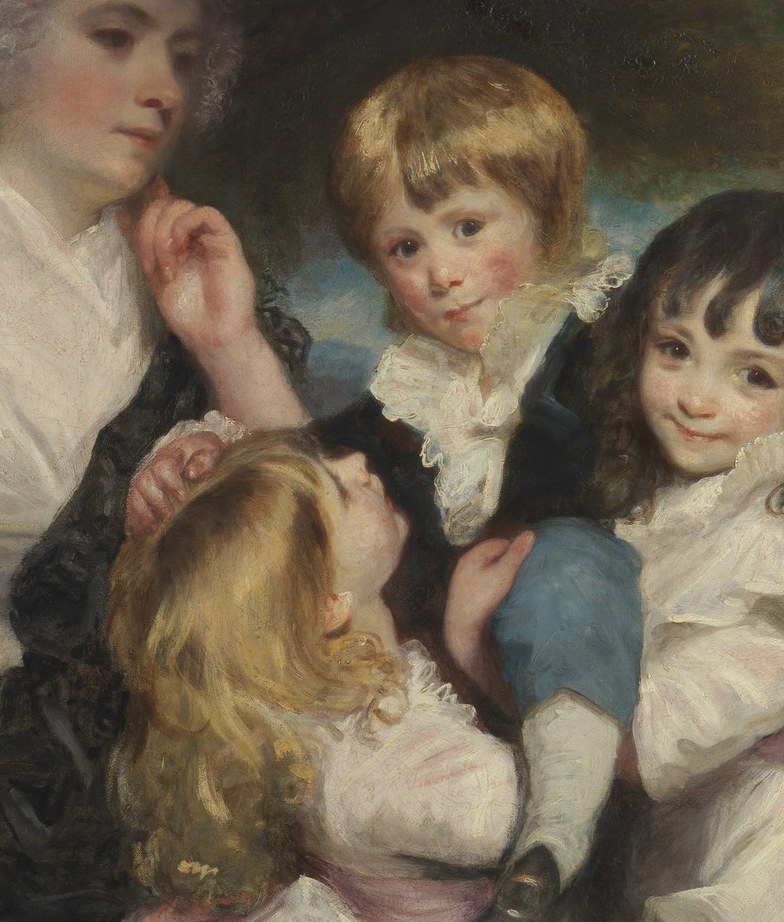
The portrait shows Lady Smith in a black feathered hat and heavy dark cloak, a fixed, sheltering presence. Her three children surround her in white dresses with pink accents. The central daughter tilts her face up toward her mother in a posture of pure adoration, while the boy, George Henry, meets the viewer's eye directly, a small but deliberate marker of future masculine agency.
Reynolds was the first president of the Royal Academy and the most sought-after portraitist in Britain. He was also a relentless technical experimenter who mixed wax, resins, and unstable pigments into his paint. The results could be luminous on day one and wrecked within a decade. His clients knew this. A pink sash in a Reynolds portrait almost always began as a strong carmine red, and the fading was so predictable that it became a quiet scandal among aristocratic patrons.
That crimson-to-pink decay is visible here. What reads as a soft, innocent pink unifying the three children was originally a bolder, more expensive statement of wealth. The painting arrived vivid and has dimmed gently over two centuries into something unexpectedly tender.
Details
Transcript
In 1787, Joshua Reynolds was Britain's most expensive portraitist. Lady Charlotte Delaval Smith paid 300 guineas for this family portrait. Close to £220,000 today. She wears the black hat and dark cloak of an 18th-century aristocrat. Her daughters are dressed in white with pink sashes, the color of childhood innocence. But Reynolds' clients feared one thing above all else. His experimental pigments were notorious for fading within years. Those pink sashes were once crimson red.