Latona and the Lycian Peasants by Jan Brueghel (Flemish, 1568–1625)
This is Jan Brueghel the Elder's "Latona and the Lycian Peasants," painted around 1605, a small, terrible masterpiece of myth turned into body horror. It shows the instant a mother's desperation becomes divine retribution, and where most artists painted the before or the after, Brueghel paints the exact middle of the metamorphosis, which is far worse.
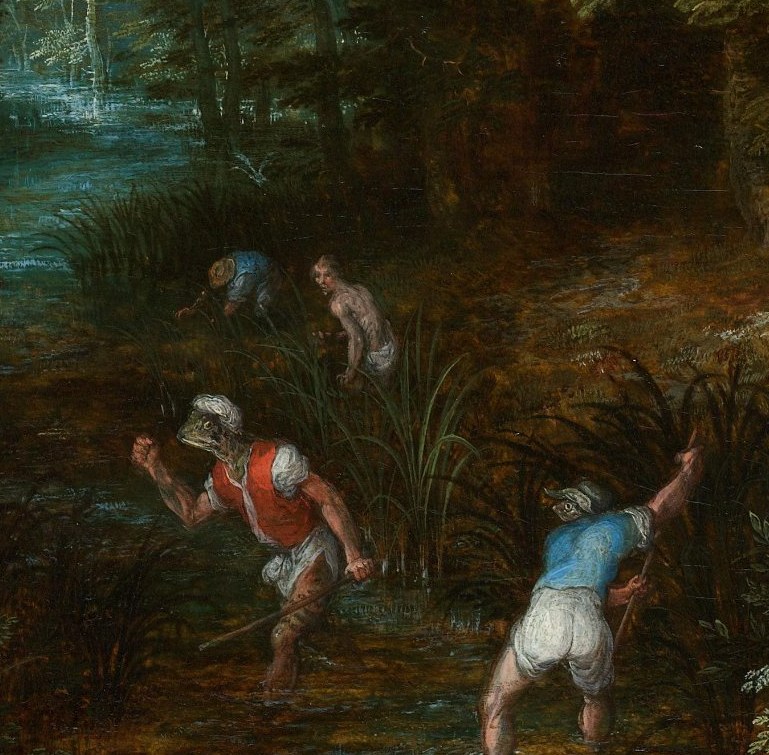
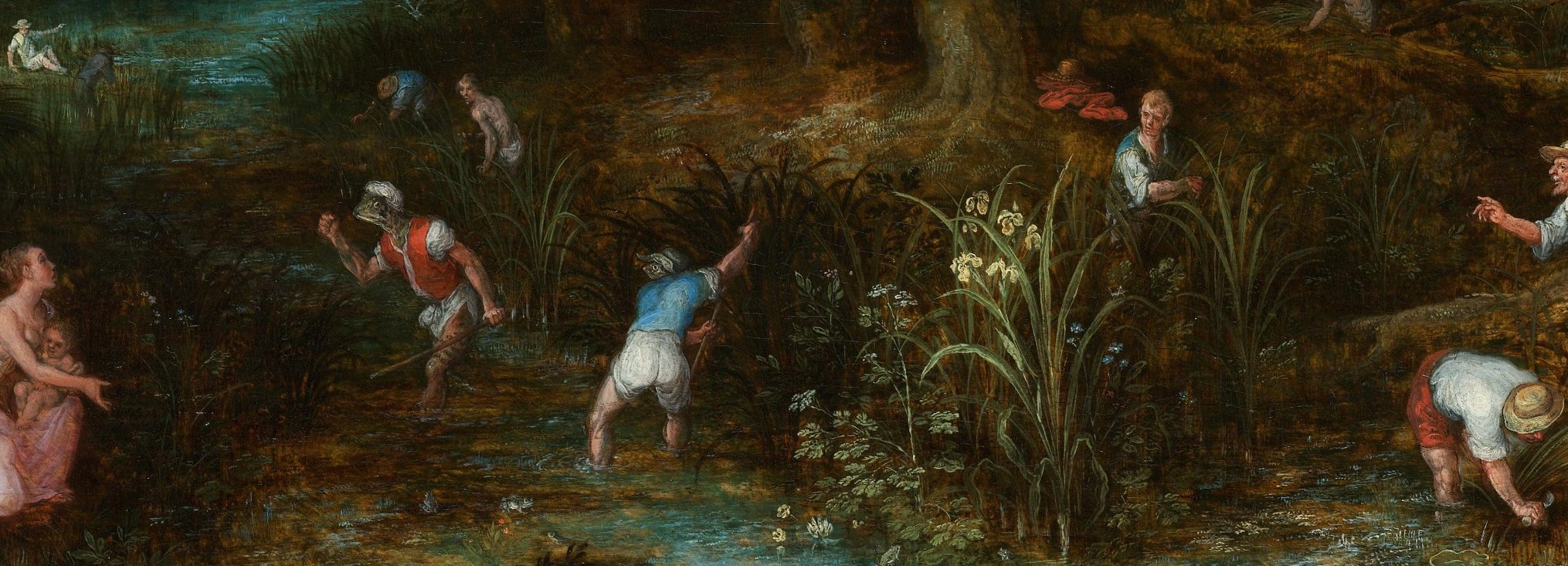
Find the two figures crouching at the waterline. Their bodies still wear a peasant's clothes and working posture, but their heads are already amphibian, round, bulging, wide-mouthed. Brueghel does not show us the curse being spoken so much as the curse arriving inside flesh. The pond that was denied to Latona now reflects faces that no longer quite exist.
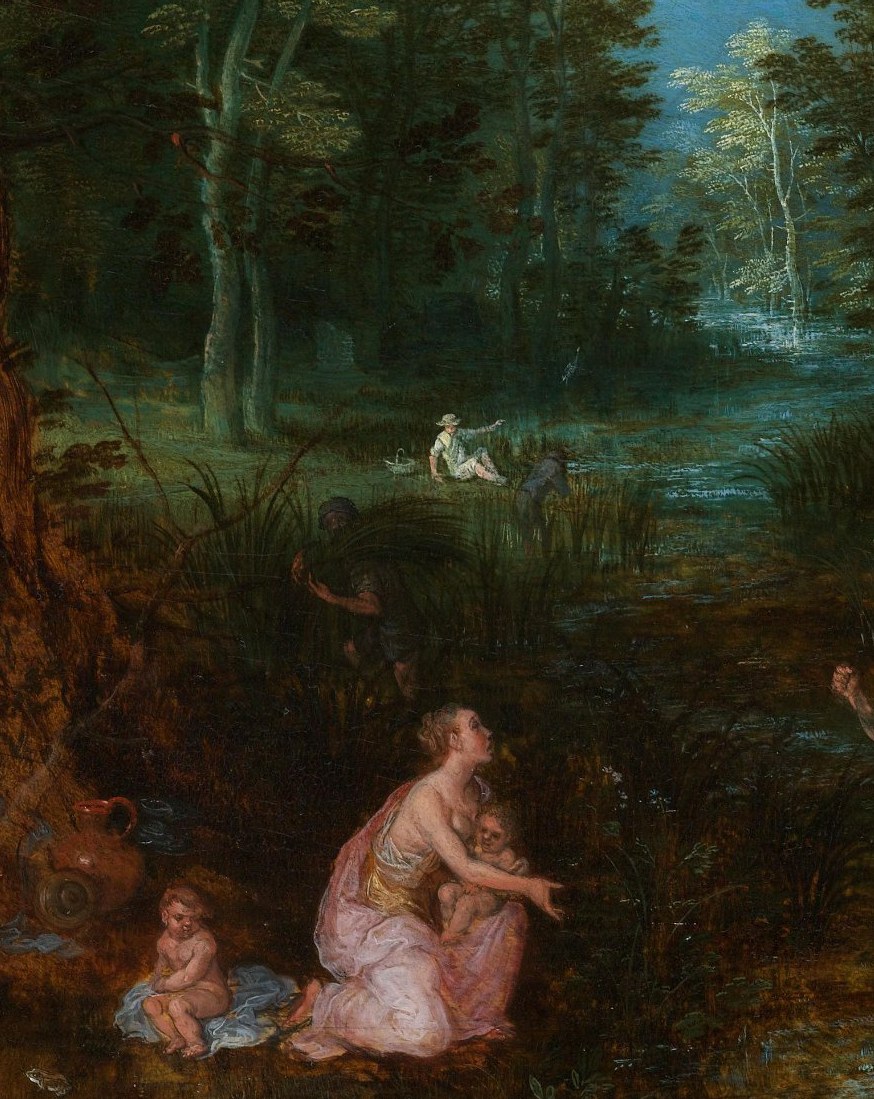
The story comes from Ovid: Latona, mother of Apollo and Diana, exhausted from wandering, stopped to drink at a Lycian pond. The local farmers deliberately stirred the mud to foul the water. Her response was not to strike them dead. She condemned them to live in the mire forever, as the creatures that belong there. Brueghel, a Flemish Catholic working in the shadow of his father Pieter, understood that divine justice could be slower and stranger than lightning.
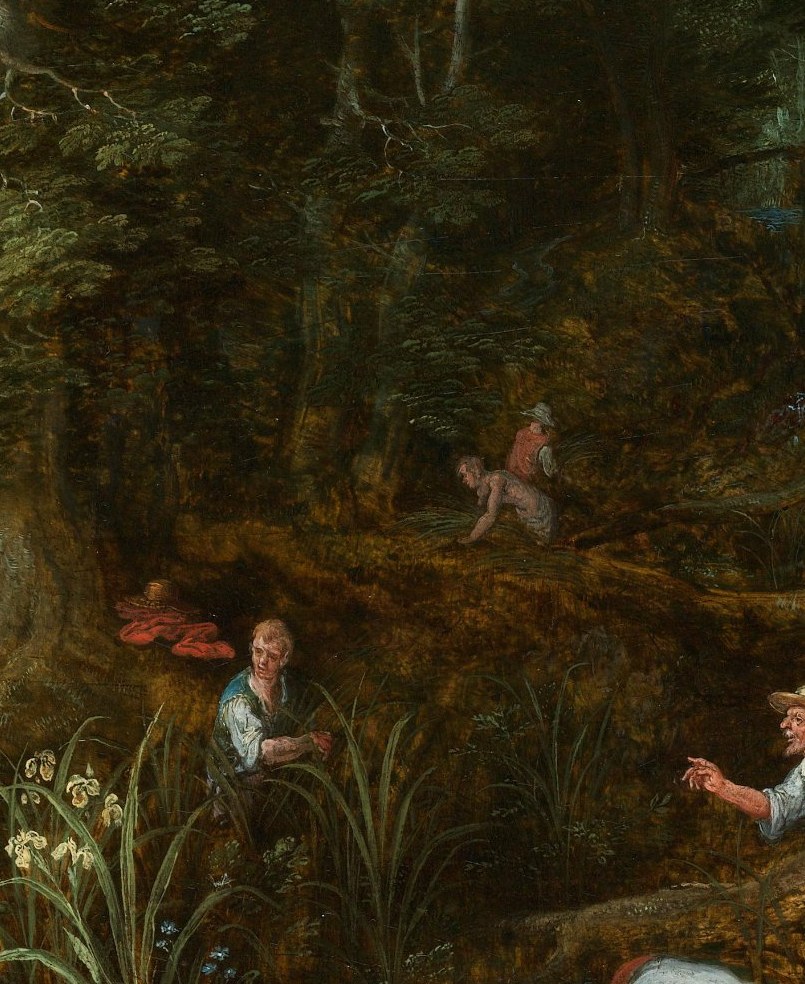
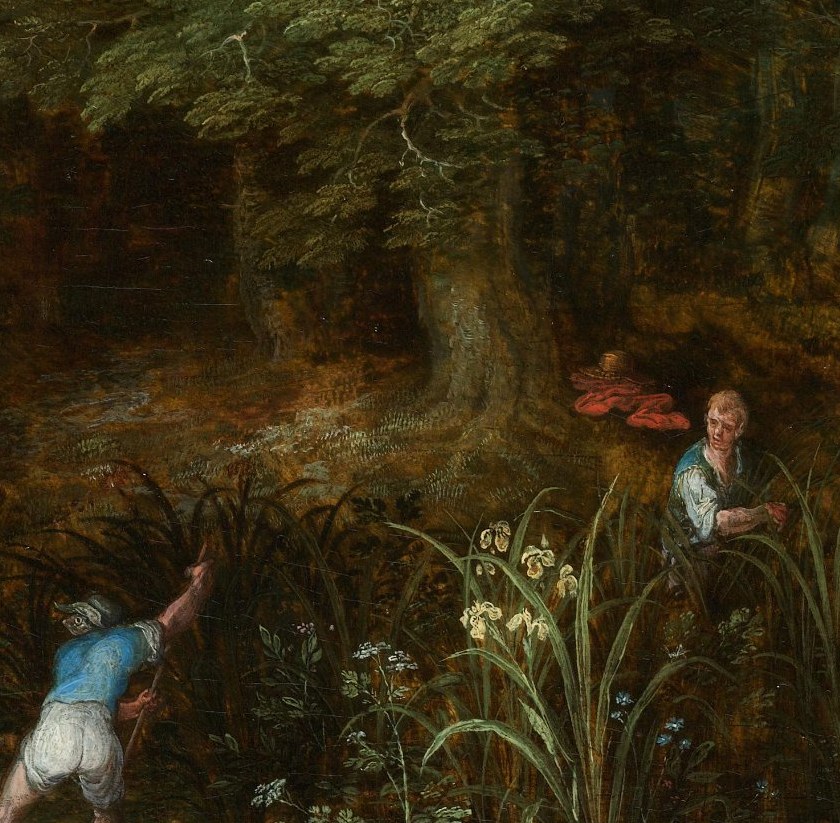
Brueghel's forest dwarfs everyone. The massive oak on the right, the layered canopy, the delicate reeds, the natural world is painted with astonishing care while the human figures are small and almost incidental. The transformation is just one event in a landscape that will outlast it. The frogs will croak for centuries. Latona will walk on.
Details
Transcript
She only wanted water for her children. The villagers blocked her way. So Latona raised her arms and spoke one sentence. Now look below her hands. A human body. A frog's head. Breathing. Her curse did not kill them. It unmade them.