Christian II i fængslet på Sønderborg Slot by Carl Bloch
Carl Bloch's 1871 oil painting, "Christian II in Prison at Sønderborg Castle," became a national sensation in Denmark, despite depicting an imagined moment from history. This dramatic work, housed at the Statens Museum for Kunst, portrays King Christian II during his long imprisonment.
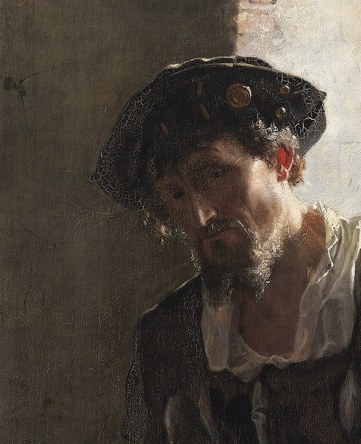
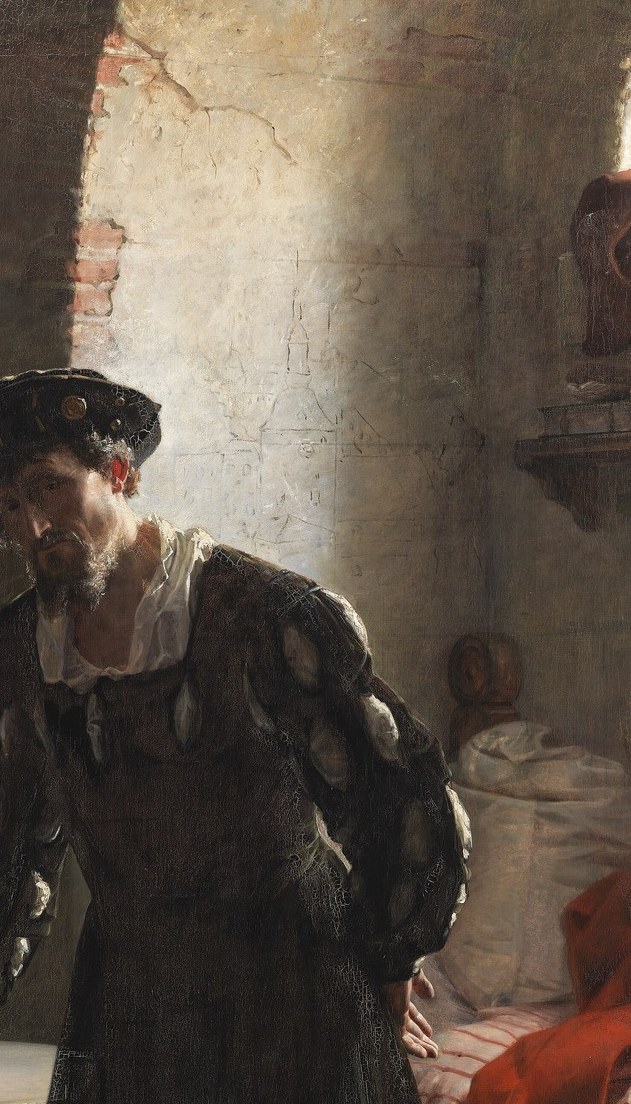
Bloch masterfully uses chiaroscuro, a dramatic contrast of light and shadow, to illuminate the king's weary face and highlight the stark conditions of his confinement. The shaft of light from the arched window emphasizes the king's solitary existence.
The painting's popularity was immediate and enduring, cementing its place in Danish artistic heritage. Bloch created this work centuries after Christian II's actual imprisonment, yet his portrayal resonated deeply with the public, becoming an iconic image.
Bloch's ability to imbue historical narrative with such emotional intensity made this piece a significant contribution to Danish art. What details in the painting help tell this dramatic story?
Details
Transcript
This painting shows a deposed Danish king, imprisoned for years. He was Christian II, locked away in Sønderborg Castle. This artist painted him in 1871, 300 years after his death. But the public loved this dramatic, imaginary moment. It became one of the most popular paintings in Danish history. His face, lit by this window, became a national symbol.