Wilgebomen by Willem Roelofs
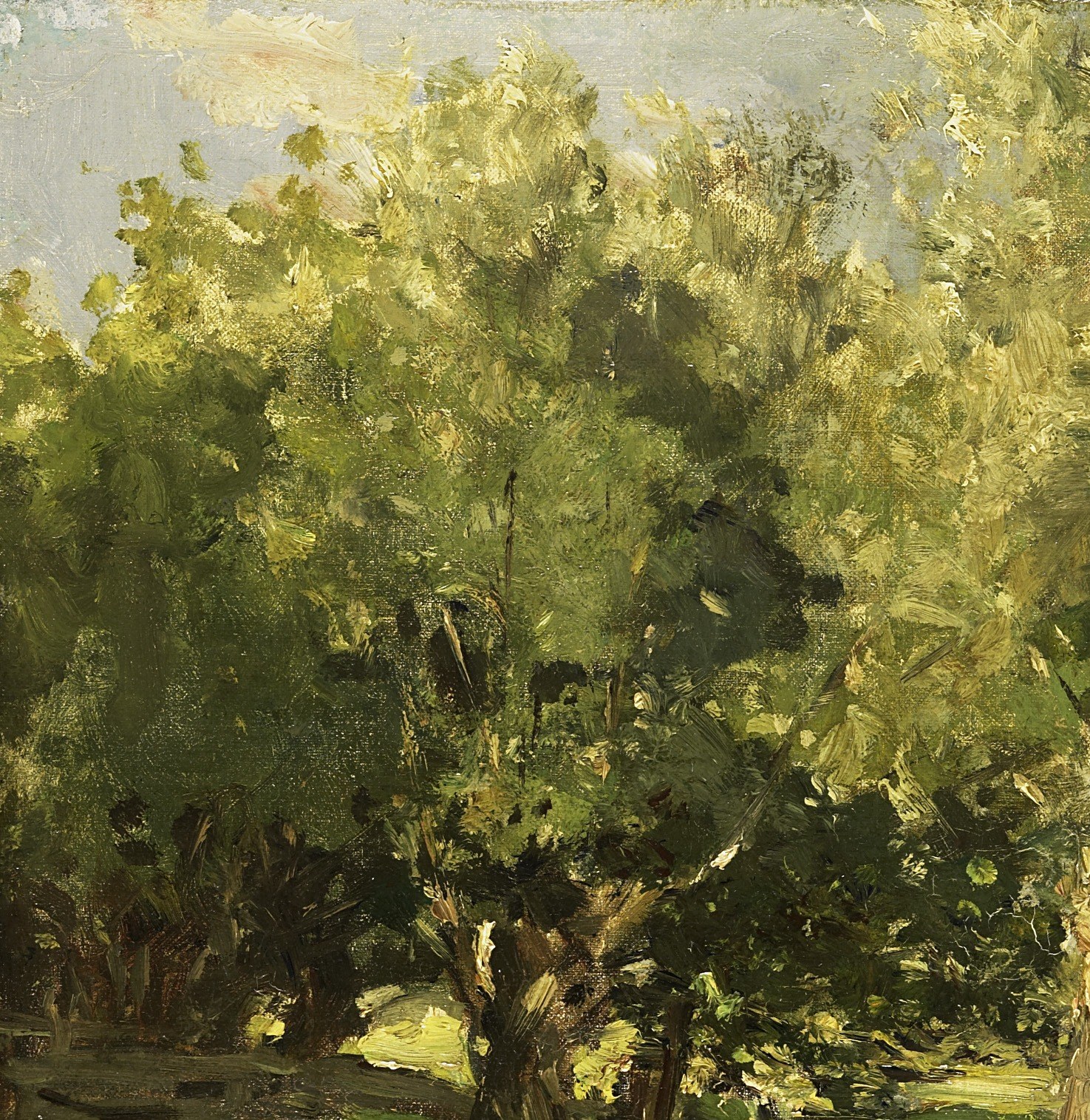
Willem Roelofs painted "Wilgebomen" in 1875, and it hangs today in the Rijksmuseum. The painting is almost stubbornly simple: a willow tree, a sunlit pasture, a few white birds, a dirt path. No figures, no dramatic weather, no narrative. In the 1870s, this was a radical choice. Roelofs was one of the first Dutch painters to insist that the unadorned polder landscape, observed directly outdoors, was sufficient subject matter for serious art.
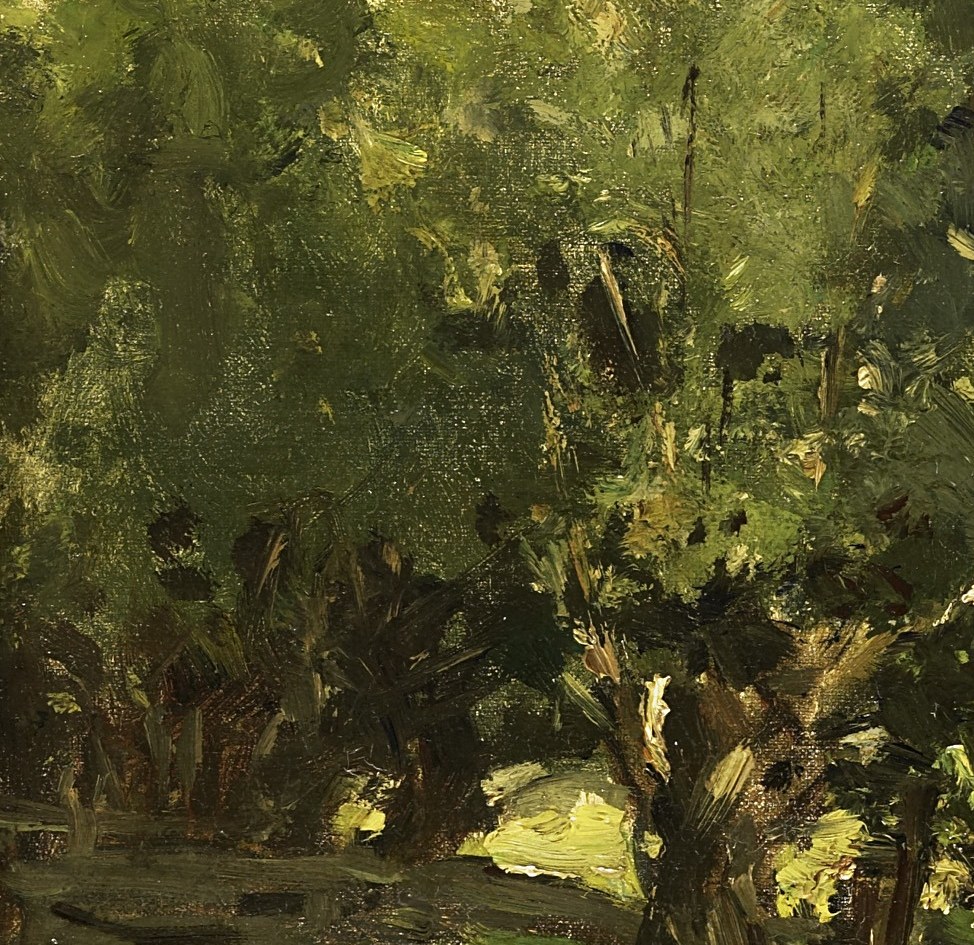
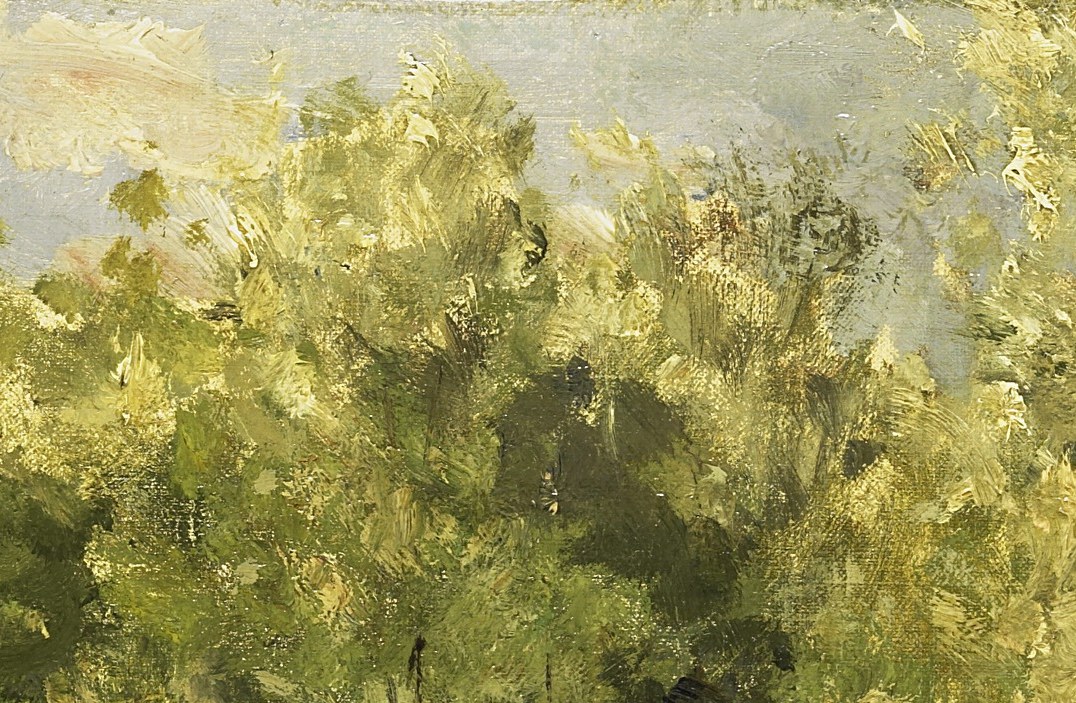
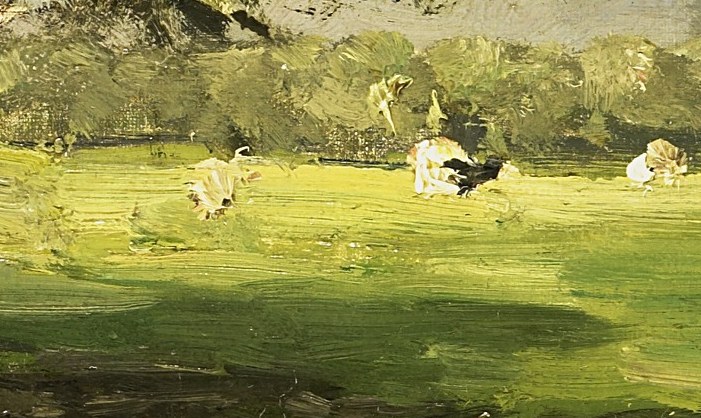
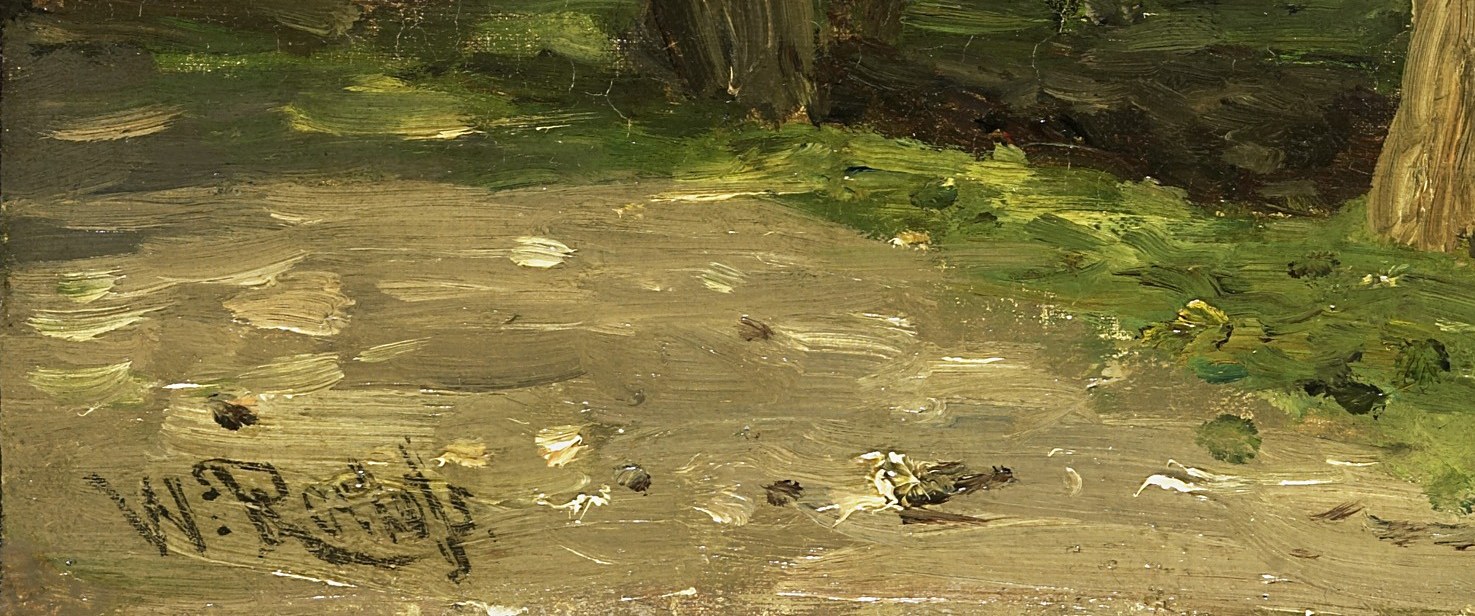
Look at the thick, quick dabs of yellow-green on the willow's crown. That is impasto, wet paint laid on heavily with a loaded brush, and it captures the exact shimmer of backlit leaves. Then look into the deep shadow beneath the canopy. That darkness is not empty; it controls the whole painting. By holding the foreground in shadow, Roelofs forces the meadow behind it to feel brilliantly sunlit. The tiny white waterfowl in the grass are barely legible, just pale specks in the glare. They are easy to miss on a phone screen, but they prove this was painted from life: a painter inventing a scene in a studio would have made them larger and clearer.
Roelofs was a key figure in the Dutch Revival, the movement that broke with Romantic Classicism and led directly to the Hague School. His approach was shaped by the French Barbizon painters, who left their studios to work en plein air. "Wilgebomen" is a Dutch landscape seen through that French lens: a rough, wet, immediate record of a real place, probably completed in a single outdoor session.
Most of the flat polder pastures Roelofs painted have since been drained and developed. This painting holds a specific afternoon, in a specific meadow, that no longer exists except right here.
Details
Transcript
In 1875, this was enough to make a painting. No story, no figures. Just a willow tree and a meadow. Look into the deep shadow under the branches. That darkness is doing the real work. It makes the sunlight seem to burn. Roelofs painted this outside, in a single session. Which is why those white birds, barely visible in the grass, were not invented later. Every wet brushstroke was laid down right here, on this path. A Dutch painter, working like a French Barbizon painter, on a Dutch polder.