The Forest of Fontainebleau by Narcisse Virgilio Díaz
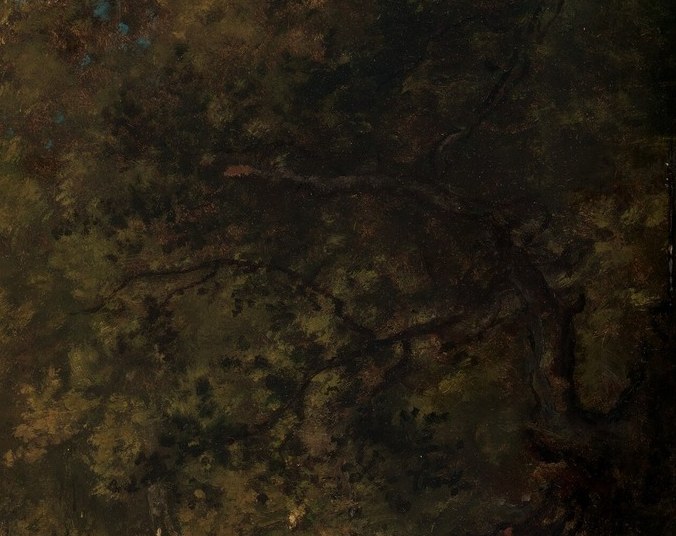
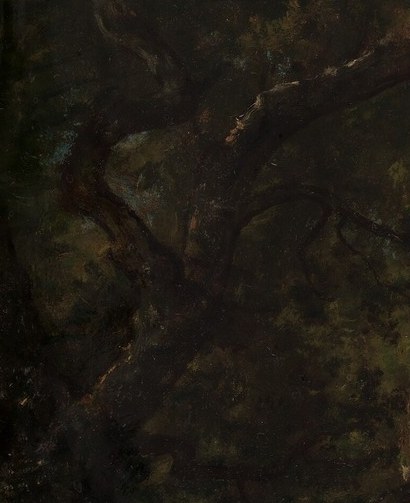
Narcisse Virgilio Díaz’s “The Forest of Fontainebleau,” painted in 1874, is a captivating oil landscape at The Metropolitan Museum of Art that invites close inspection. At first glance, it's a masterful study of light and shadow in a dense forest, but look closer, and you’ll find a subtle human element.
The artist, deeply fond of this particular forest, has placed two tiny figures in a sunlit clearing deep within the woods. They are so small they are easily missed, yet their presence adds a layer of mystery and narrative, making the viewer wonder about their journey or purpose in such a vast, wild place.
Díaz was a French artist known for his Barbizon school landscapes, which emphasized direct observation of nature and a focus on atmospheric mood over precise detail. His loose, textured brushstrokes in this painting convey the untamed character of Fontainebleau, a popular subject for artists of his era. This work exemplifies his ability to create an immersive experience, even while hiding a subtle human story within the scene.
What do you imagine these figures are doing in the heart of the forest?
Details

Transcript
This painter was obsessed with the Forest of Fontainebleau. He worked its light and shadow, year after year. Deep inside, a hidden clearing catches the sun. Look closely: who is standing in the light? Two tiny figures are almost swallowed by the woods. Their presence suggests a story, lost to time. This forest scene, painted in 1874, invites you to imagine it.