Miss Eleanor Urquhart by Raeburn, Henry, Sir
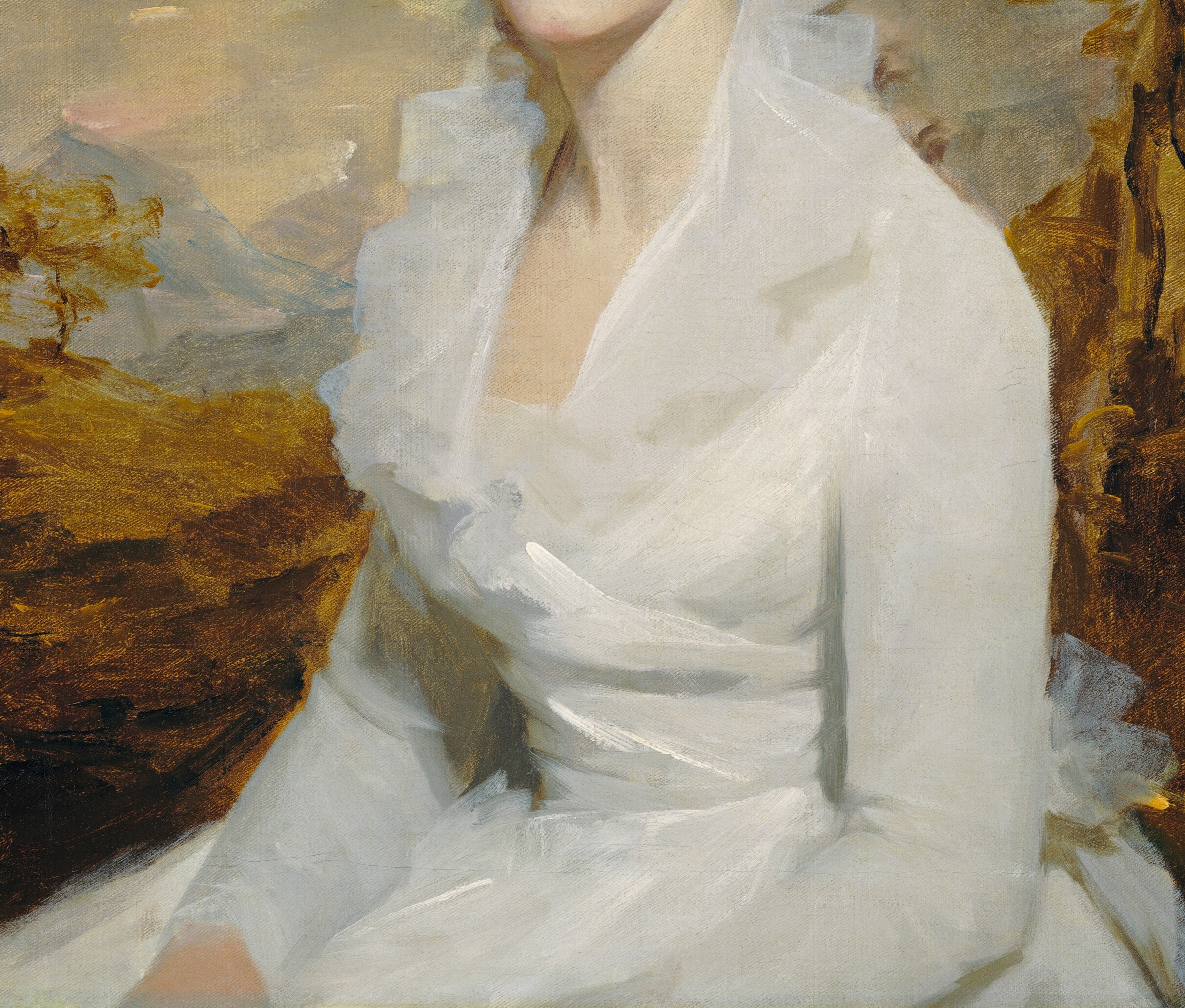
Sir Henry Raeburn painted Miss Eleanor Urquhart around 1793, and the first thing everyone notices is that white muslin dress. The brushwork is shockingly loose, broad, almost careless strokes that read as pure movement. Raeburn was painting fabric like this a full century before the Impressionists made it a cause.
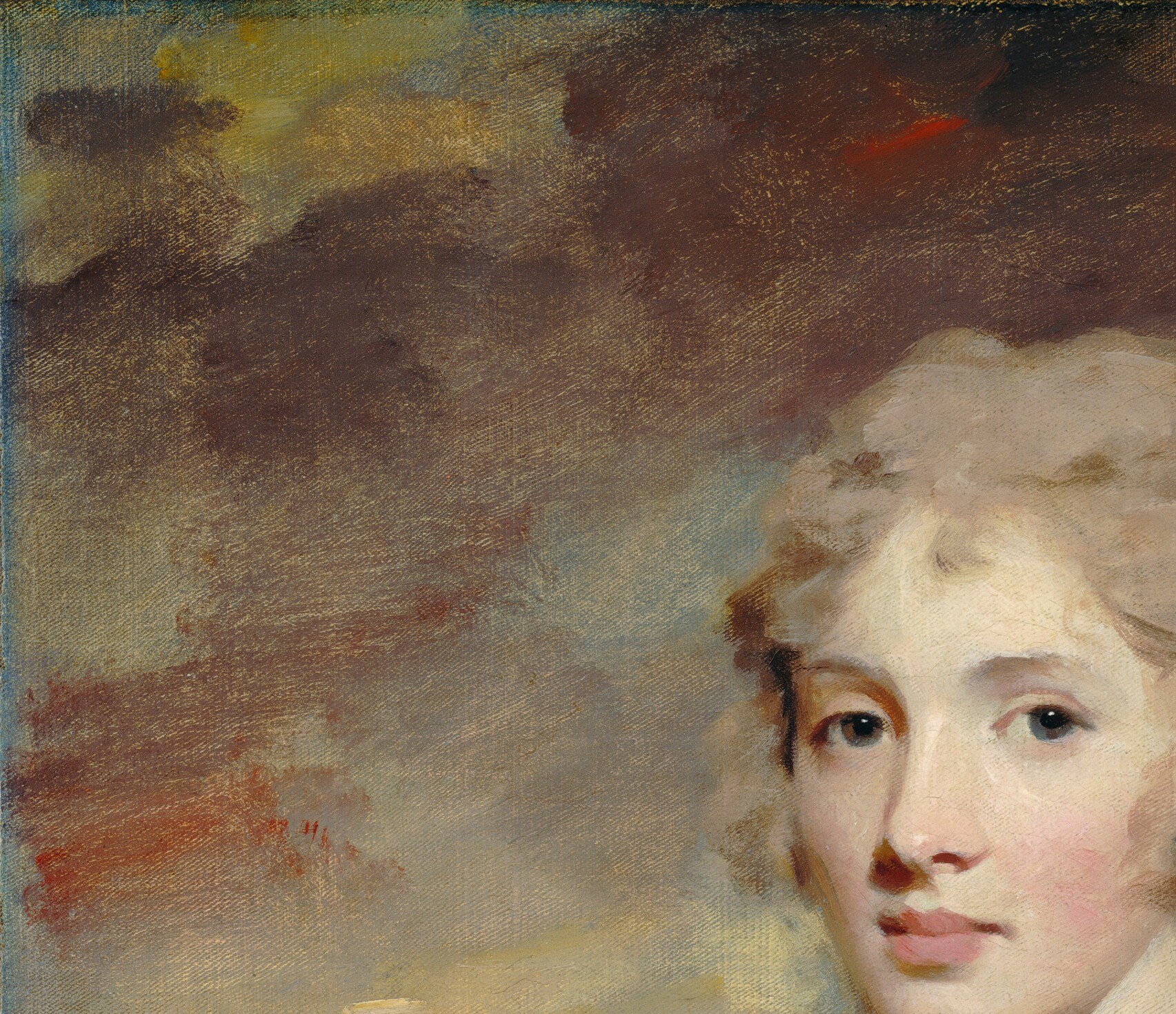
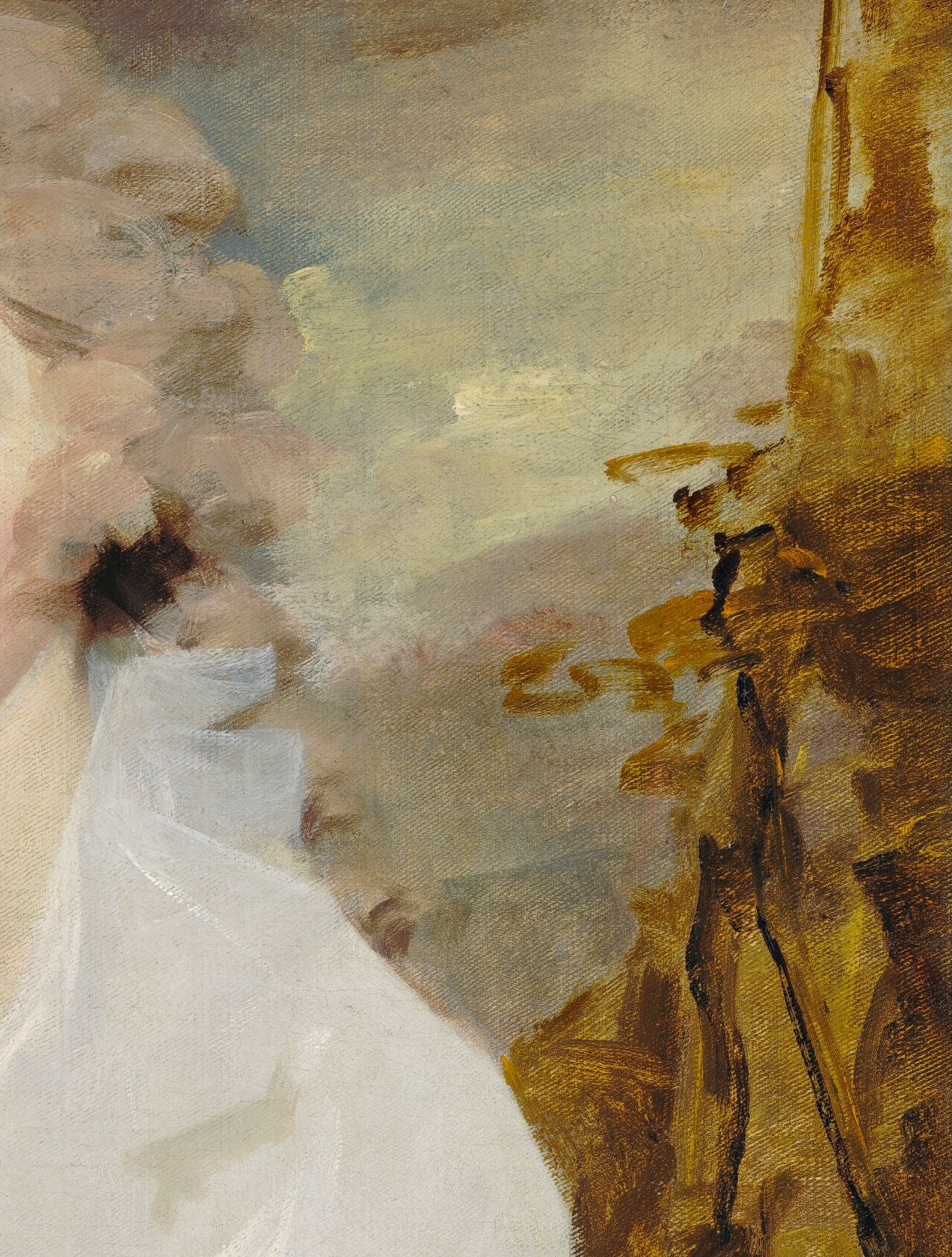
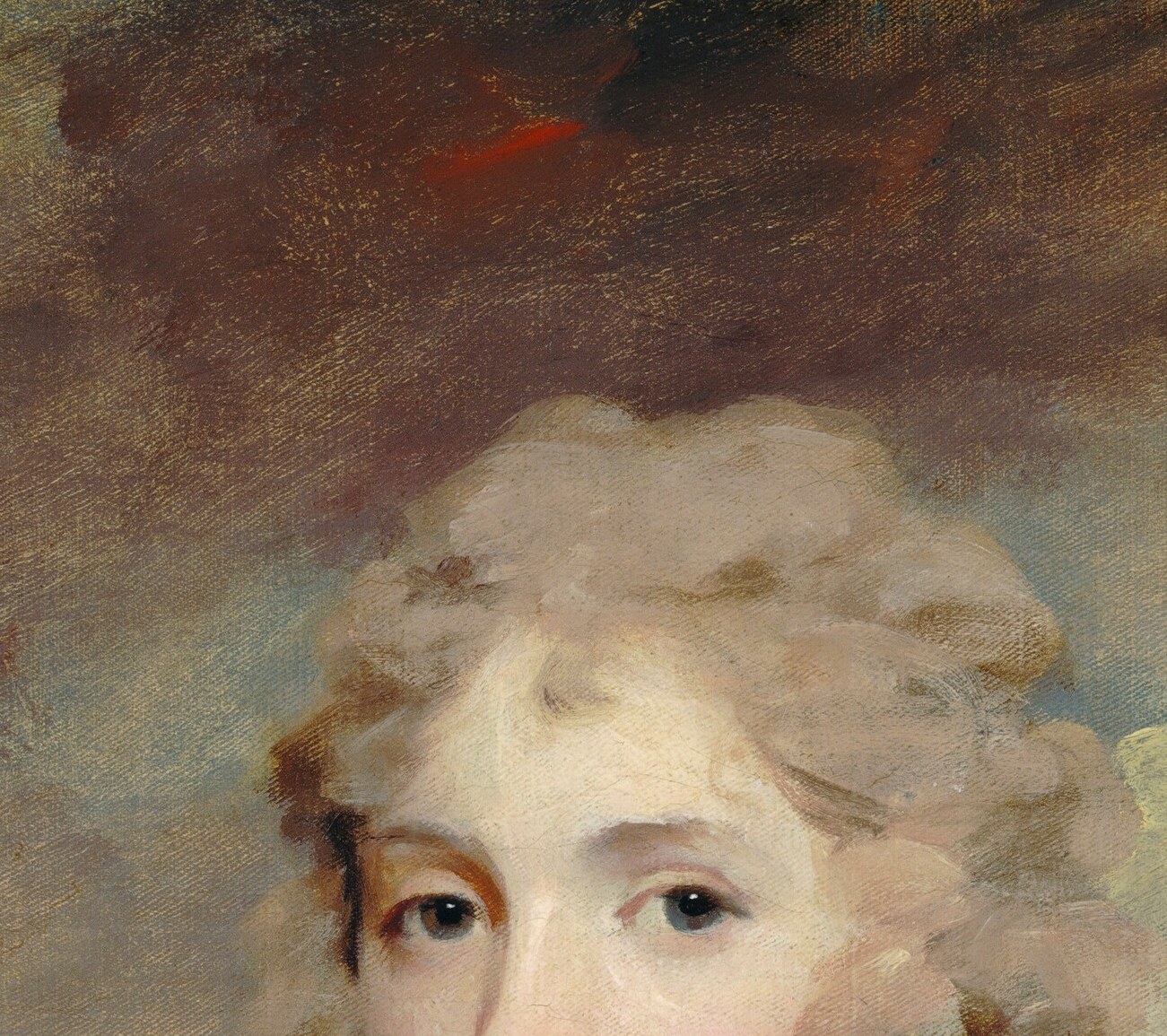
But the dress only works because of what he put around it. Look at the sky behind her: it's a turbulent, warm-grey mass of cloud, agitated and alive. That unsettled weather pushes forward visually, making the white fabric read as brilliant by contrast. And the dark cliff mass on the right isn't scenery, it's a counterweight. Without that tonal anchor, the whole composition drifts. Raeburn built this portrait like an engineer.
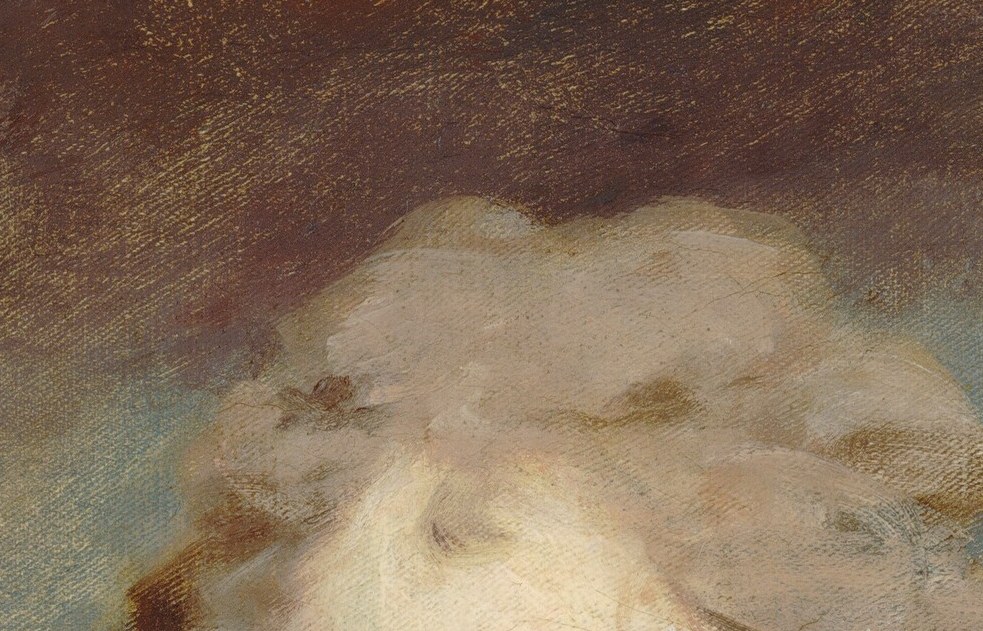
The sitter is Eleanor Urquhart, a young woman of the Scottish landed class, painted at a precise biographical moment. Her hair sits between natural blonde and powdered white, the early 1790s, when powder was going out of fashion. The high-waisted Empire silhouette under the dress confirms the date. She is poised, direct, and completely at ease.
This portrait lives in the space between preparation and instinct. Raeburn sketched nothing; he painted straight onto the canvas, and it shows. Next time you see a Raeburn, look past the sitter. The background is doing half the work.
Details
Transcript
Your eye goes straight to the white dress. It feels alive. Broad, confident strokes, almost Impressionist, a century early. But Raeburn didn't get that glow by painting the dress. He got it by building a storm behind her. Turbulent grey cloud, pushing forward, the dress reads bright against it. And this dark cliff isn't scenery. It's a tonal anchor. Without it, the whole painting would drift right. Raeburn knew exactly what he was doing. He framed her in unsettled weather so her composure would feel earned.