The Louvre, Afternoon, Rainy Weather by Pissarro, Camille
View the artwork: The Louvre, Afternoon, Rainy Weather →
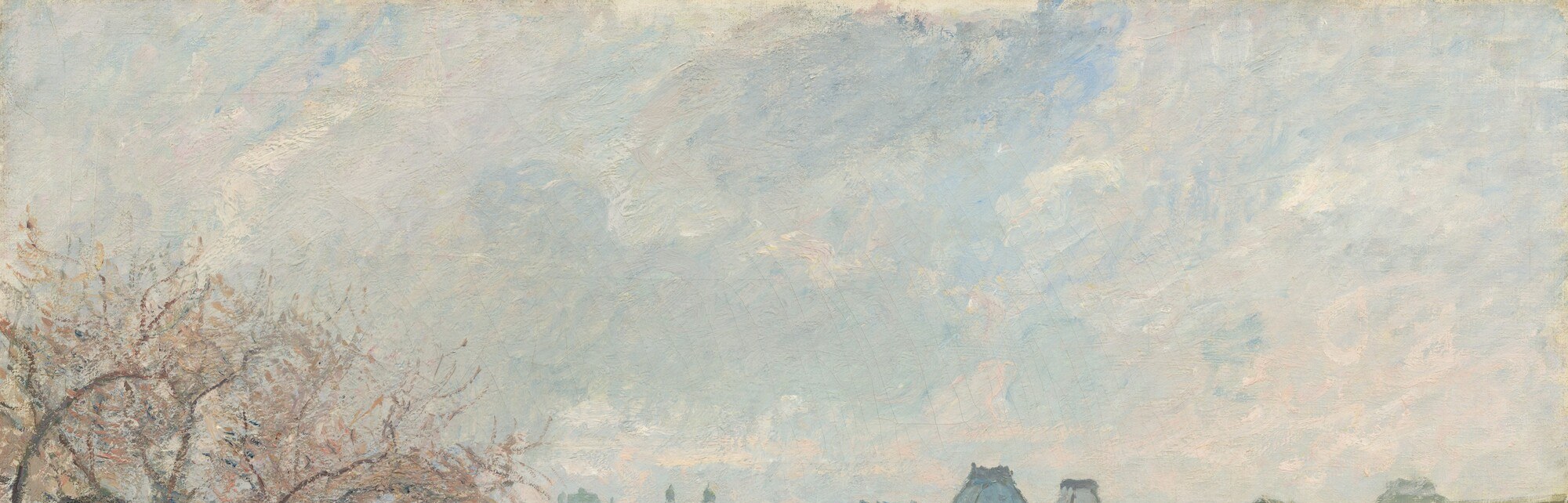
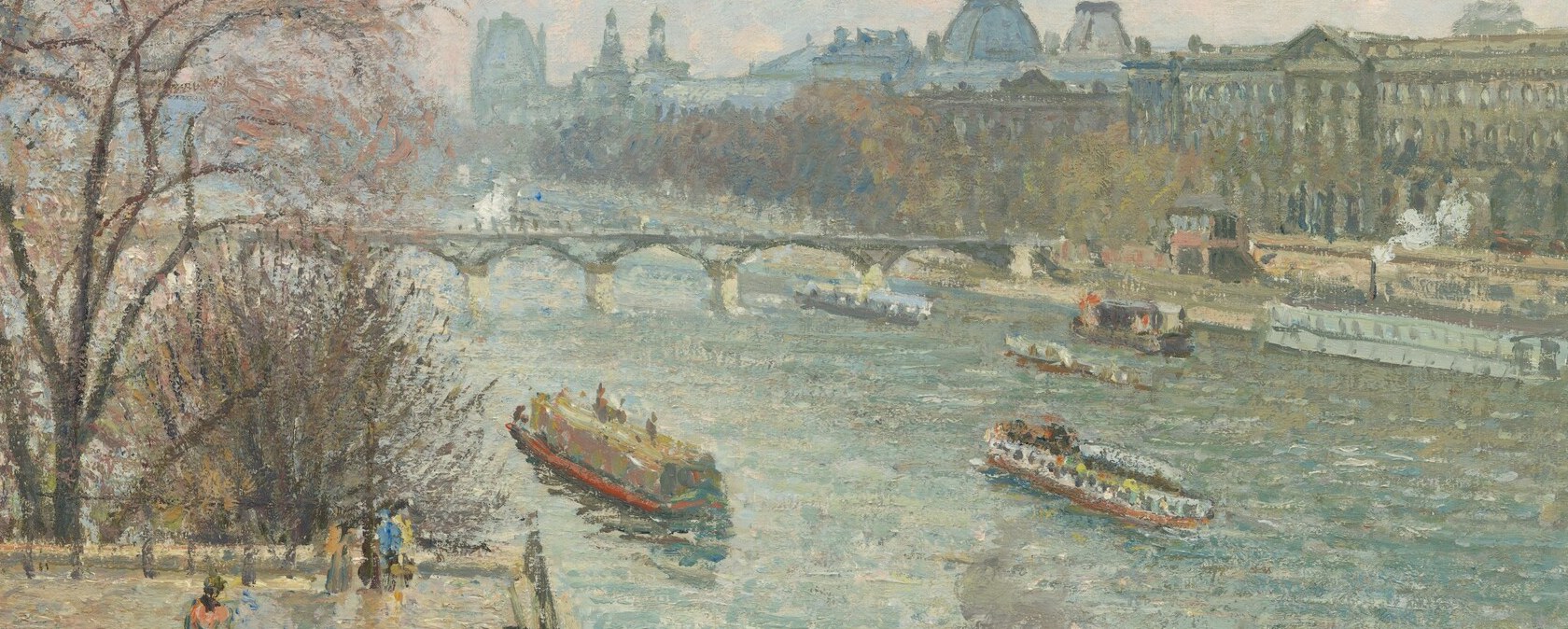
A king hides in plain sight. In Camille Pissarro's The Louvre, Afternoon, Rainy Weather (1900, National Gallery of Art), the equestrian statue of Henri IV stands at the approach to the Pont Neuf, reduced to a handful of dark brushstrokes that most viewers scroll straight past.
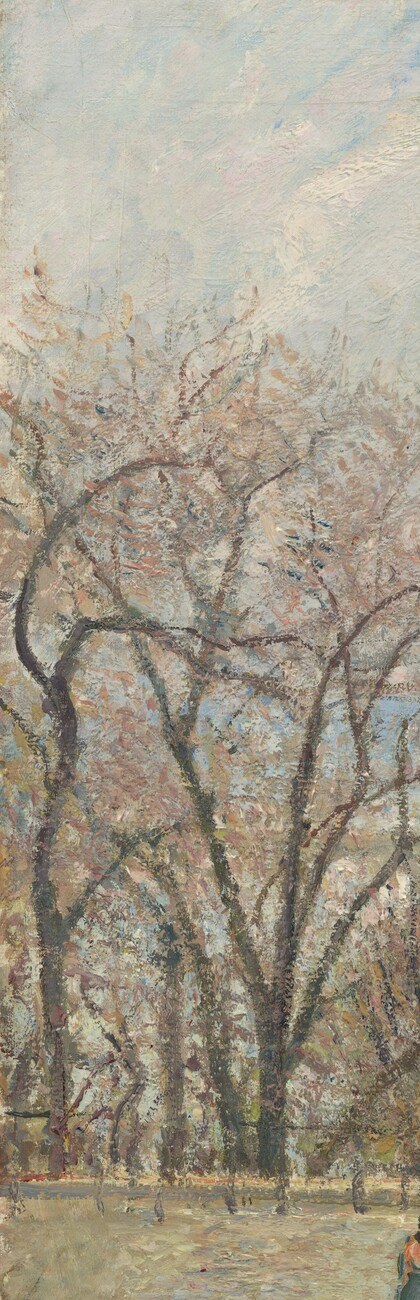
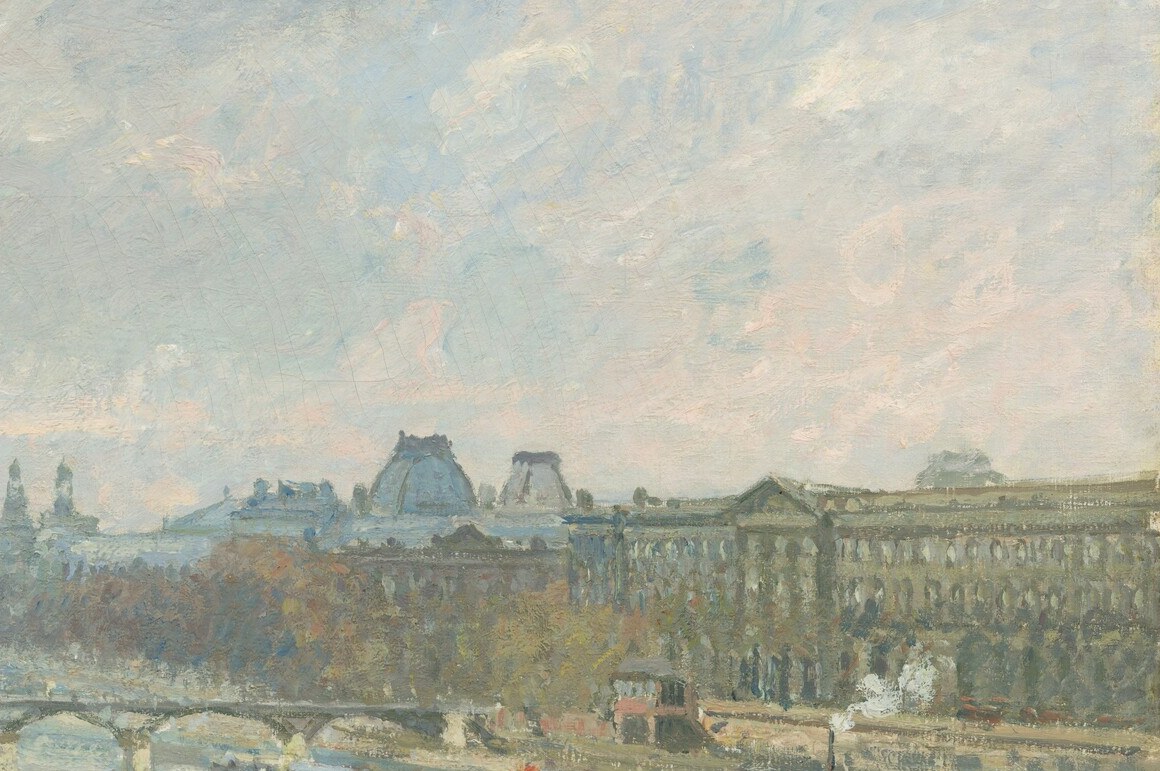
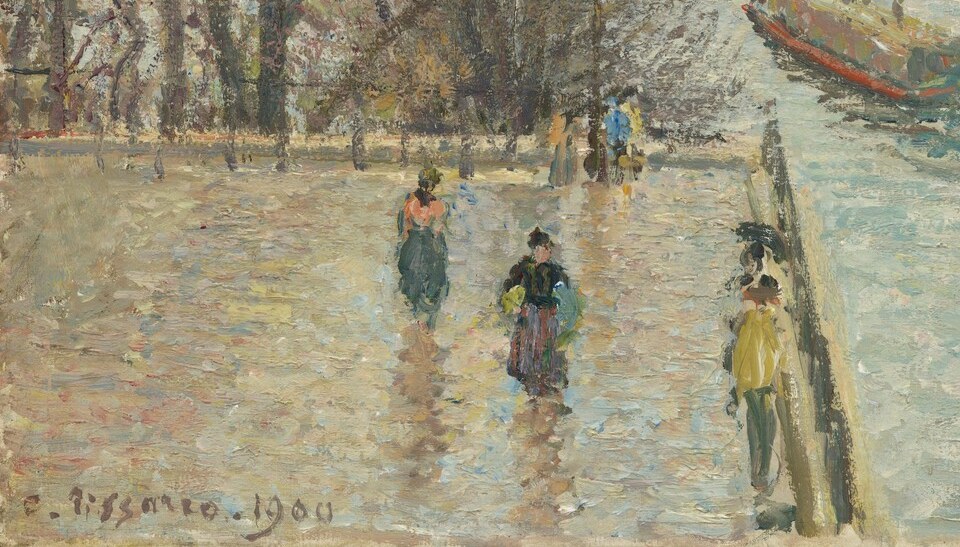
The painting grabs you first with that wet pavement. Pissarro built the shimmering surface from coral, yellow, lavender, pink, white, and brick red, a concentrated lesson in his late Impressionist color method. The Seine chops in gray and slate, the Louvre sits back in pale ochre, and the whole scene exhales after a rainstorm.
Pissarro painted this from his apartment on the Île de la Cité in 1900, the year his family moved in. He was 70 and would return to this same view again and again, varying the weather and the boat traffic, documenting a modern Paris where industry and monument share the river. The steamboat smoke dissolves into the overcast sky, and a working vessel cuts through water that reflects a museum.
The statue of Henri IV is the painting's best hidden discovery. The king who built the Pont Neuf, who ended France's religious wars, stands at the bridge he made, collapsed into a few marks of paint. Pissarro treated six centuries of French kingship as a compositional footnote. What else do you miss when you don't slow down?
#arthistory #impressionism #pissarro
Details
Transcript
After a rainstorm, Paris is all wet pavement and gray sky. Pissarro painted this from his apartment window in 1900. He was 70 years old and still working to capture light in motion. Look at the pavement. Coral, lavender, pink, brick red. Now find the bridge approach on the right side of the canvas. A small dark shape stands at the corner of the quay. That is the equestrian statue of Henri IV. A king, three centuries gone. He built the Pont Neuf. Pissarro gave him seven brushstrokes.