An English Warship Firing a Salute by Willem van de Velde the Younger
Willem van de Velde the Younger's "An English Warship Firing a Salute" from 1673 might seem like a grand naval scene at first glance, but it's full of fascinating human details that bring the ship to life. Painted in oil on canvas, this work captures a moment of ceremonial activity with remarkable precision.
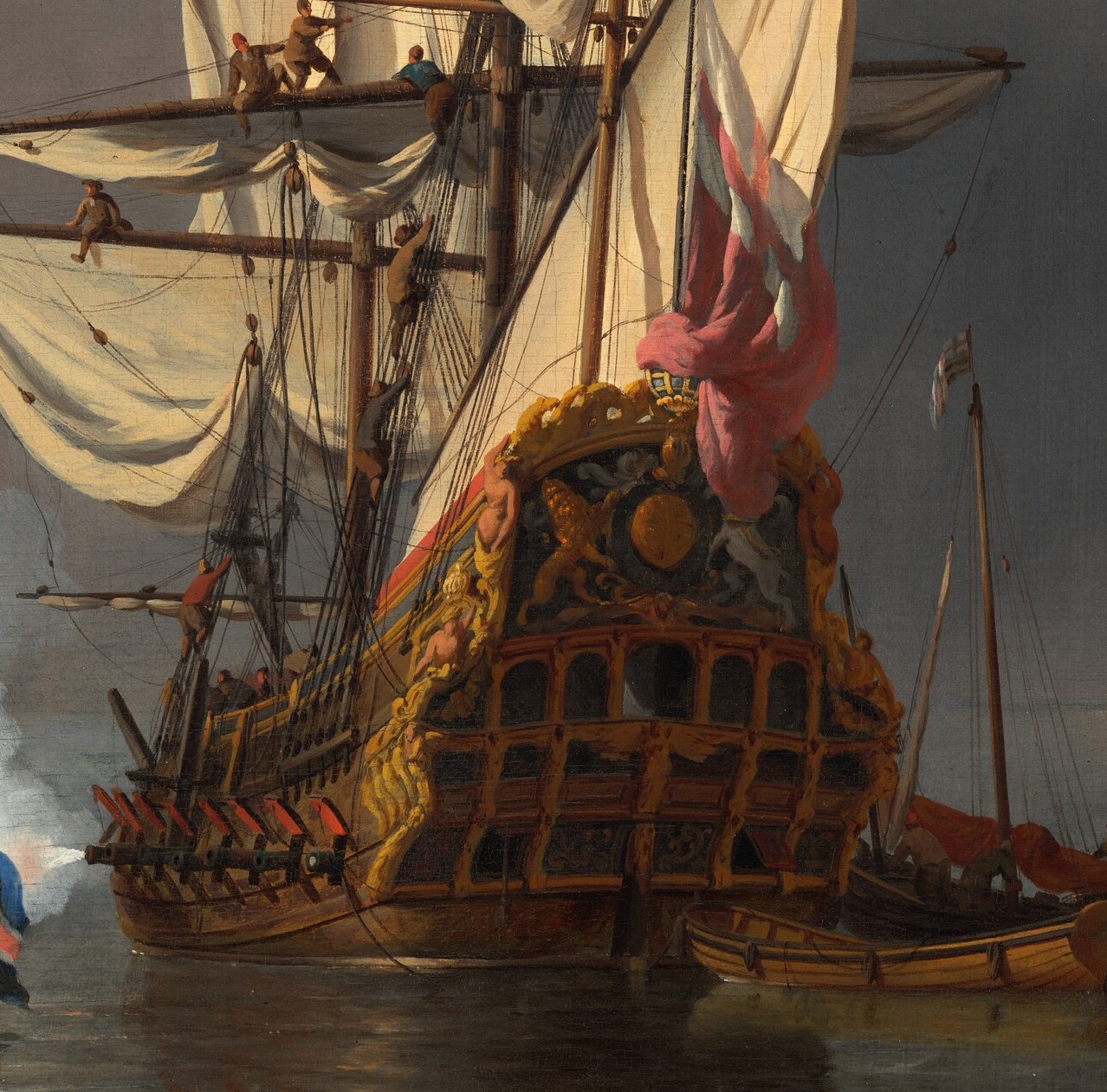
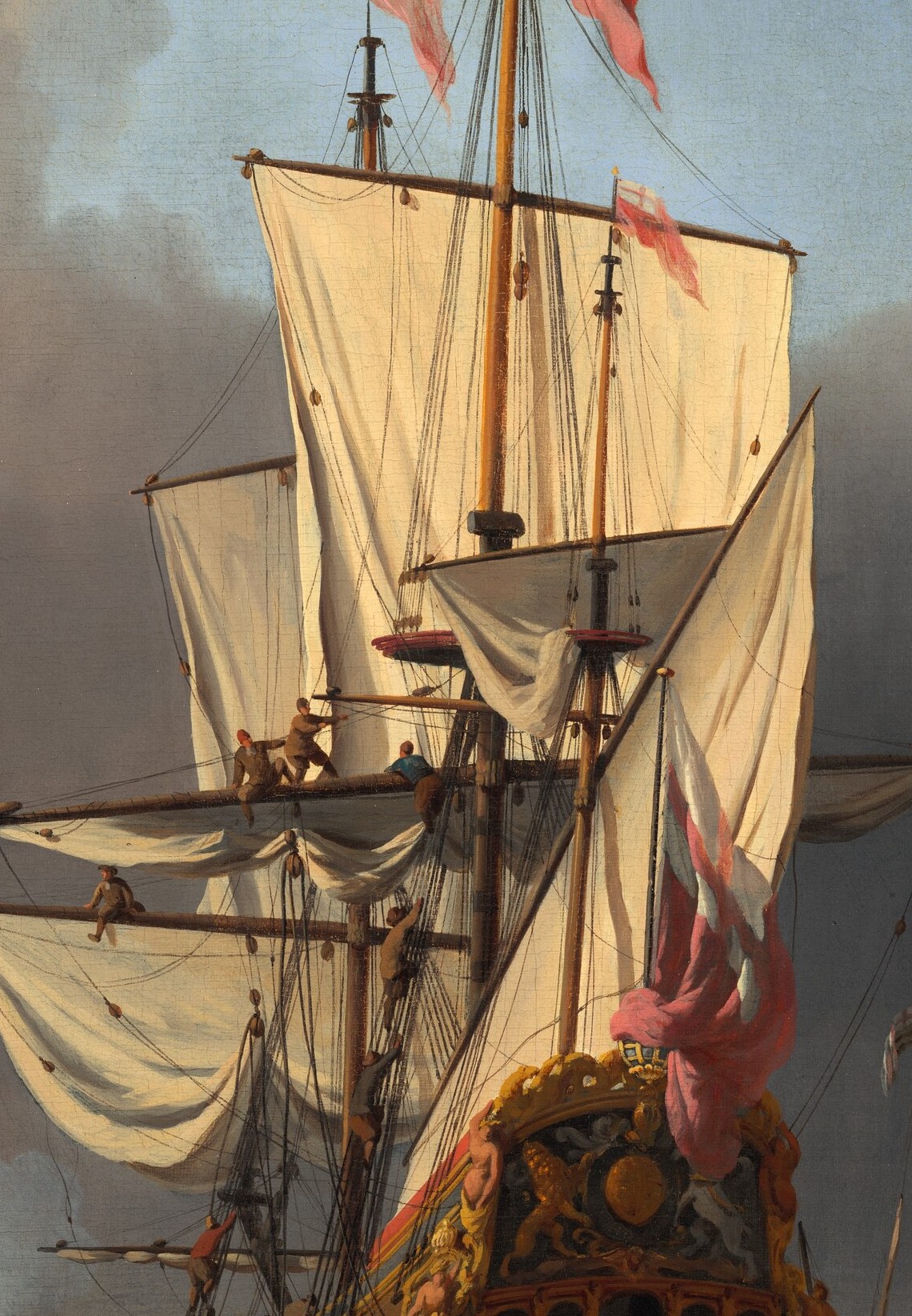
Take a moment to zoom in on the main warship. While the billowing sails and cannon smoke command attention, the tiny figures on the deck and the elaborately carved stern reveal a world of bustling activity, hinting at the complex operations of a 17th-century vessel. The artist, a Dutch master of marine art, meticulously included these elements to convey the human effort behind such powerful ships.
Van de Velde the Younger was celebrated for his ability to depict ships and seascapes with both accuracy and atmosphere. His work provides a window into maritime life of the era, showcasing not just the grandeur of warships but also the day-to-day realities and roles of the people aboard them. It's a reminder that even the grandest scenes are made up of countless smaller stories.
What small detail do you find most interesting in this bustling scene?
Details
Transcript
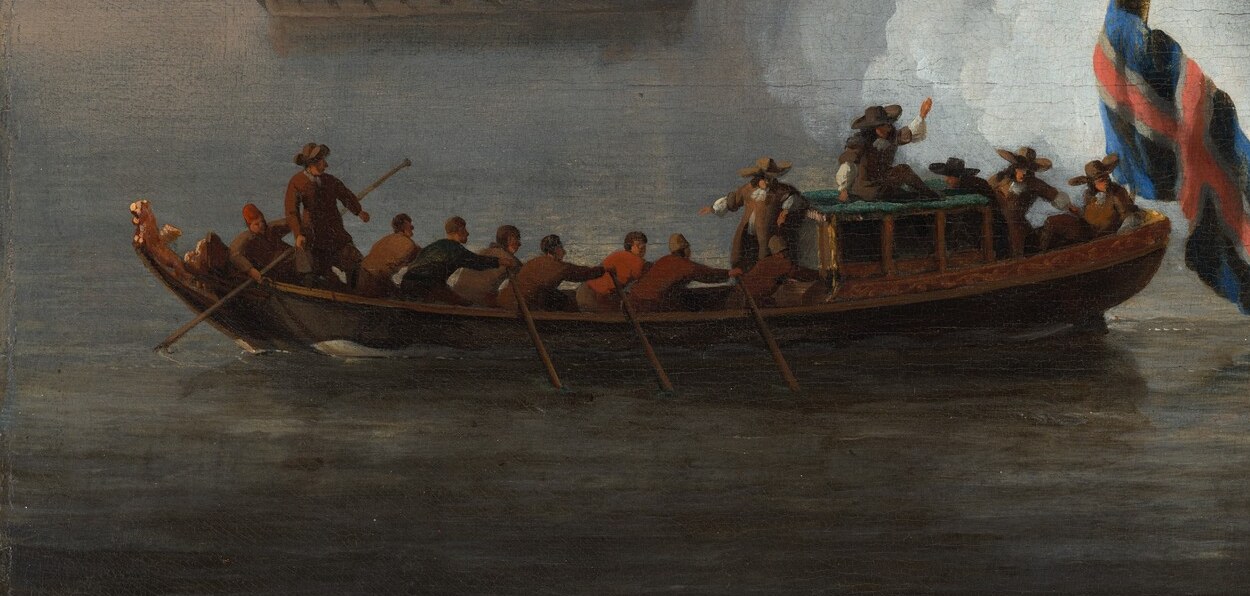
This 1673 painting shows a majestic warship firing a salute. Its sails billow, and smoke pours from its cannon. But look closer at the ship's stern, its decorated back. Tiny figures are busy here, tending to the ship. The painter was known for capturing every detail of naval life. Even a small rowboat, filled with more people, can be seen.