First Steps by Franz Ludwig Catel
This is Franz Ludwig Catel's "First Steps," painted in 1820 and held at The Metropolitan Museum of Art. It captures a milestone moment, but Catel embedded the scene with a coded language of domestic symbols that turns a family snapshot into something more deliberate.
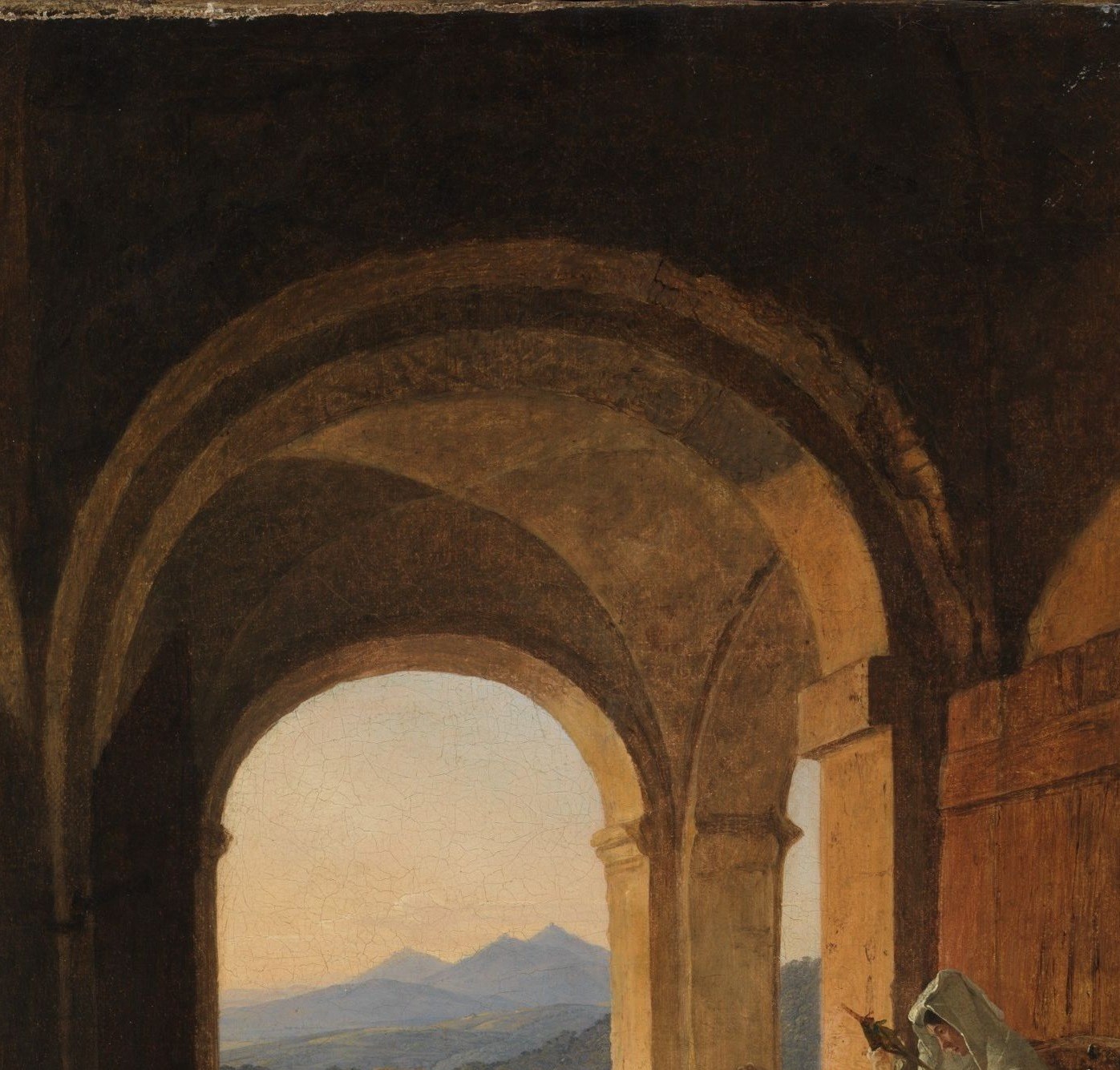
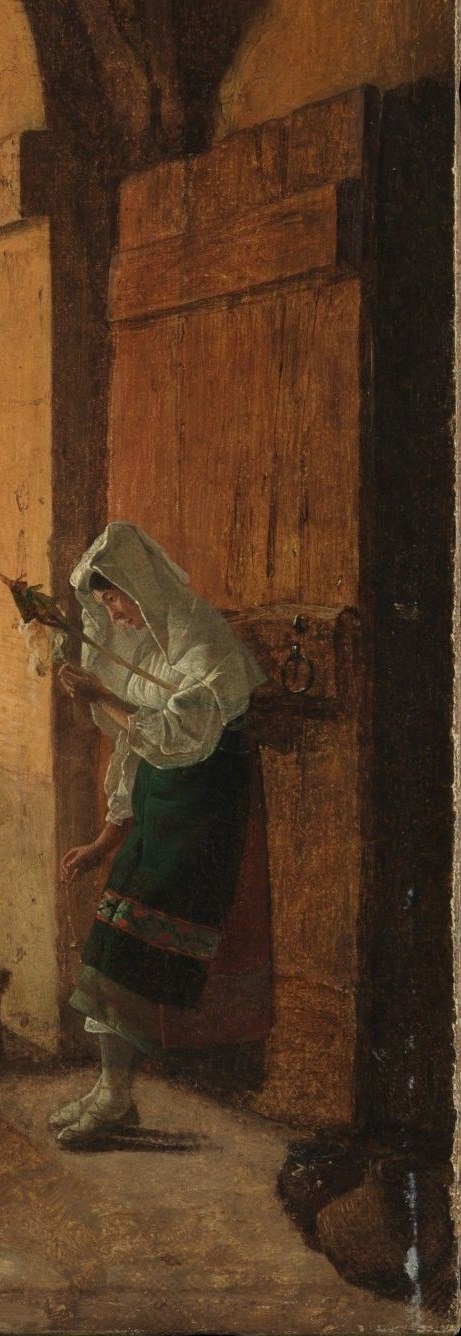
Watch how the child is framed, not just by the father's open arms, but by the massive stone archway. This architectural proscenium divides the sheltered domestic space from the sunlit mountains of the Roman Campagna. On the right, a half-open wooden door echoes the arch: a threshold to the outside world, exactly like the first steps the child is taking.
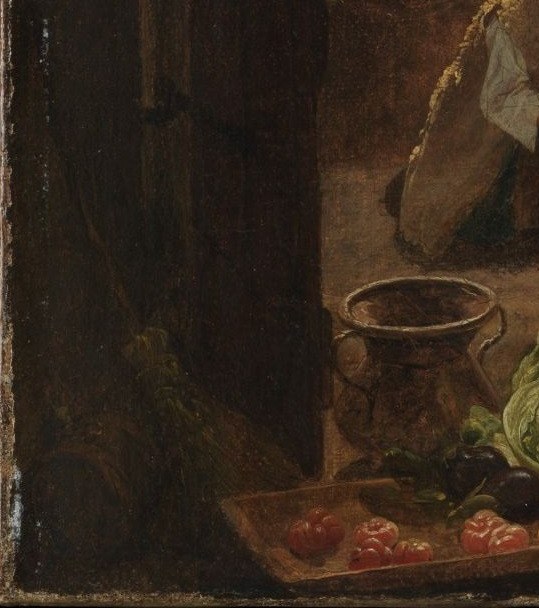
Look closely at the lower left corner. Among the scattered vegetables are cabbages, a common motif in German painting of the period. In the visual language Catel shared with his audience, cabbages carried a specific association with fertility, new life, and domestic prosperity. He has rooted a transcendent family moment in the practical, earthy facts of the everyday.
Catel was a Berlin-born painter who built his career in Rome, and this work is an ideal example of his Italian sojourn genre pieces. The painting places a universal human moment, a child's uncertain first walk, inside a structure that quietly says: the world is waiting for you.
Details


Transcript
A family watches a child walk. But the painting is a code. Look at the archway: it frames the whole domestic world. That arch separates the sheltered home from the sunlit world beyond. Now the wooden door, held ajar on the right. A threshold. The child, too, is crossing one. Now the cabbages. These aren't just groceries. Cabbages were a German symbol for fertility and new life. Every detail is an announcement: this is a beginning.