The Cat by American 19th Century
An anonymous 19th-century American painter built one of the most unblinking stares in animal portraiture, and the trick is hiding in plain sight. “The Cat” (oil on canvas, probably second half of the 19th century) is a quiet, balanced composition: a hunter returning through tall grass, a meadow receding into soft atmosphere, birds perched in the trees. The scene feels serene until you meet the cat’s eyes.
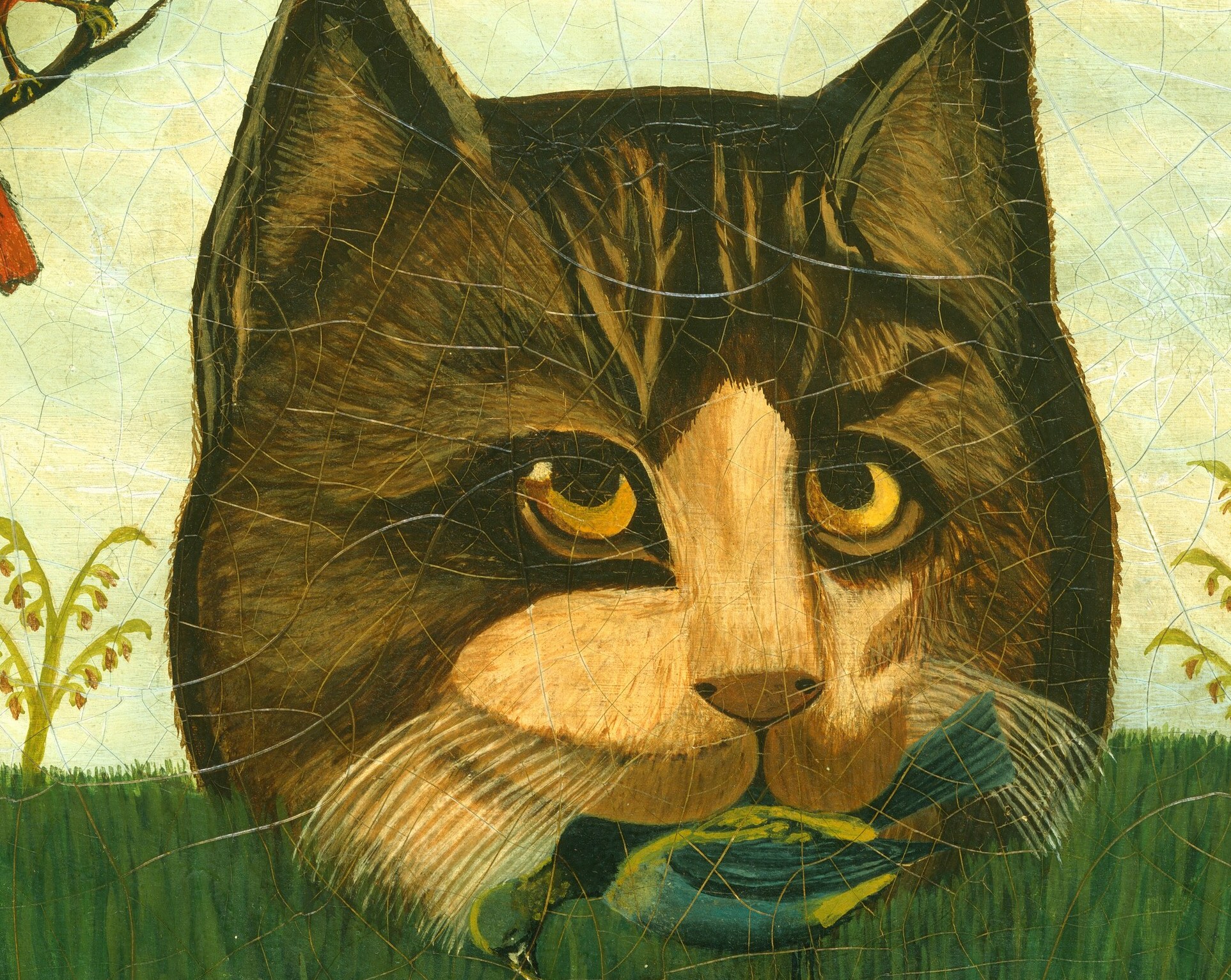
The eyes are the painting. Tight on the face, you see the construction clearly, a brown socket, a flat disc of yellow, a single black pinpoint. Nothing blended, nothing feathered. The painter understood that an eye does not need detail to feel alive. It needs contrast. The dark surround makes the yellow an electric presence, and the tiny black pupil becomes a focal point the human eye cannot resist.
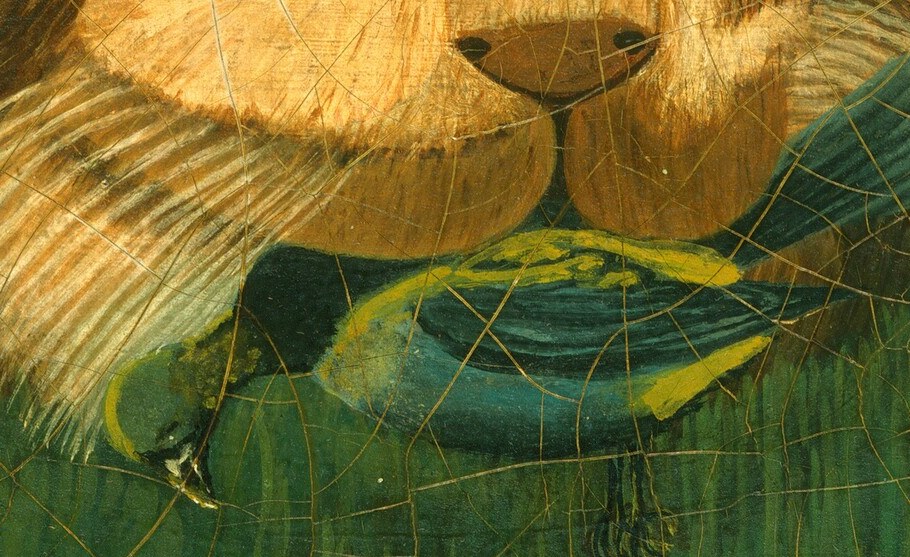
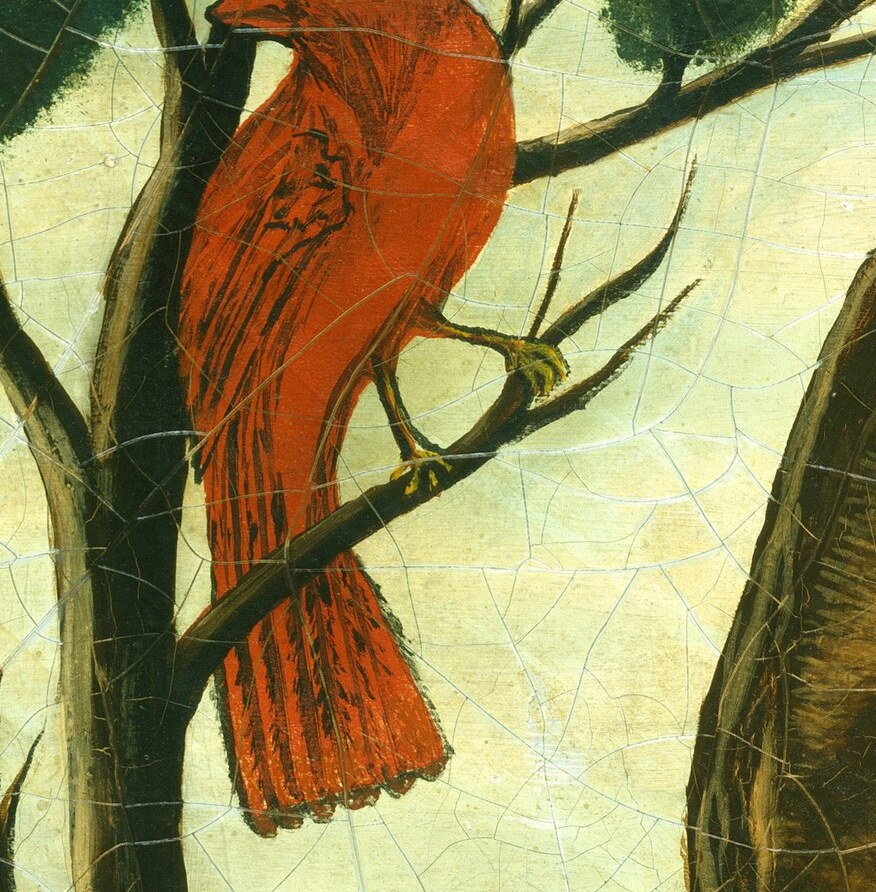
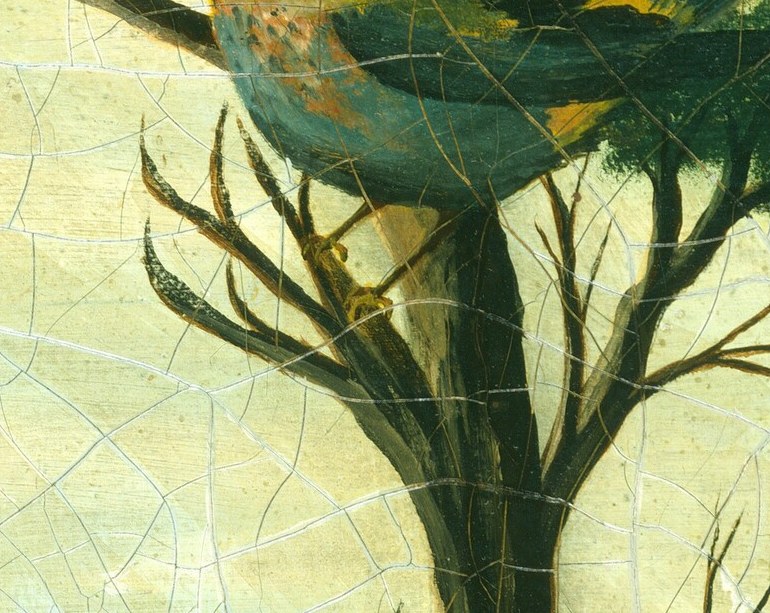
The grass is built the same way: thick, impasto-like strokes that catch actual light on the canvas surface, giving the meadow a tactile, overgrown quality. The reddish bird on the left and the blue-and-yellow bird on the right provide compositional balance, but the cat’s prey, a whole bird held gently in its mouth, is rendered without sentiment. The painter is not telling a moral story. He is showing you how paint can become a predator’s stillness.
The artist remains unknown, working in an American tradition that blended animal portraiture with idyllic landscape. What they left behind is a masterclass in economy. Sometimes the most riveting gaze in a gallery is nothing more than a circle of yellow paint, placed exactly where it belongs.
Details
Transcript
A cat returns from hunting. The bird in its mouth is still whole. But the painter has not given the bird a single brushstroke of pity. Now look at how the eyes were made. One flat disc of yellow. One black pinpoint pupil. Nothing more. An eye, the painter knew, is a trap for light. Build the socket in brown, place the disc inside, and the mind gives you a living stare. A 19th-century American painter pulled off this whole predatory stillness with nothing but color placed against color.