Sioux Village - Lac du Cygne by Catlin, George
This is George Catlin's "Sioux Village, Lac du Cygne," painted in 1865. It is a small oil painting on card, so modest in size that it could be carried in a saddlebag. Catlin was trained as a lawyer but found his true calling on the American frontier, making five expeditions in the 1830s to document the life of the Plains Indians before westward expansion swept it entirely away.
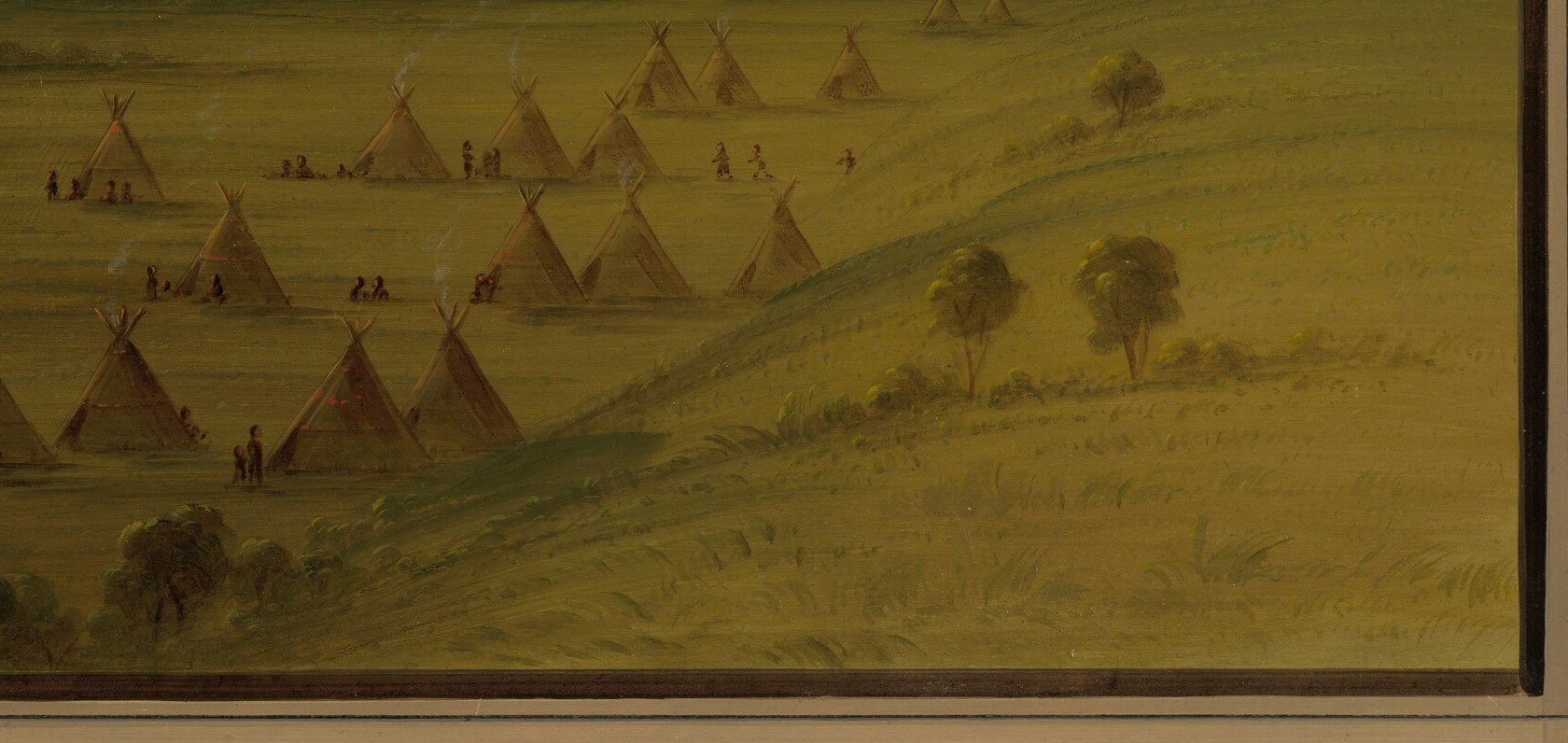
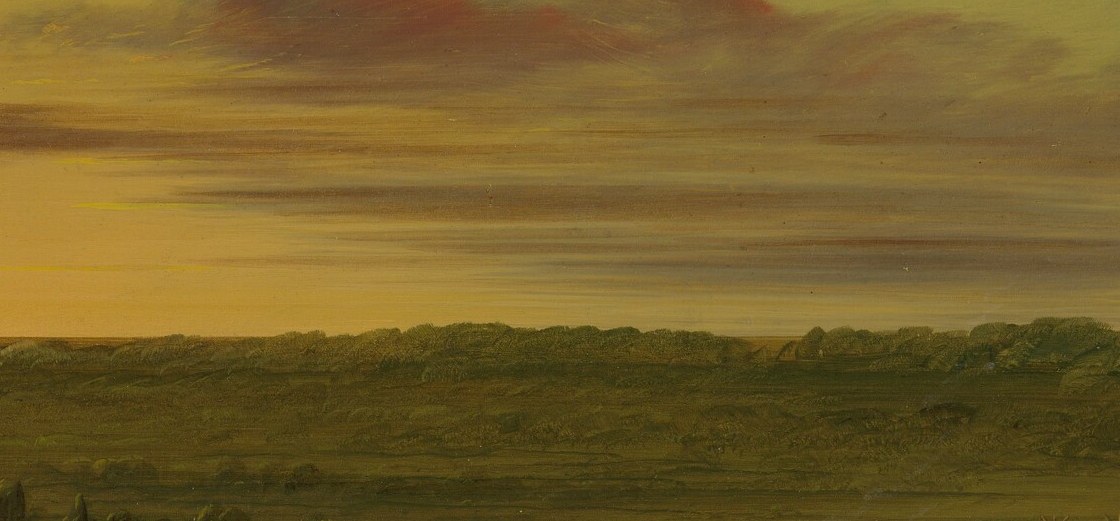
Look at how the lake doubles the sky. The reflection is a deep, still mirror, and the setting sun washes everything in a quiet gold. A single tree stands as a natural landmark on the horizon. Below it, tipis cluster near the water's edge, with canoes pulled up and small figures moving through the encampment. Catlin does not dramatize anyone; the people are simply there, in scale, against a vast landscape.
By the time Catlin painted this, he was in his late sixties. The world he had first sketched in the 1830s was already under siege. This picture draws on those earlier firsthand studies, carefully placing each lodge and shoreline detail from memory and field notes. The work was executed using thin glazes that give the sky and water a luminous, almost transparent light.
A landscape like this one does not shout for attention. It records. It says: this place was here, at this hour, with this light, and these people lived beside it.
Details
Transcript
1865. The American Civil War had just ended. But here, on the plains, life had a different rhythm. The painter, George Catlin, first visited these villages thirty years earlier. He was a lawyer who left the courtroom to document Native American life. This canvas is small. Painted on a card. Carried in a saddlebag. A lone tree fixes the horizon. A landmark everyone knew. Catlin feared this world would vanish. He painted it before it did.