Interior, after Dinner by Monet, Claude
Claude Monet painted "Interior, after Dinner" during the winter of 1868-1869, a season he spent with his partner Camille Doncieux and their infant son in Étretat. He was 28 years old and in desperate financial straits, scraping together money to buy food and paint. This is a portrait of the quiet that follows when all the guests are gone and only family remains.
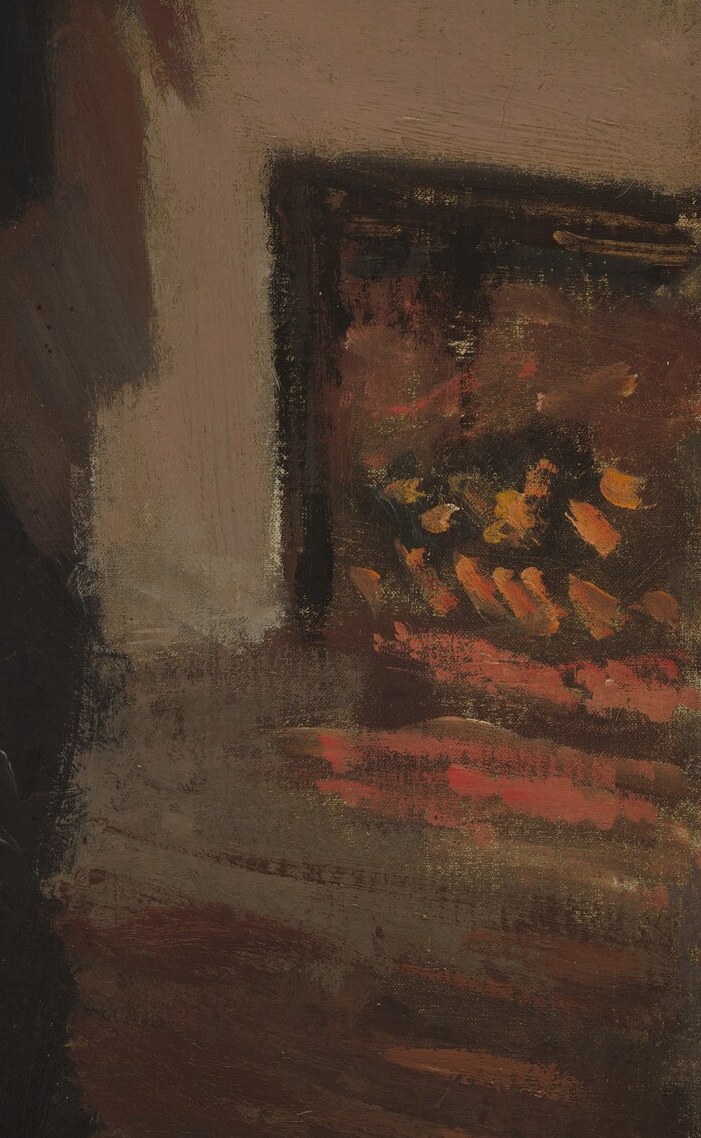
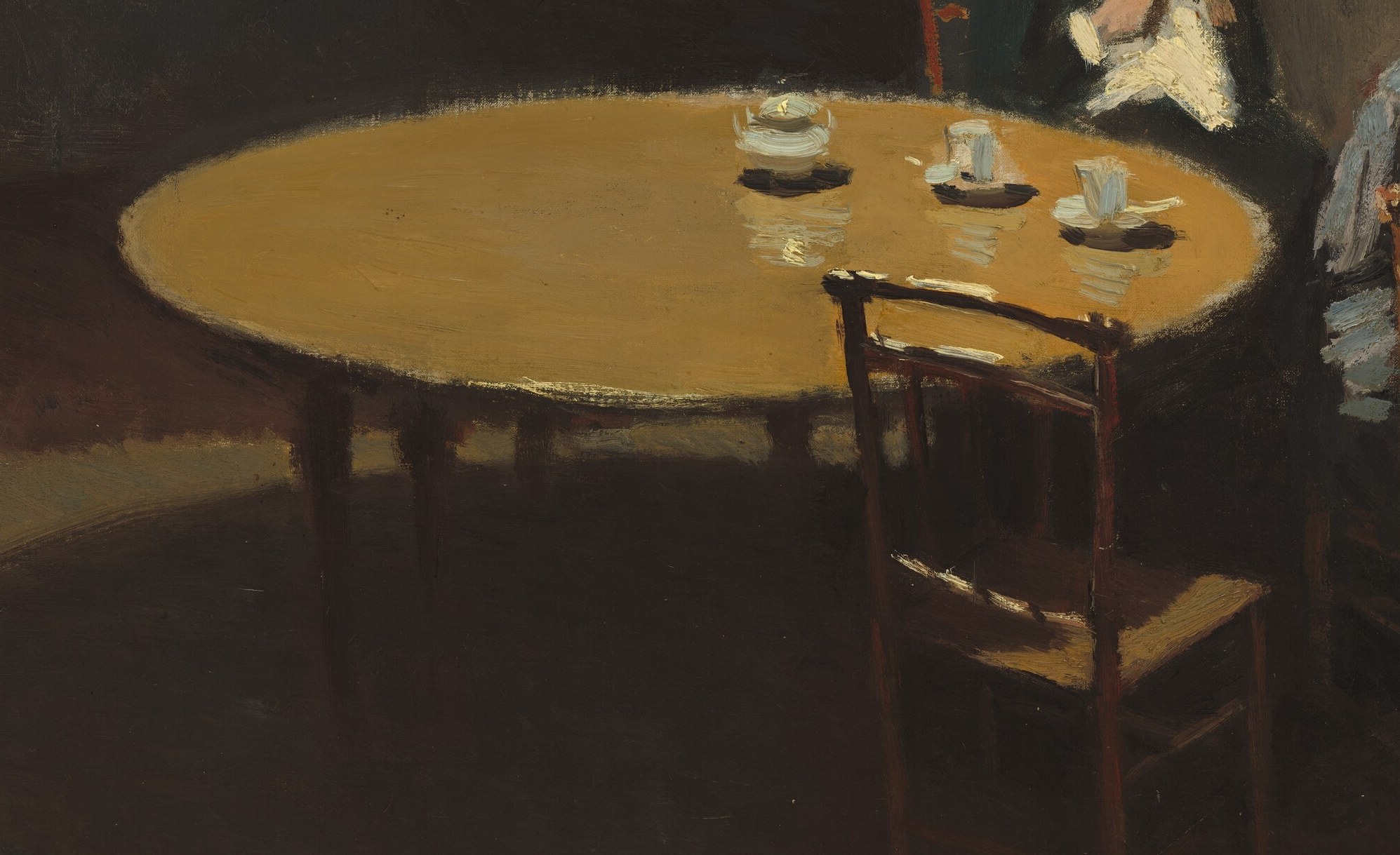
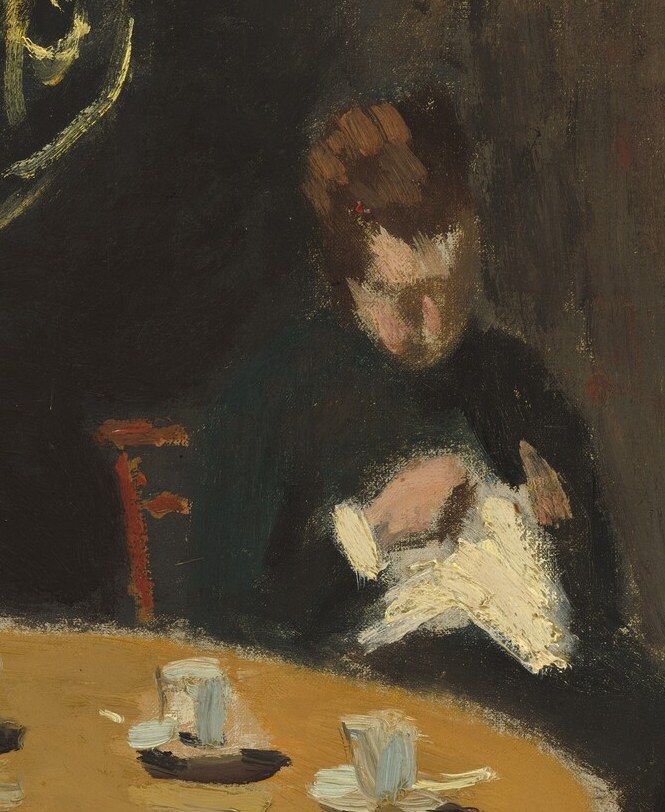
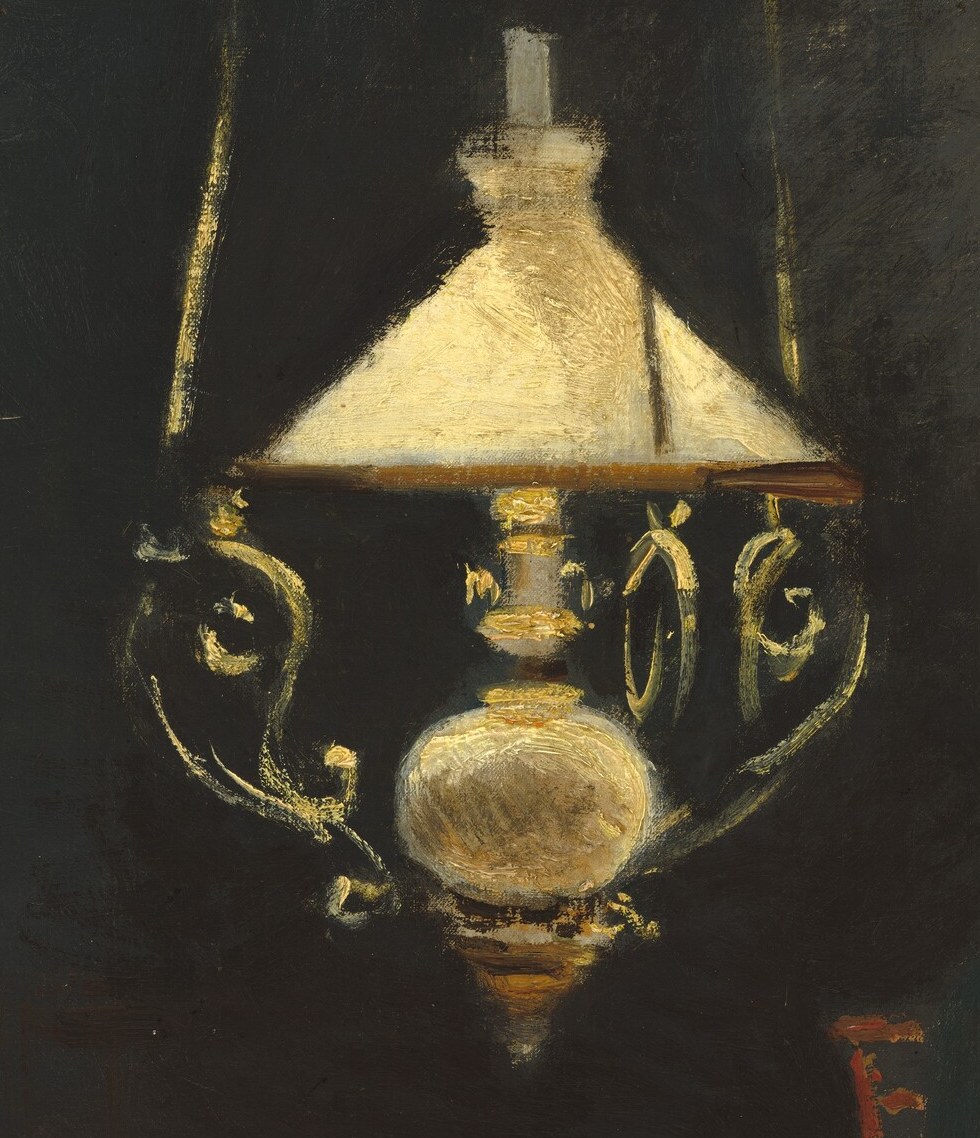
The scene is set in the aftermath of a meal. Two cups and saucers rest on the round dining table, and the glow of a hanging lamp pushes long shadows across the floor. Camille sits reading a letter, her posture still and private. The man standing with his back to us is almost certainly a friend or fellow painter, sharing the sparse warmth of the room. Look at the embers in the fireplace: the fire is dying, but it has not gone out.
Monet painted this work with the rapid, broken brushstrokes that would soon define Impressionism. The floral wallpaper and the blue vases on the mantelpiece are rendered with a deliberate, sketch-like haste. He was not chasing a grand historical narrative here. He was recording the actual texture of a cold winter evening spent indoors with the people he loved, using the limited palette of an artist who could not afford more.
This painting now hangs in a private collection, a direct window into the domestic life that Monet fought to hold together. Next time you see one of his vast, sun-drenched canvases, remember this room: the stillness, the shadows, and the young family waiting for spring.
Details
Transcript
Winter, 1868. Monet was 28, broke, and a new father. He fled Paris for a fishing village, owing everyone money. This is the room where they huddled through it. Two cups. The meal is over. It was just the three of them. That winter, he painted his own life for the first time. Camille, reading. The room has gone still. Monet sold this painting for a handful of francs to survive.