Lucrezia Tornabuoni by Ghirlandaio, Domenico
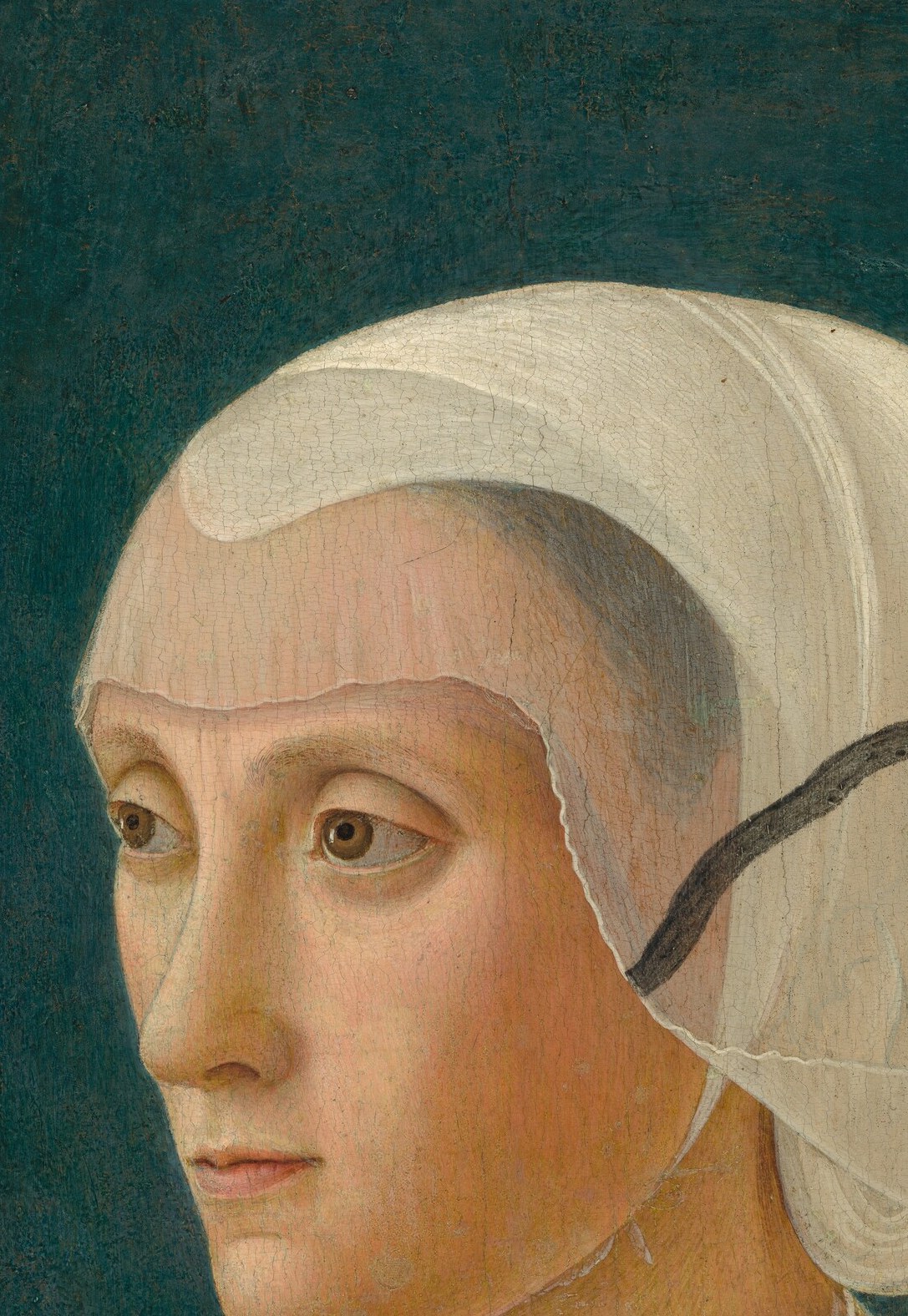
This is a portrait of a mind kept carefully private. Domenico Ghirlandaio painted Lucrezia Tornabuoni around 1475, on a poplar panel with tempera and oil. It lives at the National Gallery in London.
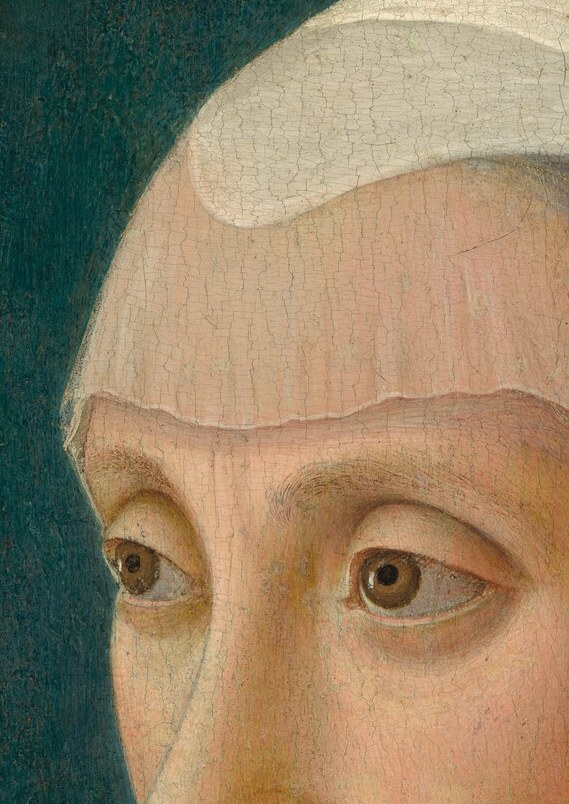
Look at her eye. She gives you one, in near-perfect profile, and it denies you entry. The mouth is firm, not cruel, just closed. A poet and a politician, a woman who wrote sacred verse and managed Medici statecraft, and she shows you the immaculate surface she chose.
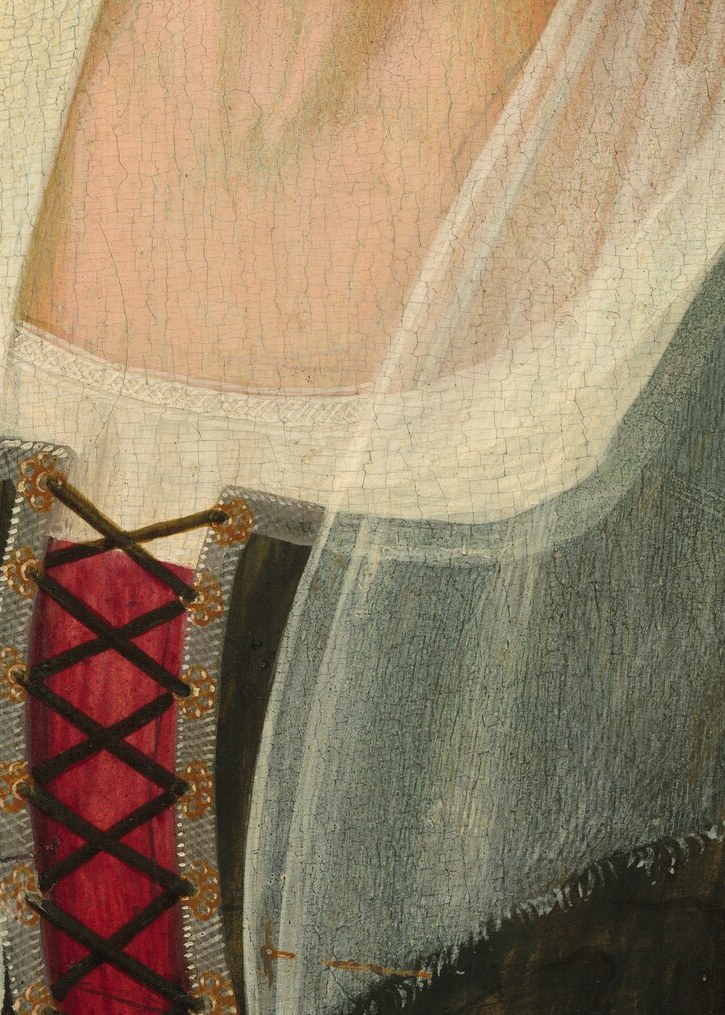
Ghirlandaio trained Michelangelo. He was a master of the documentary likeness, he refused to smooth the patrician nose or soften the jaw, because Florentines in the 1470s paid for truth, not flattery. The single flash of color, the red bodice lacing, draws the eye down and whispers that this woman in widow's black was still very much alive.
Lucrezia bore nine children, lost two daughters, married a Medici, outlived her husband, and became the power beside the power. This face knew more than it would ever say, and it still does.
Details
Transcript
Florence, 1475. A city of poets and bankers. This is Lucrezia Tornabuoni. Lorenzo the Magnificent's mother. She composed sacred poems. Wrote political letters to kings. But a portrait is a social performance. She reveals almost nothing. Ghirlandaio records the real nose, not a flattered version. The one pulse of red: a laced bodice. A sign she was still vital. She lost two daughters. She survived her husband. She kept her counsel.