Margherita Gonzaga (1591–1632), Princess of Mantua by Frans Pourbus, the Younger
View the artwork: Margherita Gonzaga (1591–1632), Princess of Mantua →
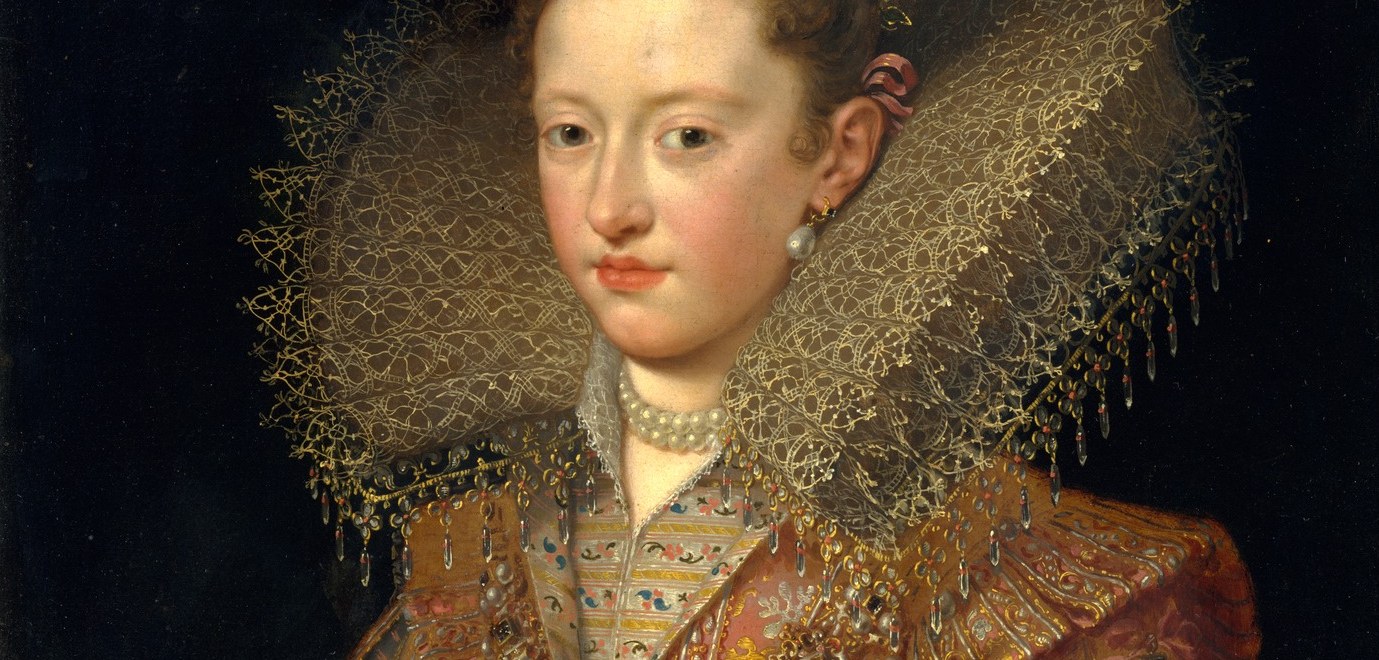
This is Margherita Gonzaga (1591-1632), Princess of Mantua, painted by Flemish court portraitist Frans Pourbus the Younger around 1605. Now in the Metropolitan Museum of Art, the portrait was not a casual likeness but a critical instrument of state diplomacy.
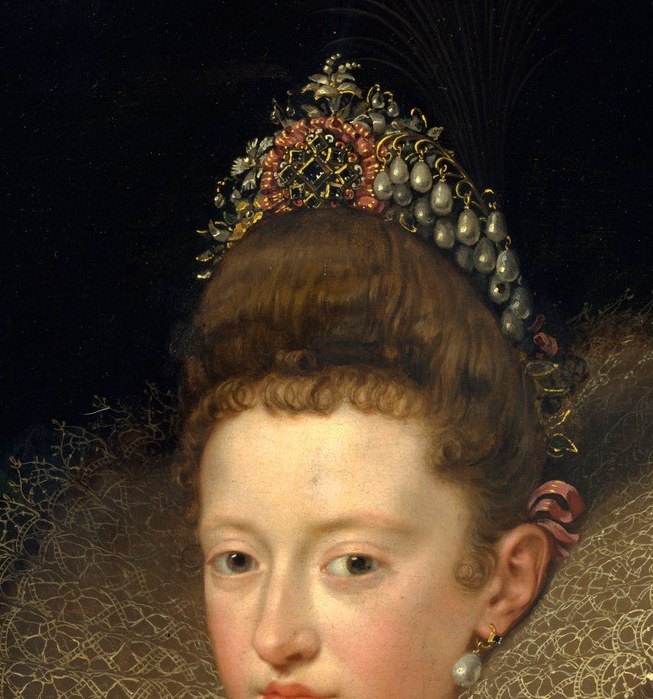
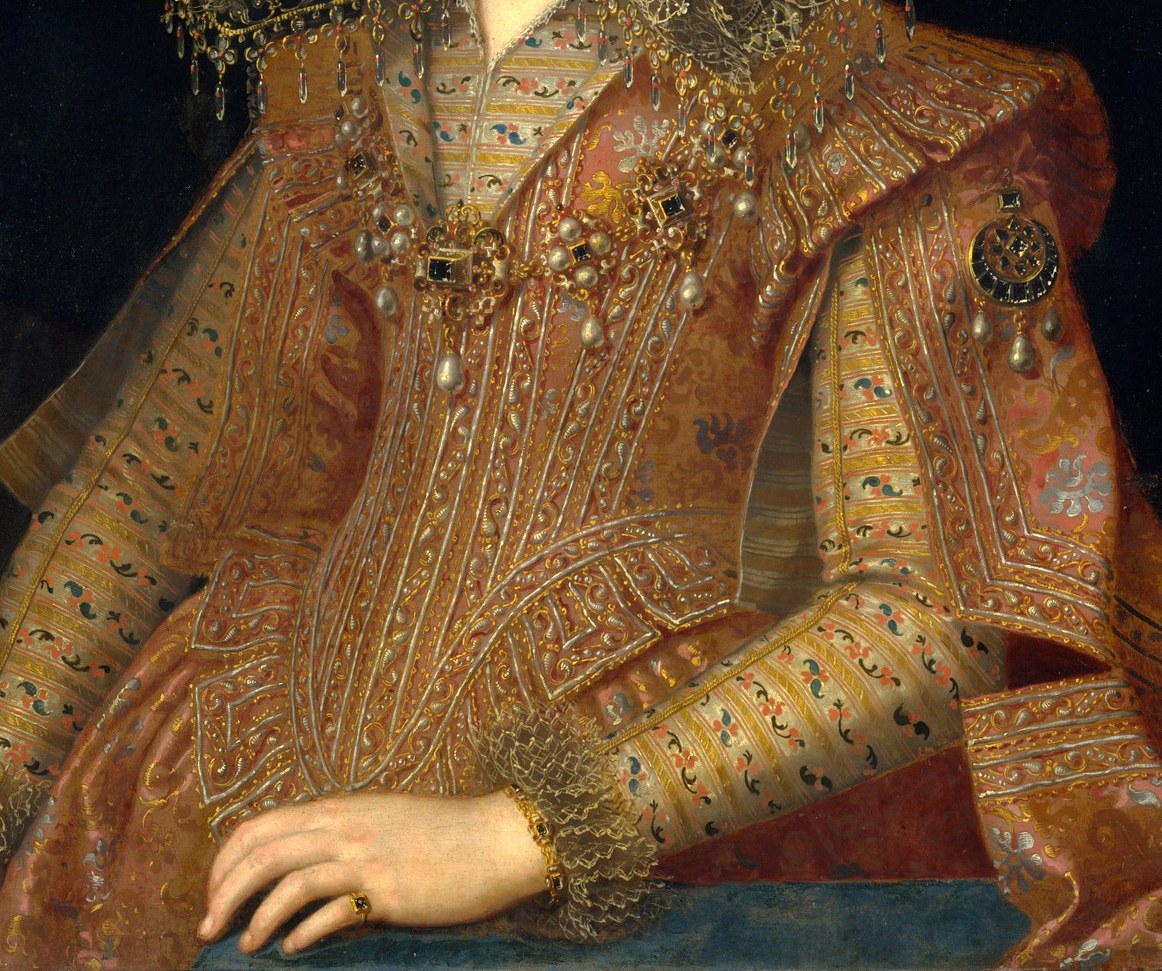
Look for the tight, physical contradiction between her rigid court costume and the two places the painter breaks the formula. Her stiff lace ruff and the heavy pearl strands signal wealth and purity in a language every European court could read. But her cheeks are flushed, her eyes are wary, and her fingers are gently, humanly flexed at the bottom edge of the frame.
Pourbus served Duke Vincenzo Gonzaga I of Mantua as chief portraitist, a role he took up in 1600 after arriving from the Brussels court. Vincenzo needed a painter who could inventory dynastic grandeur and present his daughter as a credible future duchess. The canvas was almost certainly made for marriage negotiations, and it worked: in 1606, the fourteen-year-old Margherita was wed to Henri II, Duke of Lorraine.
The painting entered the Met in 1900 among the vast bequest of American railroad magnate Collis P. Huntington. It is a masterclass in how a portrait could function as a silent ambassador, its every detail designed to close a deal.
#arthistory #portraiture #metmuseum
Details

Transcript
She was fourteen, and she was for sale. Her name was Margherita Gonzaga, Princess of Mantua. Look at her eyes. She knows. This pearl earring wasn't just jewelry. It was a coded message of purity. The pendant over her heart is likely a dynastic gift, a token in the deal. Her rigid lace collar is a cage of pure, unbroken status. But then look at her hands. The painter lets her fingers relax. In the end, the portrait worked. She was married off to the Duke of Lorraine within a year.