明/清 佚名 仿夏珪 捕魚圖 團扇|River Landscape with Boatmen by After Xia Gui
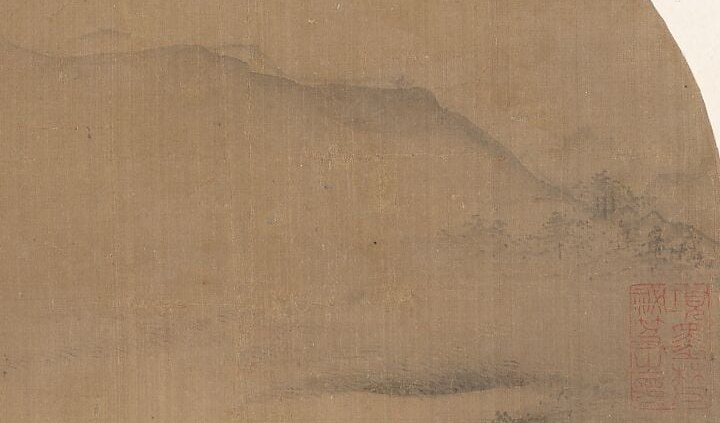
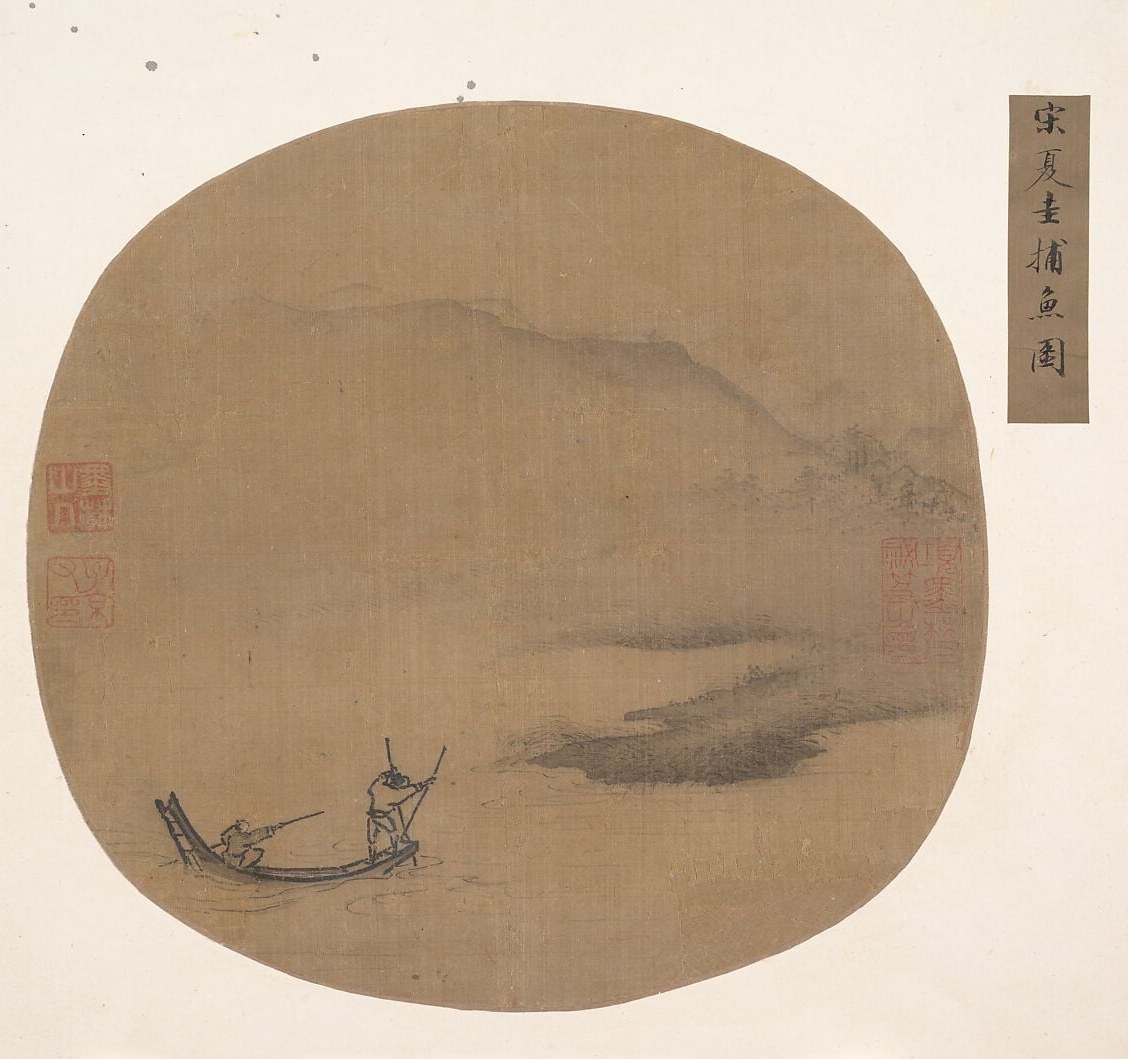
A fan-shaped painting on silk shows a boat in a misty river: River Landscape with Boatmen, anonymous Ming dynasty, ca. 1506, now at the Metropolitan Museum of Art. It was painted as a deliberate imitation of the Southern Song master Xia Gui (active ca. 1195-1230), whose soft, smoky landscapes defined an entire tradition.
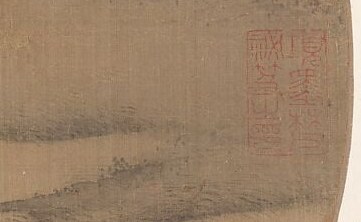
The painting itself rewards slow looking. Notice how the unpainted silk becomes the river, what Chinese painters call 'leaving white.' The far hills dissolve into mist with barely a hard line. And the two red stamps at upper left are vermillion collector seals, the fingerprint trail of Chinese art ownership. Each seal is a person who once valued this small, quiet work enough to press their name into it.
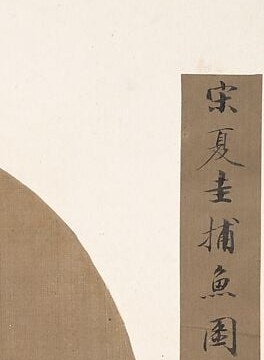
The vertical inscription at upper right is a colophon, likely added later, praising the painting and connecting it to the Xia Gui lineage. We do not know the painter's name. But we know other names, the collectors who preserved this work across centuries. Their red stamps are the only signatures that survive.
In Chinese landscape painting, the artist often disappears into the mountains. Here, the artist literally left no name, only a beautiful, borrowed style and a trail of red seals.
Details

Transcript
A boat. A misty river. A landscape so quiet it almost vanishes. The painter is unknown. The label says 'After Xia Gui,' a master who died three centuries earlier. Xia Gui made these soft, smoky hills famous. This artist is copying him stroke for stroke. But the painting has another story to tell. Look up. The vertical text names the scene and praises the work. And to its left: two red seals stamped by collectors who owned this silk centuries ago. The artist left no signature. The owners left their mark instead.