Saint Lawrence Enthroned with Saints and Donors by Filippo Lippi
View the artwork: Saint Lawrence Enthroned with Saints and Donors →
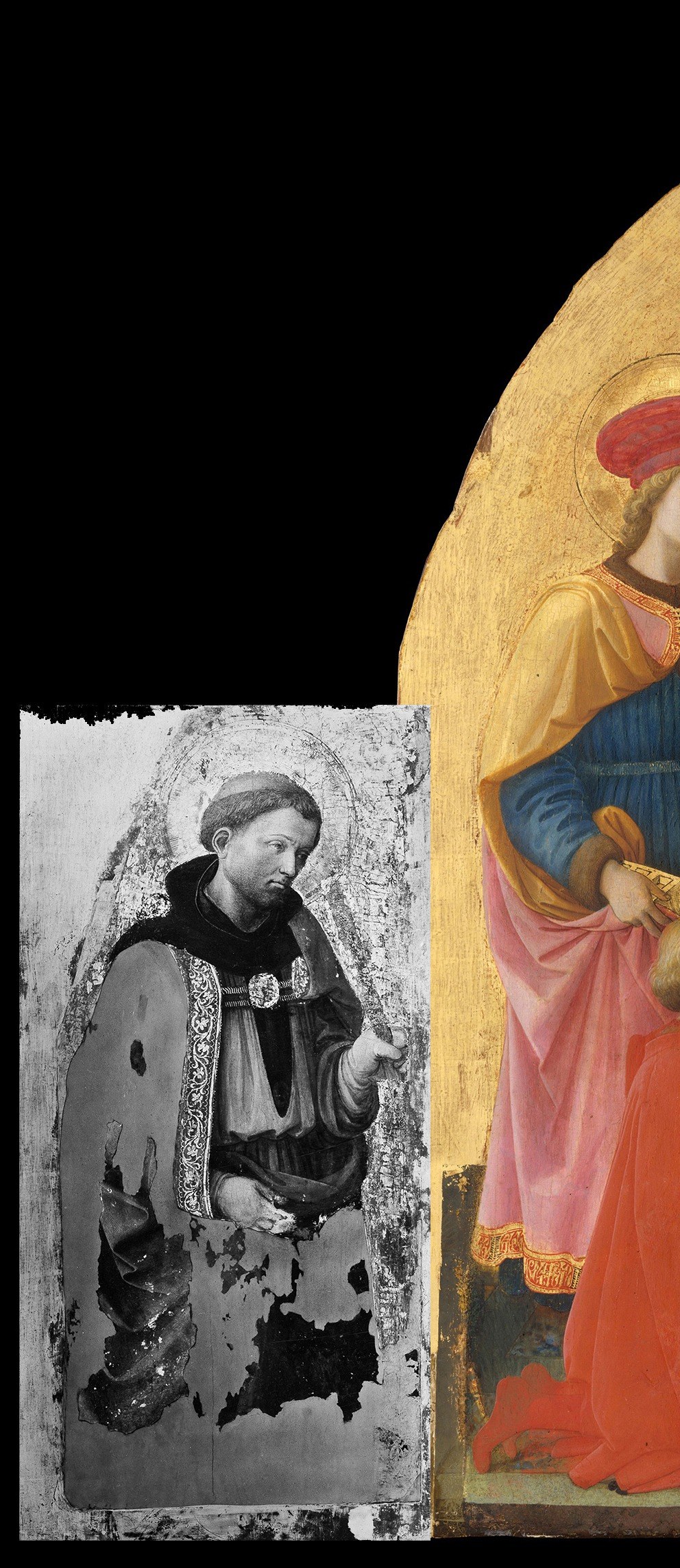
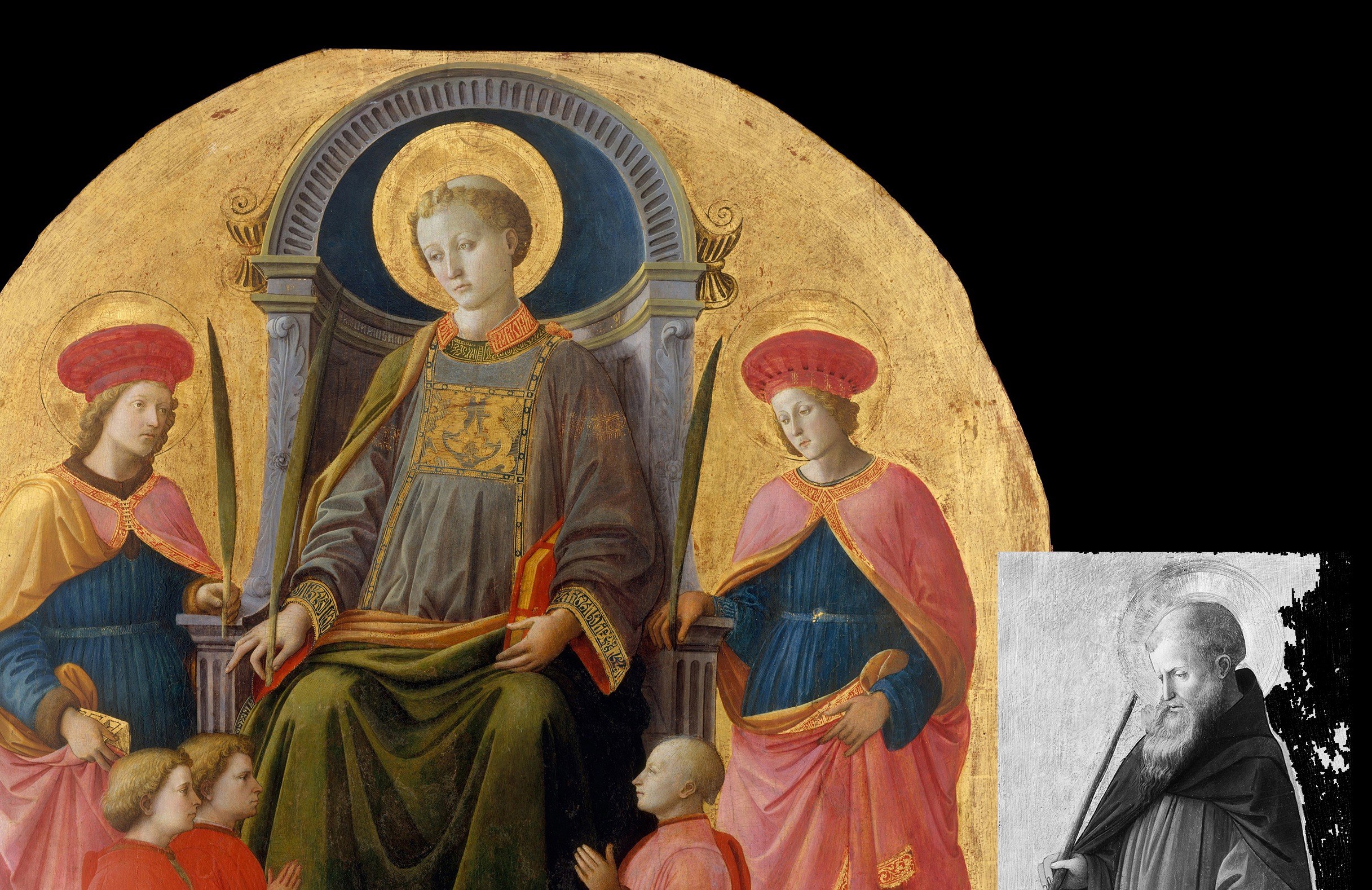
This is Filippo Lippi's Alessandri Altarpiece, painted in tempera on panel around 1453, now in the Metropolitan Museum of Art. The single most startling fact about it: the lower half of Saint Lawrence, his legs, the base of the throne, was largely repainted by restorer Federico Zeri in 1971. The painting we see is partly a modern reconstruction of a damaged devotional object, and you would never know by looking.
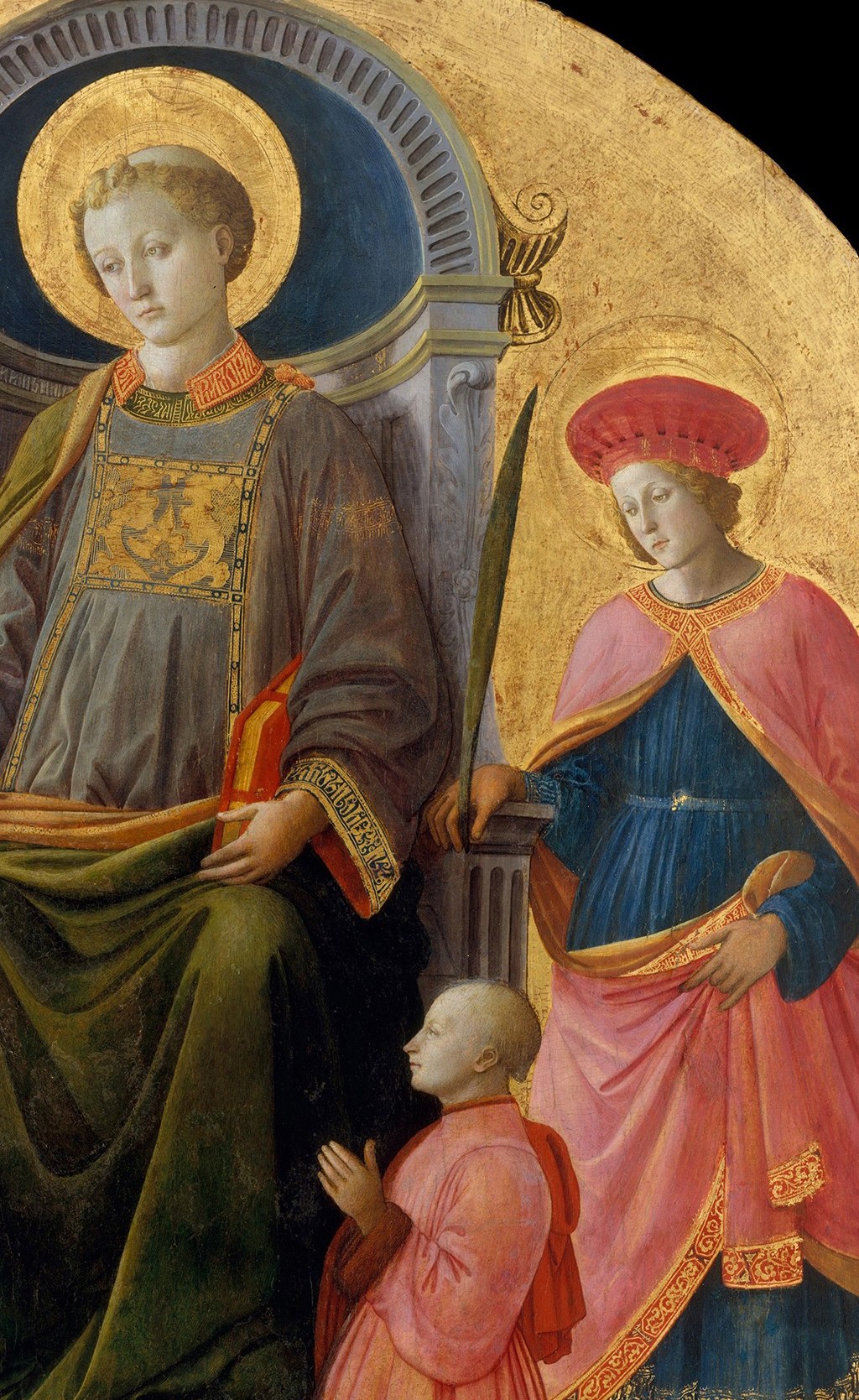
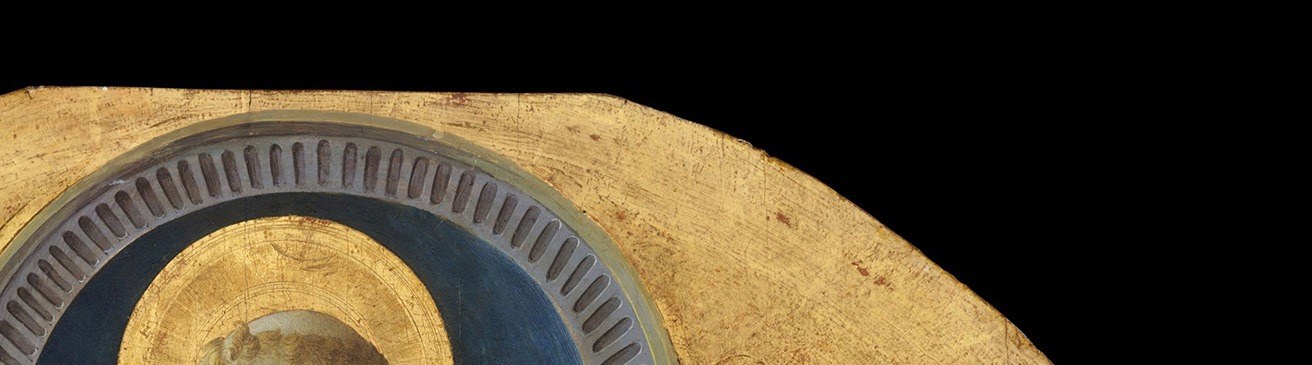
What to look at: the green and gold vestments on Saint Lawrence. This is not textured fabric, embossing, or real metal thread. It is pure illusion, built in egg tempera. Lippi laid down a flat green field for the silk, then overlaid the brocade pattern in dense parallel strokes of ochre and lead-tin yellow that sit slightly proud of the surface. The trick works because each gold loop in the weave is rendered as a distinct calligraphic mark, a short stroke catching imaginary light.
Lippi was a Carmelite friar and one of the most sought-after painters in mid-fifteenth-century Florence. Botticelli trained in his workshop. This altarpiece was likely commissioned by the Alessandri family, possibly as a wedding gift for Ginevra degli Alessandri's marriage into the Medici clan in January 1453. The two standing saints flanking Lawrence are Cosmas and Damian, physician-saints and Medici patron saints, political branding, dressed as devotion.
Next time you see gold in an early Renaissance panel, lean in. It might not be gold at all.
#arthistory #filippolippi #renaissance
Details
Transcript
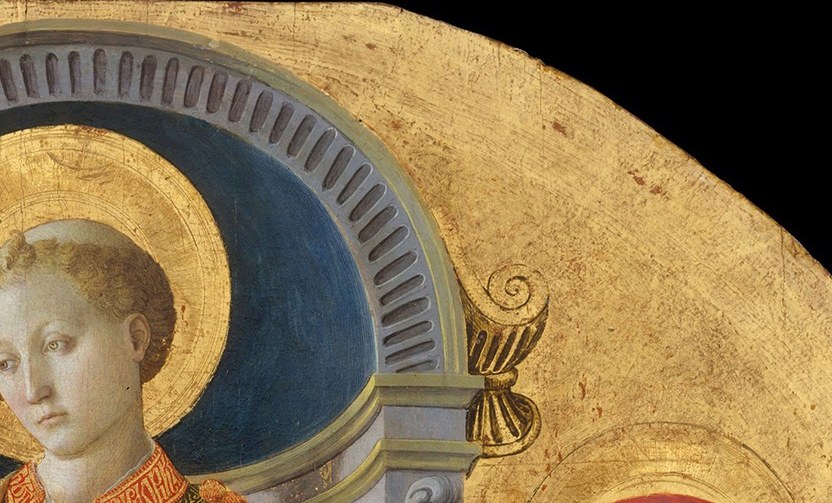
Florence, 1453. A family wants to be remembered. Look at the gold behind the saint. Now look at the gold on his chest. This is tempera, powdered pigment bound in egg yolk. There is no real weave here. Just paint. He built brocade out of short, parallel strokes. Thousands of them. Gold thread that sits on top of green silk, catching light that isn't there. A trick so precise it took a 1971 restoration just to reconstruct his legs.