Artwork
Saint Lawrence Enthroned with Saints and Donors
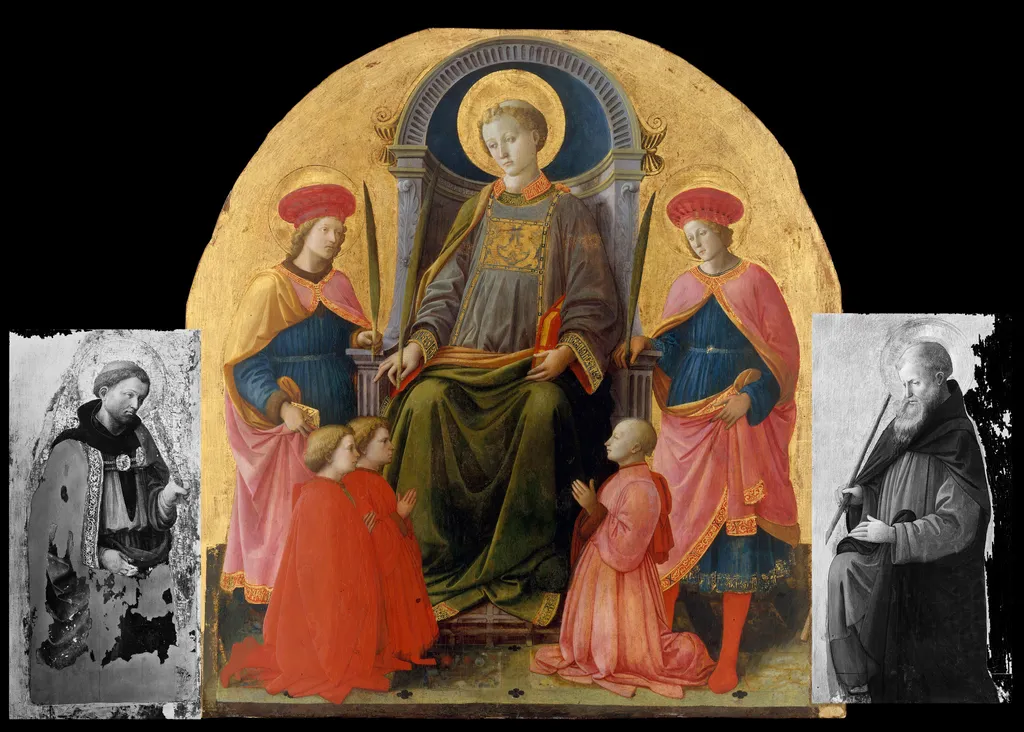
Saint Lawrence Enthroned with Saints and Donors is a tempera painting by the Early Renaissance artist Filippo Lippi. It dates from 1453 and is held in the collection of the Metropolitan Museum of Art.
About this work
Subject & Meaning
Kneeling donors, likely Alessandro Alessandri and his sons, appear at the saint’s feet, their reduced scale signaling their earthly status.
The altarpiece centers on Saint Lawrence, identifiable by his attributes: a book and a martyr’s palm, with the grill beneath his feet recalling his death by roasting. He is enthroned in a hierarchical composition, flanked by Saints Cosmas and Damian, physician-saints traditionally invoked for protection. The Medici-associated family of the Alessandri commissioned the work, and the inclusion of these saints aligns with Medici devotional practice, underscoring the patrons’ political and cultural allegiance.
Kneeling donors, likely Alessandro Alessandri and his sons, appear at the saint’s feet, their reduced scale signaling their earthly status. The gold ground and circular halos evoke Byzantine and Gothic conventions, while the architectural throne reinforces the sacred hierarchy, emphasizing Lawrence’s celestial authority and the intercessory role of the flanking saints.
Technique & Style
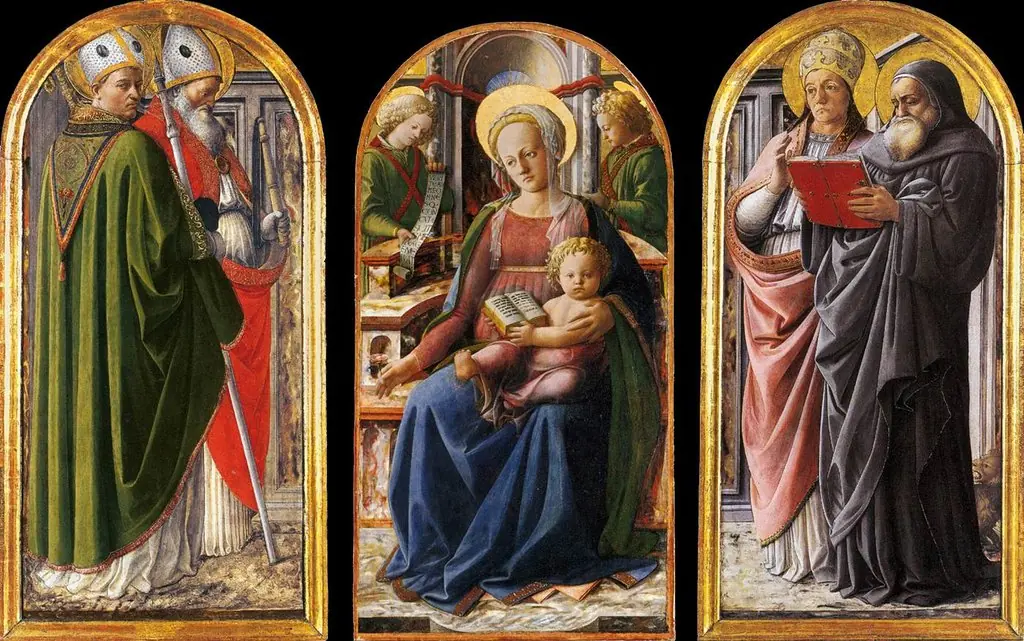
Executed in tempera on wood panel, this work currently presents as a triptych comprising a central panel (approx. 121 × 116 cm) and two lateral wings. Although originally conceived as a single panel, it was later divided and subsequently reassembled in 1971 by Federico Zeri. This reconstruction necessitated extensive repainting, particularly in the background areas and the legs of Saint Lawrence, to compensate for damage and loss.
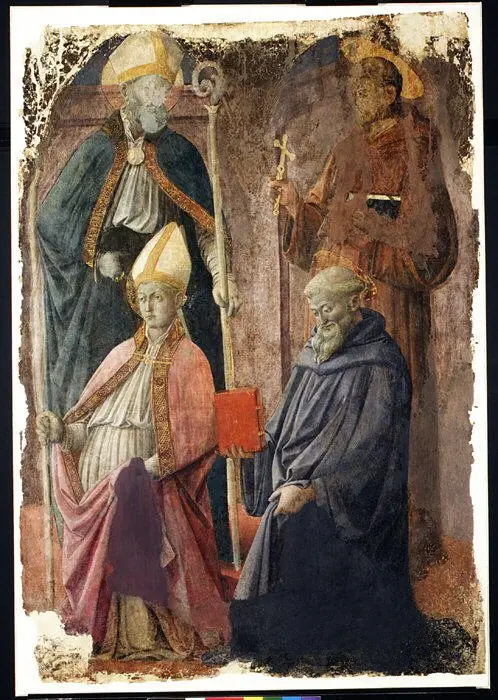
The painted surface retains areas of deterioration, including the near-total loss of one kneeling donor figure. Stylistically, the composition employs hierarchical scaling, where donors appear smaller than interceding saints, who are themselves diminutive compared to the enthroned central figure. The work maintains a Gothic-Byzantine aesthetic through its use of a gold leaf background, circular halos, and an architectural throne rendered without linear perspective.
History & Provenance
The painting is currently held by the Metropolitan Museum of Art in New York, where it has been part of the collection since 1935. It entered the museum's holdings via the Morgan Library that same year, following its sale on the London art market in 1912 and its subsequent transfer to the New York art market. The provided sources do not list a specific inventory or accession number, nor do they document any specific exhibition history beyond its continuous presence at the Metropolitan Museum of Art.
Context
The Alessandri Altarpiece is identified as the work described by Giorgio Vasari in his Lives of the Artists, executed for the Alessandri family's villa chapel at Vincigliata near Florence, and it is now considered a key example of Filippo Lippi's mid-Quattrocento output. Dating remains unsettled: most art historians place the panel between the mid-1440s and early 1450s, while some propose it functioned as a wedding gift for Ginevra degli Alessandri's marriage to Giovanni di Cosimo de' Medici on 20 January 1453. The choice of Saints Cosmas and Damian alongside Saint Lawrence reflects the Alessandri family's ties to the Medici, for whom the physician saints served as protectors.
The composition retains a markedly Gothic and Byzantine character through its hierarchical scaling of donors beneath the saints, gold ground, and architecturally conceived throne without linear perspective. Federico Zeri's 1971 reconstruction into a triptych form, repainting large areas of background and the saint's legs, has shaped subsequent scholarship, catalogued by Mannini and Fagoli in their 1997 complete catalogue of Lippi.
Legacy
The Alessandri Altarpiece, attributed to Filippo Lippi, has been recognized in art-historical literature since Giorgio Vasari’s Lives of the Artists, which situates it among Lippi’s works for the Alessandri family’s villa at Vincigliata near Florence. Its later reception has been shaped by debates over its original form, provenance, and restoration. In 1971, Federico Zeri reconstructed the dispersed triptych from a single panel, repainting damaged areas and stabilizing its current presentation at the Metropolitan Museum of Art.
The painting’s association with the Medici and Alessandri families, particularly its possible role as a Medici-linked wedding gift in 1453, has sustained scholarly interest in its social and political context within Florentine Renaissance patronage. Despite material losses and restorations, the work remains a touchstone for discussions of Lippi’s devotional imagery and the interplay between sacred iconography and familial commemoration.
Overview
Filippo Lippi's Saint Lawrence Enthroned with Saints and Donors, also known as the Alessandri Altarpiece, is a tempera painting on panel. This work depicts Saint Lawrence seated on a throne, flanked by other saints, with kneeling donor figures presented before him. The painting is currently housed in the Metropolitan Museum of Art in New York.
Own this work as a print
Artist & collection
Artist
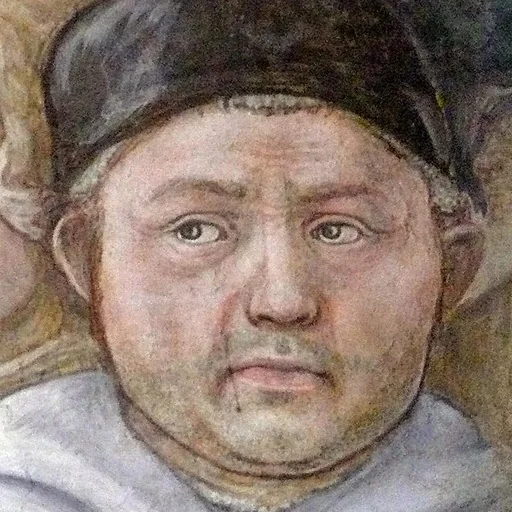
Filippo Lippi (c. 1406 – 8 October 1469), also known as Lippo Lippi, was an Italian Renaissance painter of the Quattrocento (fifteenth century) and a Carmelite priest. He was an early Renaissance master of a painting…

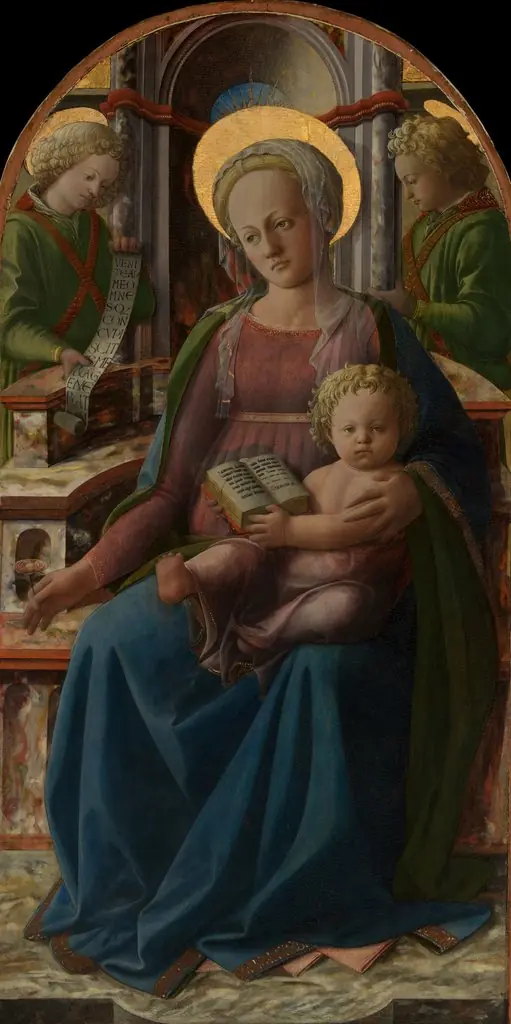
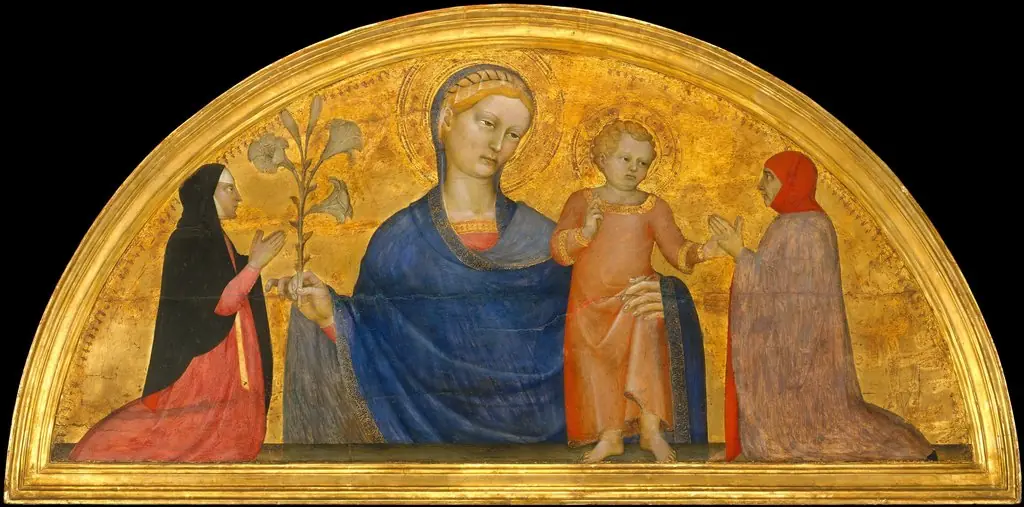 Madonna and Child with Donors
![Madonna and Child with the Blessing Christ, and Saints Mary Magdalene and Catherine of Alexandria with Angels [entire triptych], by Pietro Lorenzetti](https://artifactworldgallery.com/img/pietro-lorenzetti--madonna-and-child-with-the-blessing-christ-and-saints-mary-m--f78e415f61769b64-w320.webp) Madonna and Child with the Blessing Christ, and Saints Mary Magdalene and Catherine of Alexandria with Angels [entire triptych]
Madonna and Child with the Blessing Christ, and Saints Mary Magdalene and Catherine of Alexandria with Angels [entire triptych]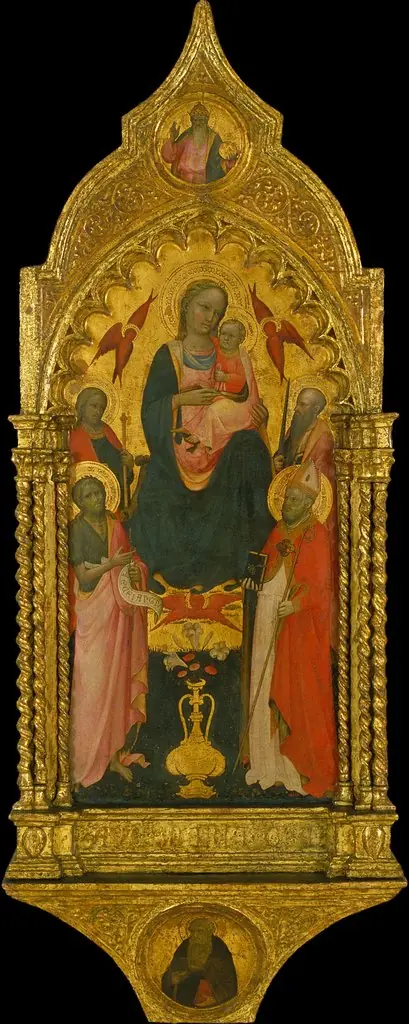 Virgin and Saints
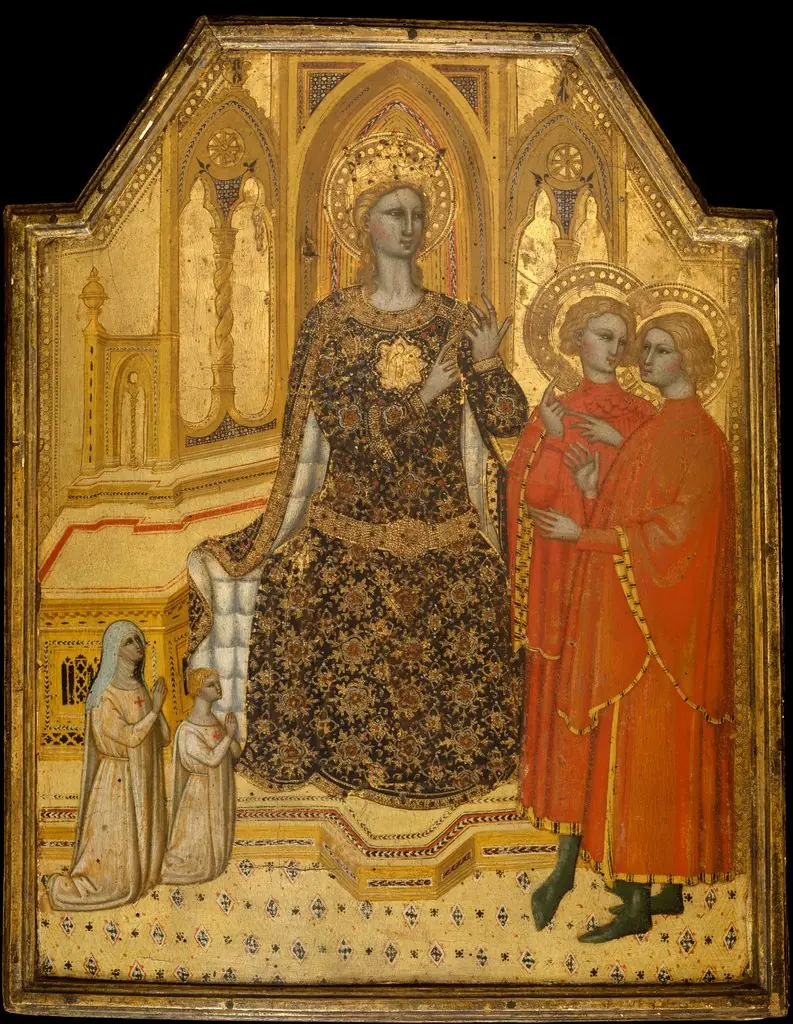 Saint Catherine Disputing and Two Donors
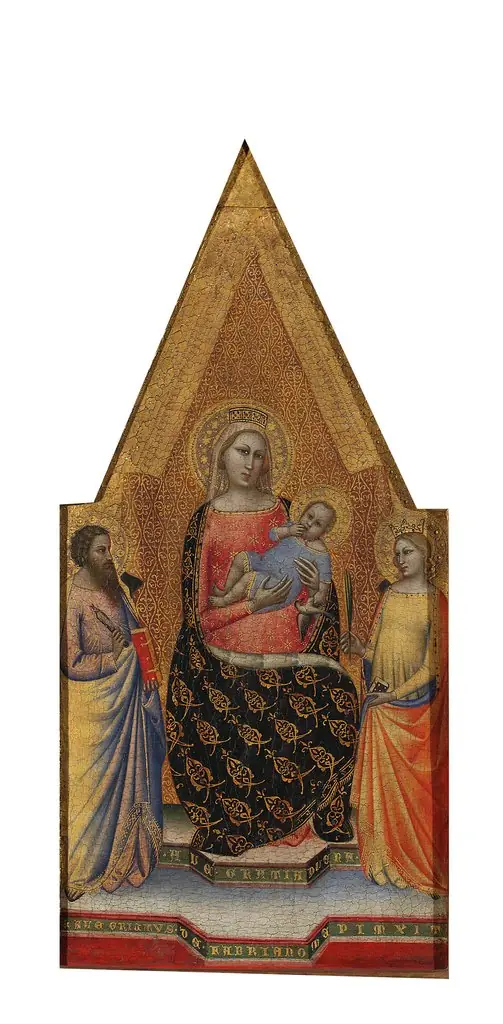 Madonna and Child enthroned with two Saints, Crucifixion
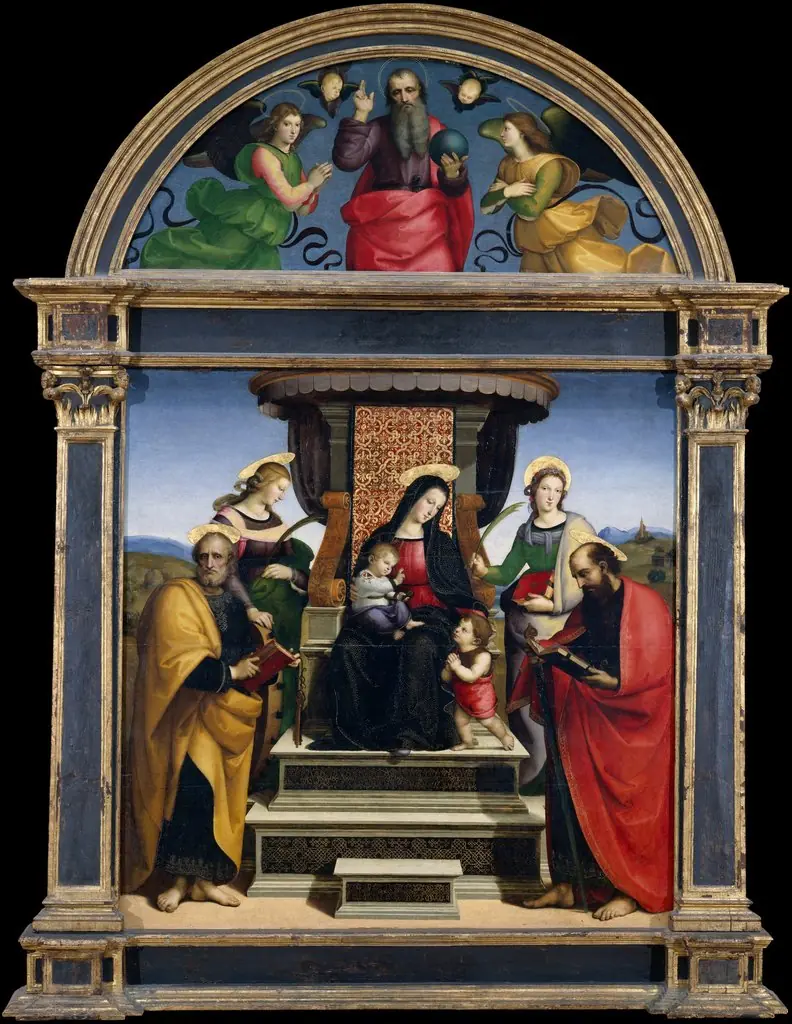 Madonna and Child Enthroned with Saints
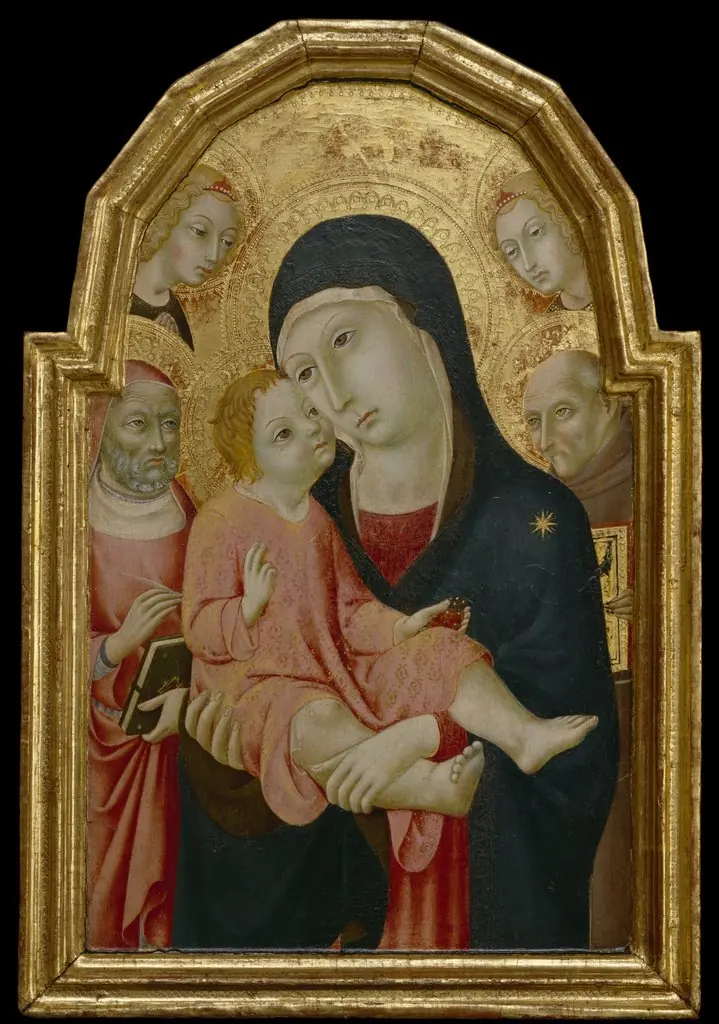 Virgin and Child with Saint Bernardino, Saint Jerome and Two Angels
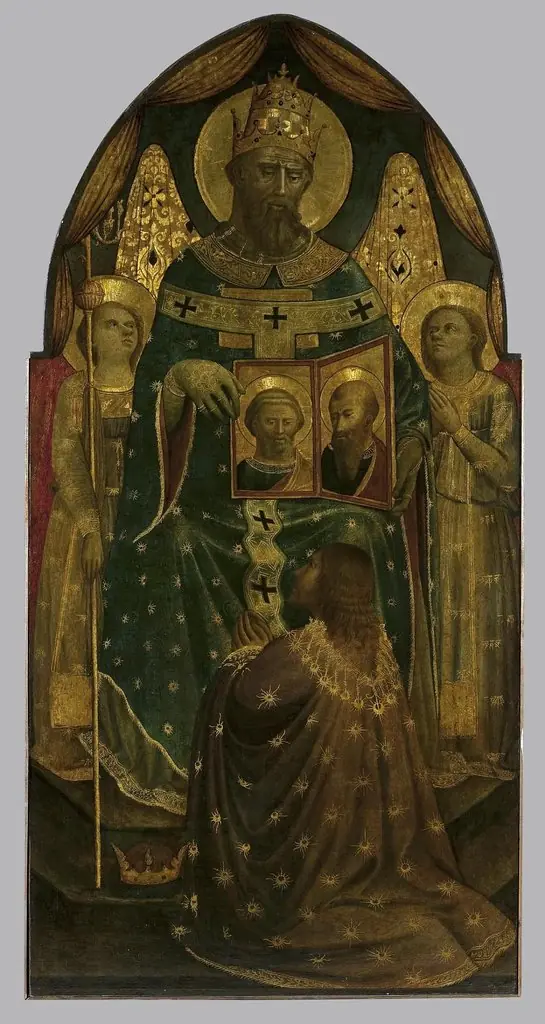 Emperor Constantine in front of Pope Sylvester I Showing Depictions of Sts Peter and Paul (central part of the triptych)
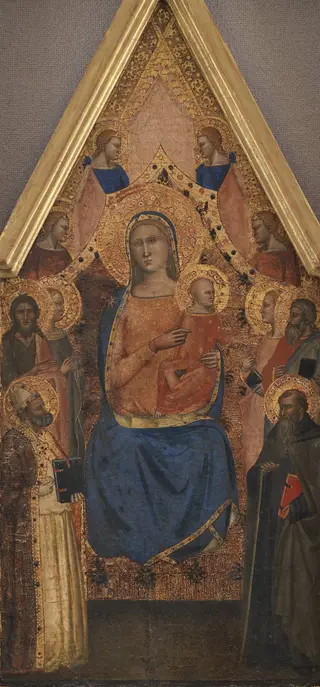 The Virgin and Child with Saints and Angels
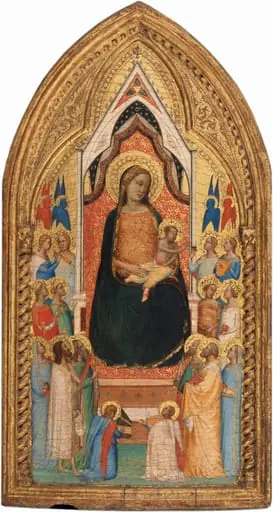 Madonna and Child with Saints and Angels
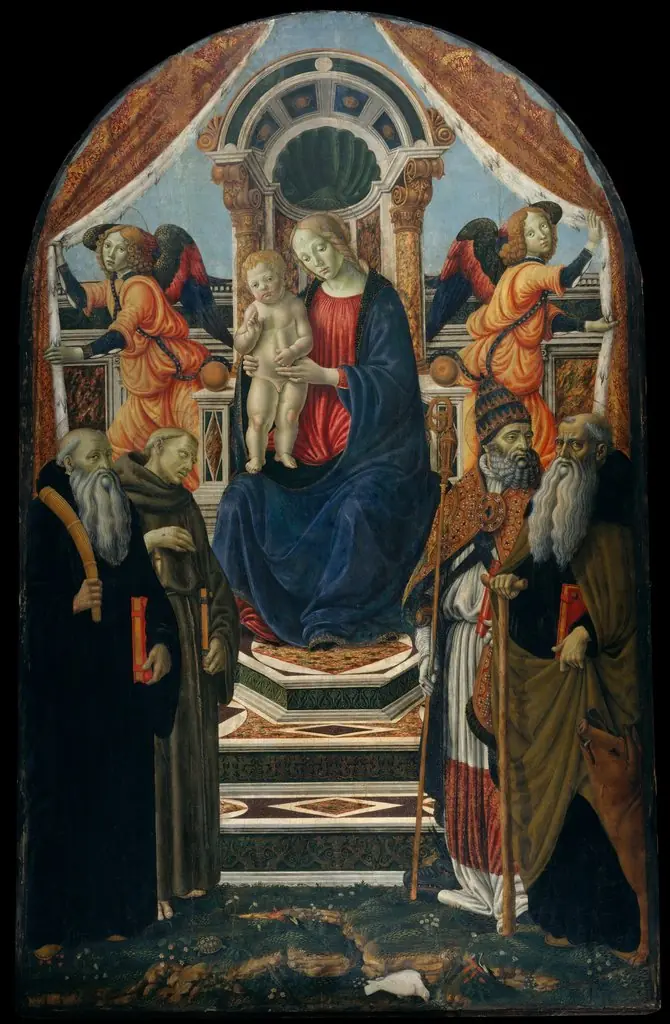 Madonna and Child Enthroned with Saints and Angels
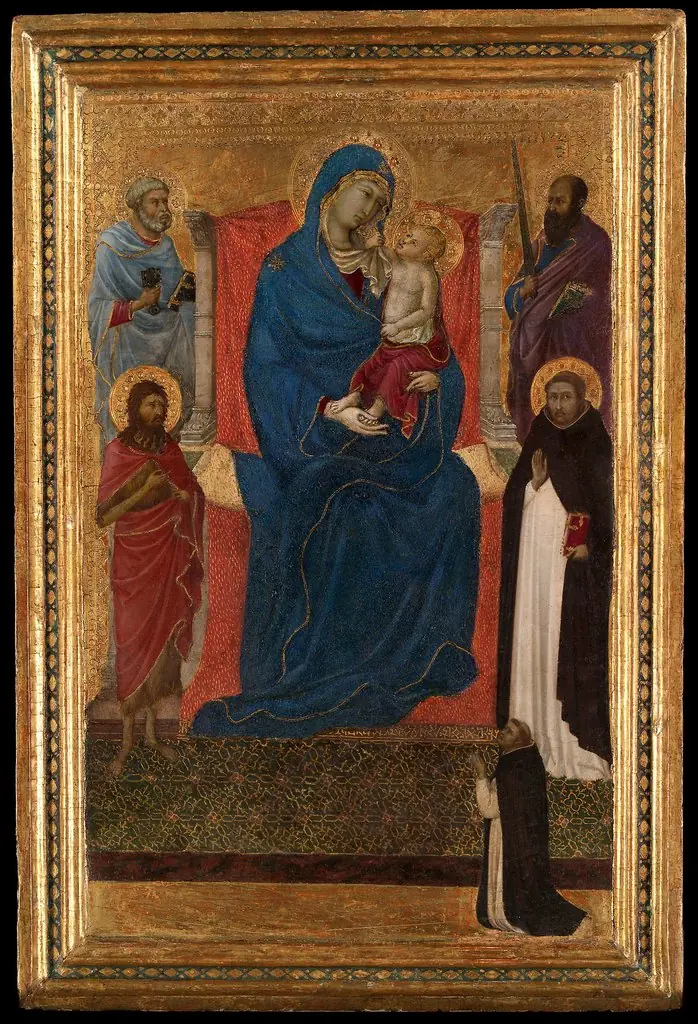
- Virgin and Child Enthroned with Saints Peter, Paul, John the Baptist, Dominic and a Donor