A Polish Nobleman by Rembrandt van Rijn
View the artwork: A Polish Nobleman →
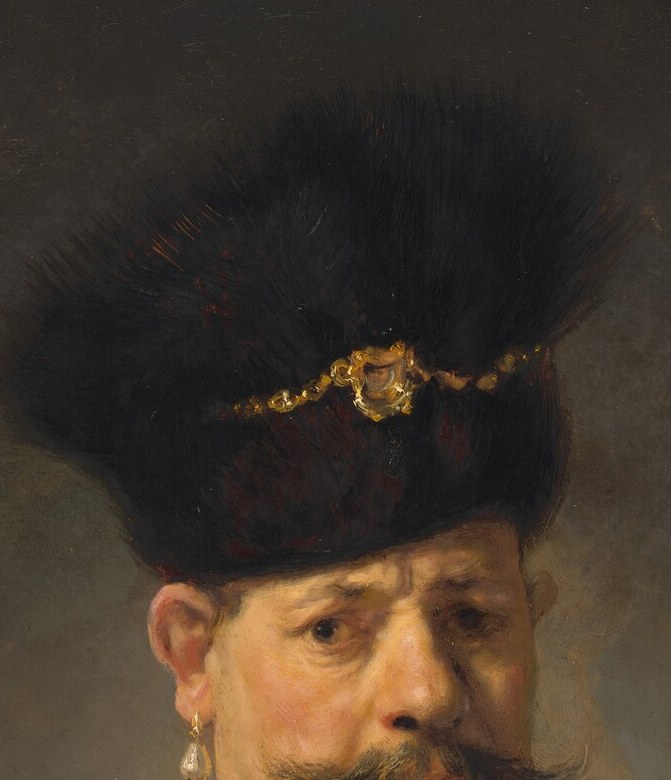
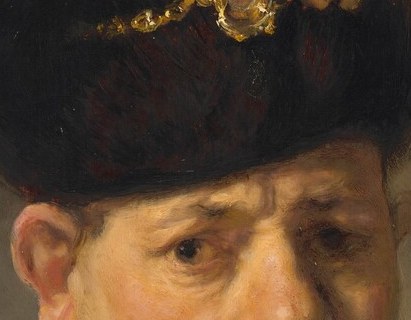
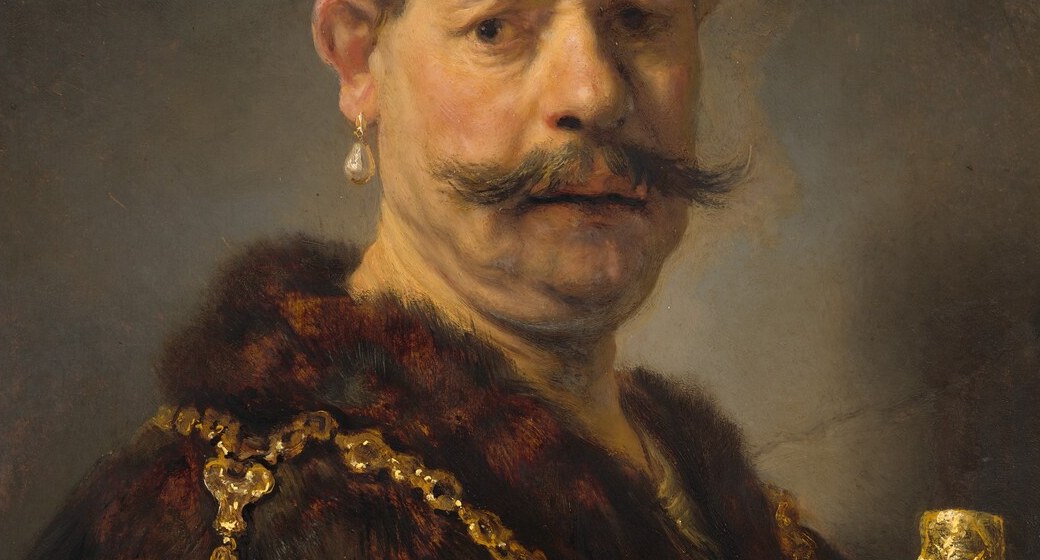
Rembrandt van Rijn's 1637 portrait, A Polish Nobleman, is often discussed as a mystery, is the sitter a Polish diplomat? The artist himself?, but the real display of genius is happening right on the surface of the paint. This is not a picture of luxury. It is a physical demonstration of it, built with six completely different painting techniques for six different materials.
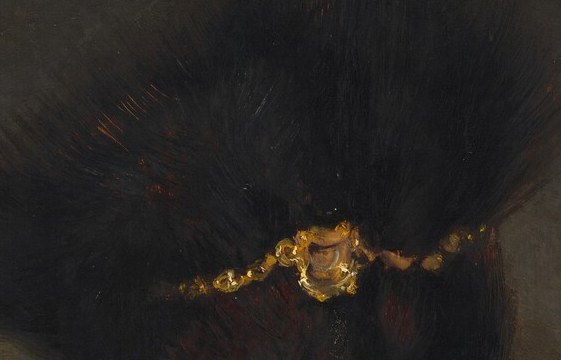
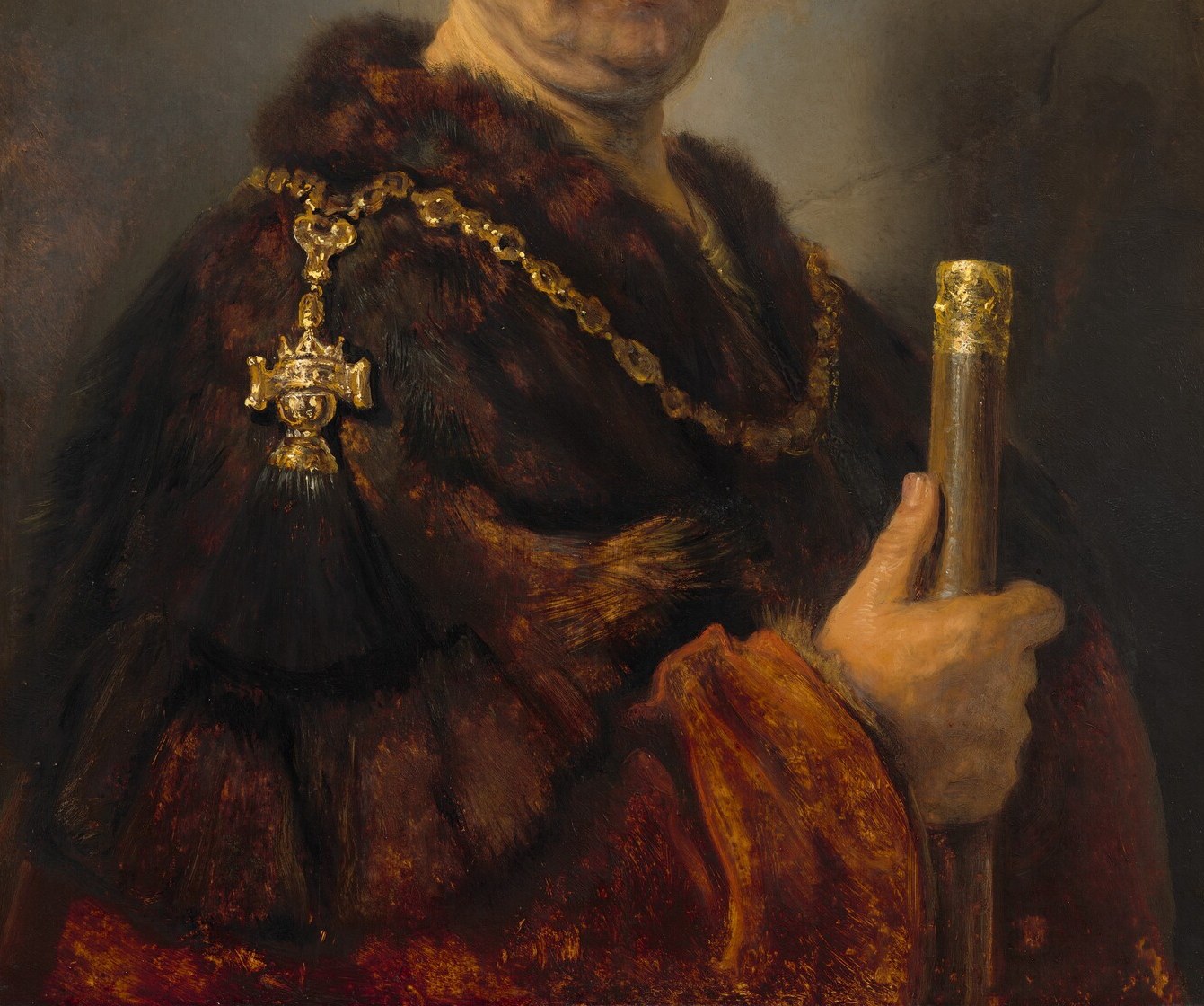
Watch the chain closely. Every link is a separate decision: a dab of ochre, a stroke of umber, a single white dot on the crest. No metallic pigment appears anywhere. The whole heavy, glowing chain is an optical trick of warm darks and one bright note per link. Then move up to the fur collar, Rembrandt loaded the brush so heavily the paint still casts its own shadow on the panel. He knew engravers could never reproduce it; a printed fur coat is flat, so he made sure the real one stood up like relief sculpture.
The background is the final piece of the system. The left side of the robe dissolves entirely into the dark ground, destroying the edge of the figure. Painters call this a 'lost edge,' and Rembrandt uses it to throw the lit face forward. The face reads as emerging from nothing, and that single white collar, a few economical strokes of lead white, catches the eye and funnels it down to the gold. Everything in this painting is a choice about where you look and what you feel when you get there.
The National Gallery of Art in Washington holds the painting today. The sitter's identity is still debated, but the technique is documented and undeniable: this is Rembrandt at thirty-one, already in full command of every surface in the world.
#arthistory #rembrandt #dutchgoldenage
Details
Transcript
You are looking at a masterclass in painting materials. Six textures. Each one made with a completely different hand. The face: soft, seamless, lit from within. The gold chain: built with single flicks of the brush. No metallic paint. Just yellow, brown, and a white highlight. Now the fur. Look at the edge of his collar. Rembrandt laid paint so thick it stands off the panel. Engravers tried to copy this and failed every time.