Artwork
A Polish Nobleman
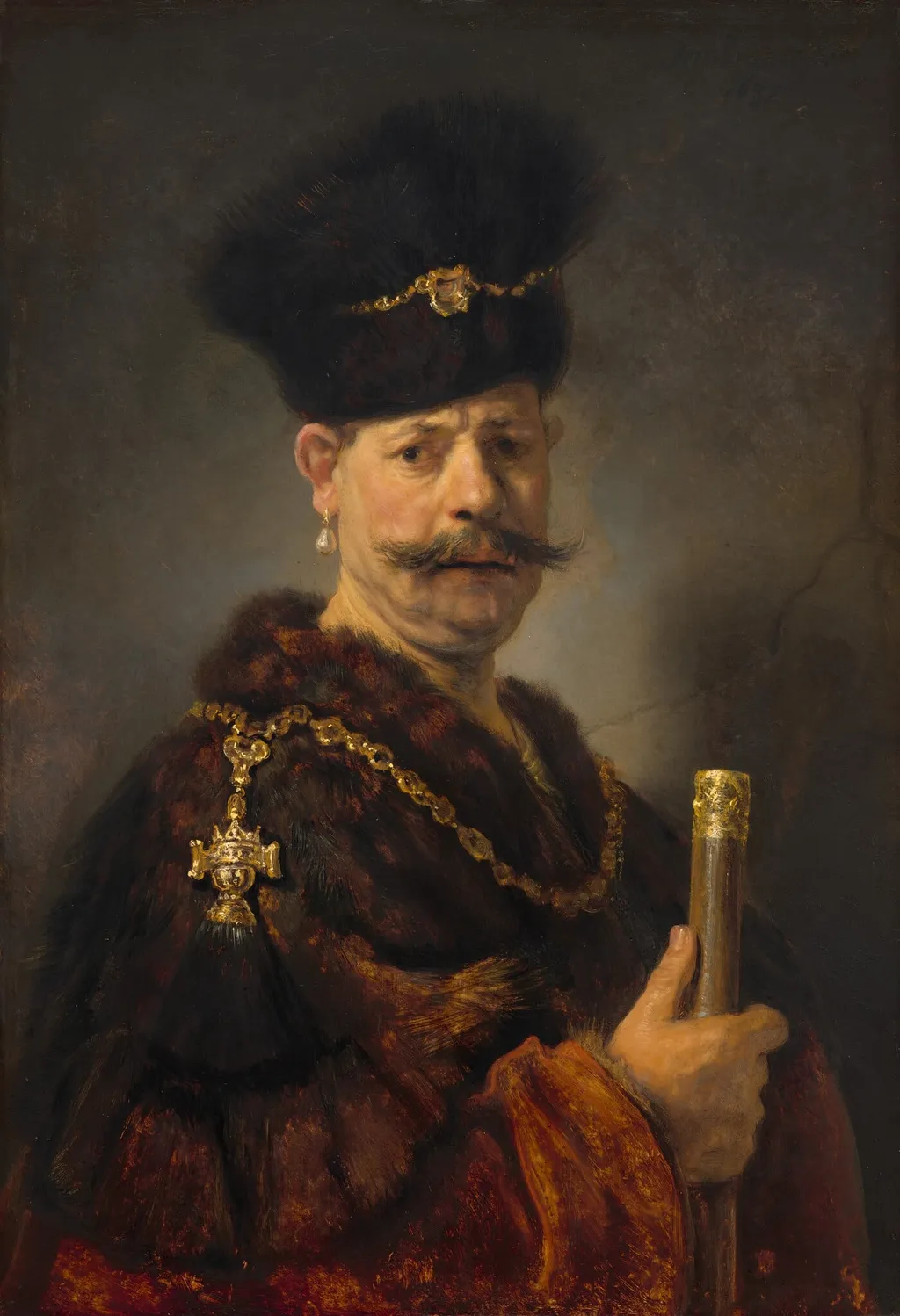
A Polish Nobleman is an oil painting by the Baroque artist Rembrandt van Rijn. It dates from 1637 and is held in the collection of the National Gallery of Art.
- Inscription
- Inscribed:upper right: Rembrandt.f:. / 1637
About this work
Subject & Meaning
A heavy gold chain and pendants featuring three horse tails, emblematic of Ottoman-influenced insignia, further emphasize status.
Rembrandt's A Polish Nobleman (1637) depicts a standing male figure in elaborate attire suggestive of Eastern European nobility, though the precise cultural origin of the costume remains debated. The subject wears a high fur cap adorned with a golden chain and a coat of arms, a thick mustache, and a pearl earring, while holding a baton topped with gold, a symbol often associated with authority or diplomatic rank. A heavy gold chain and pendants featuring three horse tails, emblematic of Ottoman-influenced insignia, further emphasize status.
Scholars have proposed the figure may represent a Polish nobleman, such as Andrzej Rej, a diplomat active in Amsterdam at the time, though others argue the costume aligns more closely with Muscovite boyar dress. The tronie genre classification underscores its potential as an exaggerated character study rather than a formal portrait, with some suggesting it could be an idealized self-portrait of Rembrandt himself.
Technique & Style
Executed in 1637, this work is an oil painting on an oak panel. Dendrochronological analysis confirms the wood originated from a tree felled around 1635, matching timber used in other Rembrandt works. The composition features a man turned three-quarters right against a brownish-grey background, illuminated by strong light from the left.
The figure wears elaborate attire, including a reddish-brown mantle with a broad fur collar, a heavy gold chain bearing a three-horse-tail insignia, and a high fur cap adorned with a jeweled chain and coat of arms. Distinctive accessories include a large pear-shaped pearl earring and a baton with a golden cap held in the raised right hand. Stylistically, the piece is often classified as a tronie, emphasizing extravagant costume and a commanding expression rather than a strict likeness.
Technical examination, including X-rays conducted prior to a 1985 restoration, reveals that the artist modified the subject's jowls during the painting process.
History & Provenance
The work, titled A Polish Nobleman, was painted by Rembrandt in 1637 on an oak panel (oil on panel). Its early ownership is uncertain, but it may have passed through the 1707 Amsterdam sale of Harman van Swol. In 1765 it entered the collection of Philippus Florentinus Vergeloo, acting for Count Johan Carl Philipp Cobenzl, and passed in 1768 to Catherine II, who placed it in the Imperial Hermitage Museum in Saint Petersburg.
In February 1931 the Soviet government sold the work through the Matthiesen Gallery, P. & D. Colnaghi & Co., and M. Knoedler & Co. to Andrew W. Mellon, who deeded it to the A. W. Mellon Educational and Charitable Trust on 30 March 1932 and gifted it to the National Gallery of Art in Washington, D.C., in 1937. Following the secretive 1931 acquisition, the painting was temporarily stored in a non-public section of the Corcoran Gallery of Art in Washington. Technical study of the panel, indicating the wood was felled around 1635, confirms the dating.
Overview
Rembrandt van Rijn's 1637 oil on panel painting, titled "A Polish Nobleman," presents a male figure adorned in rich, period-specific attire. The artwork is characterized by its direct engagement with the viewer, as the subject's gaze meets the observer's. This piece exemplifies Rembrandt's approach to portraiture, combining detailed costume elements with an emphasis on individual presence and texture, a common feature in his works from this decade.
Own this work as a print
Artist & collection

Artist
Rembrandt Harmenszoon van Rijn, known mononymously as Rembrandt, was a Dutch Golden Age painter, printmaker, and draughtsman.

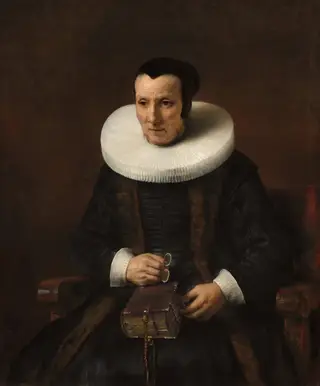
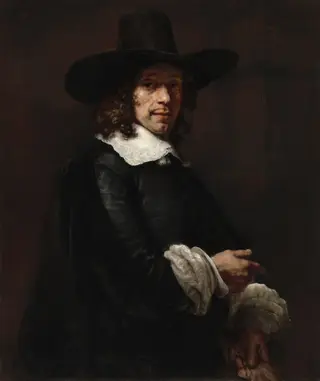
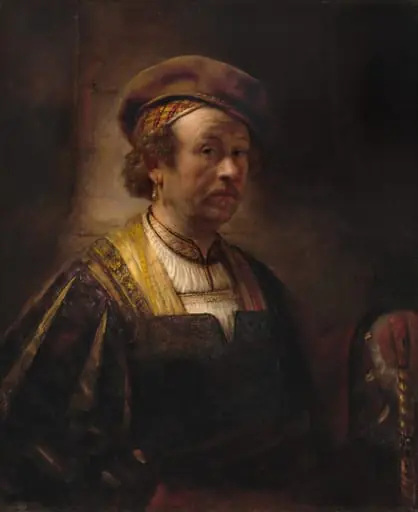 Portrait of Rembrandt
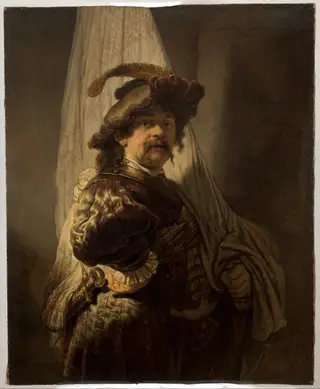 The Standard Bearer
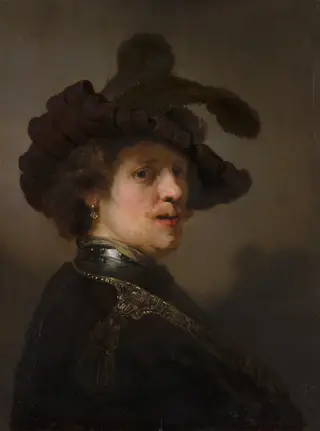 Portrait of a man in a plumed hat
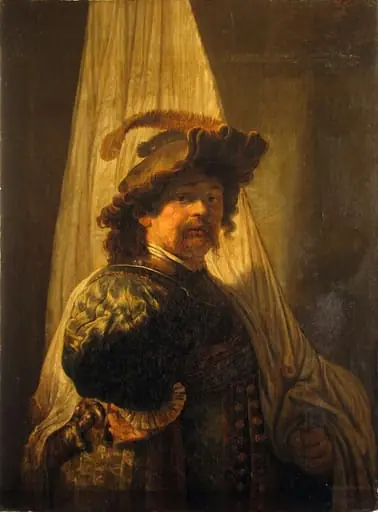 Stegar civil
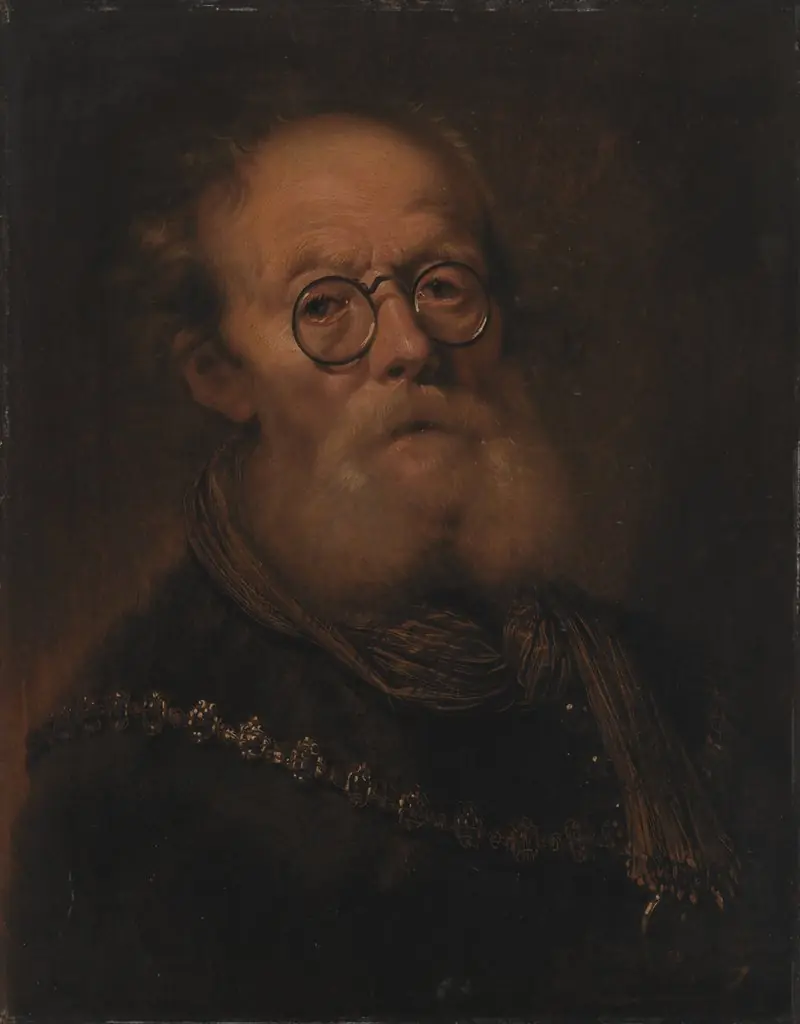 En gammel mand. Allegorisk fremstilling af synet
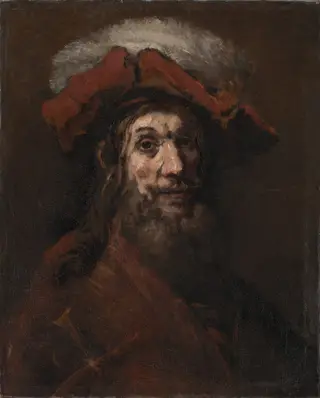 Man in plumed beret
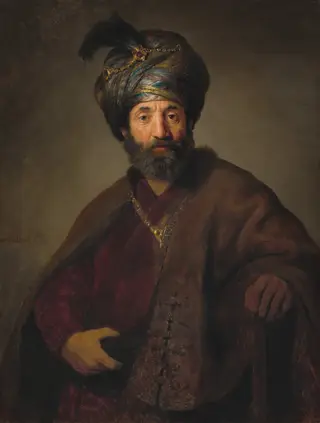 Man in Oriental Costume
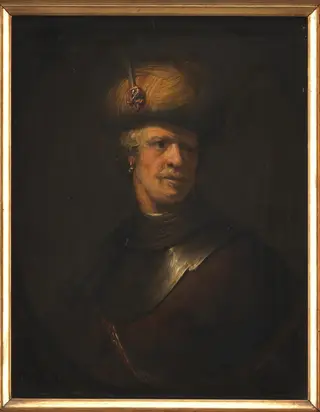 Half-Length Portrait of an Old Man
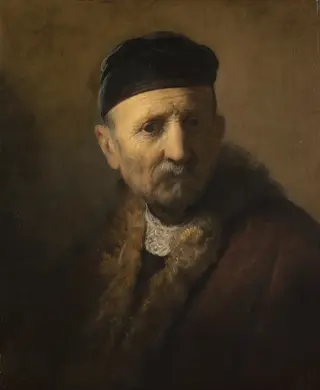 Study of an old man (Rembrandt's father)
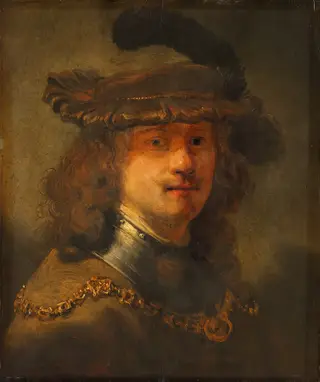 Self portrait with a velvet beret and gold chain
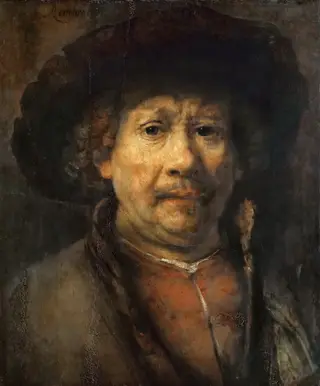 Self-portrait
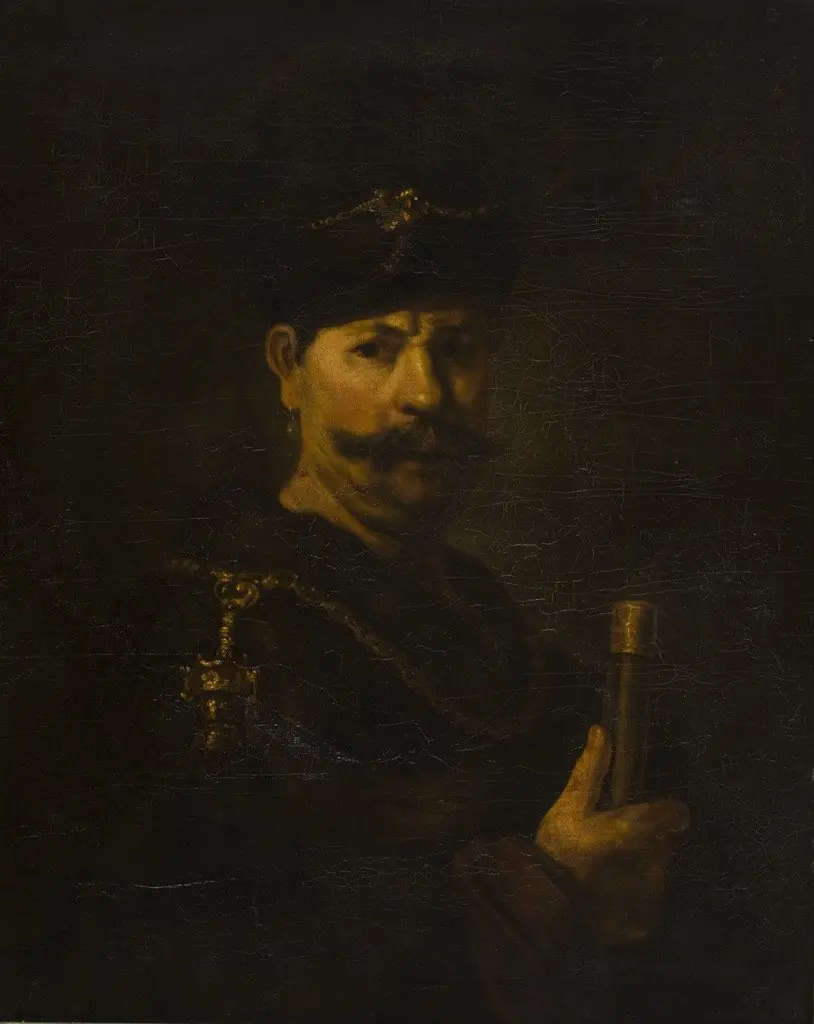
- Portrait of a Polish Nobleman – Copy