Abduction of the Sabine Women by Johann Heinrich Schönfeld
Johann Heinrich Schönfeld's "Abduction of the Sabine Women," painted in 1640, is held at The Cleveland Museum of Art and depicts a legendary founding myth of Rome.
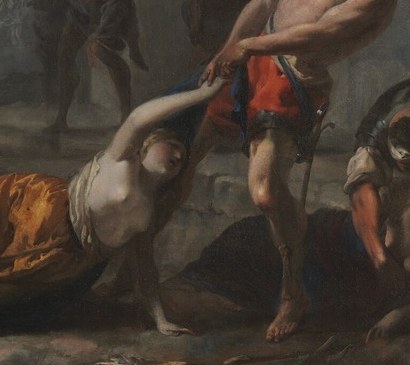
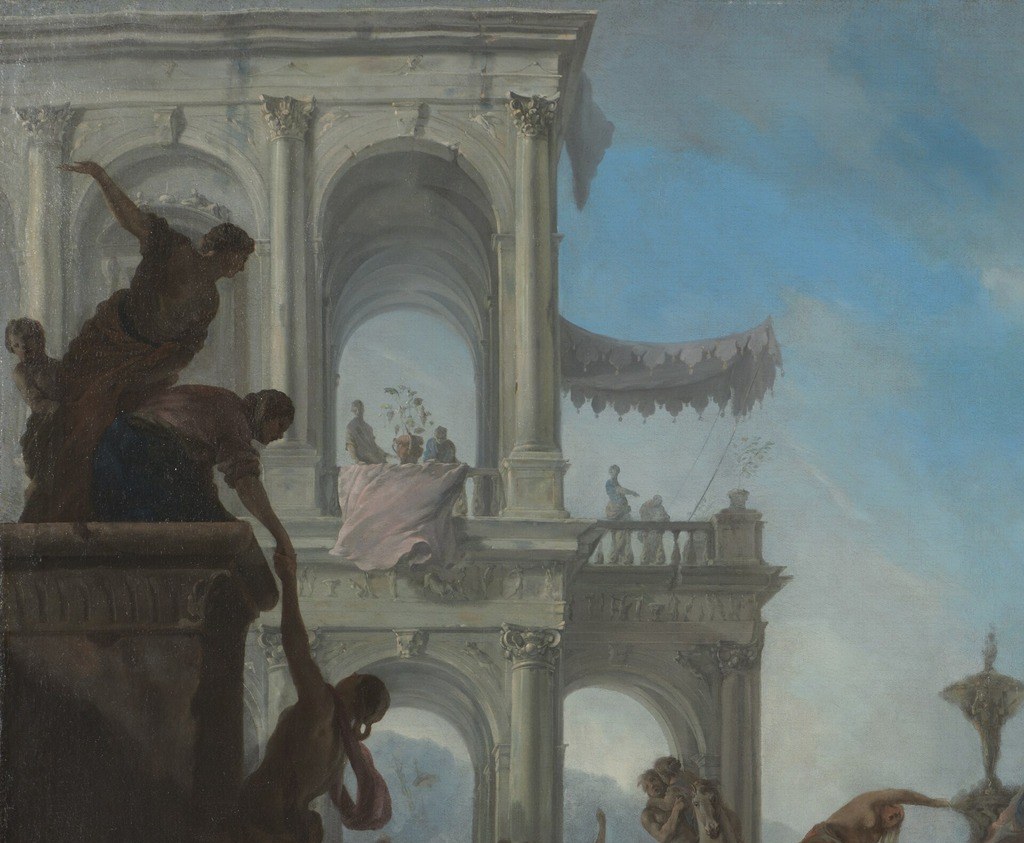
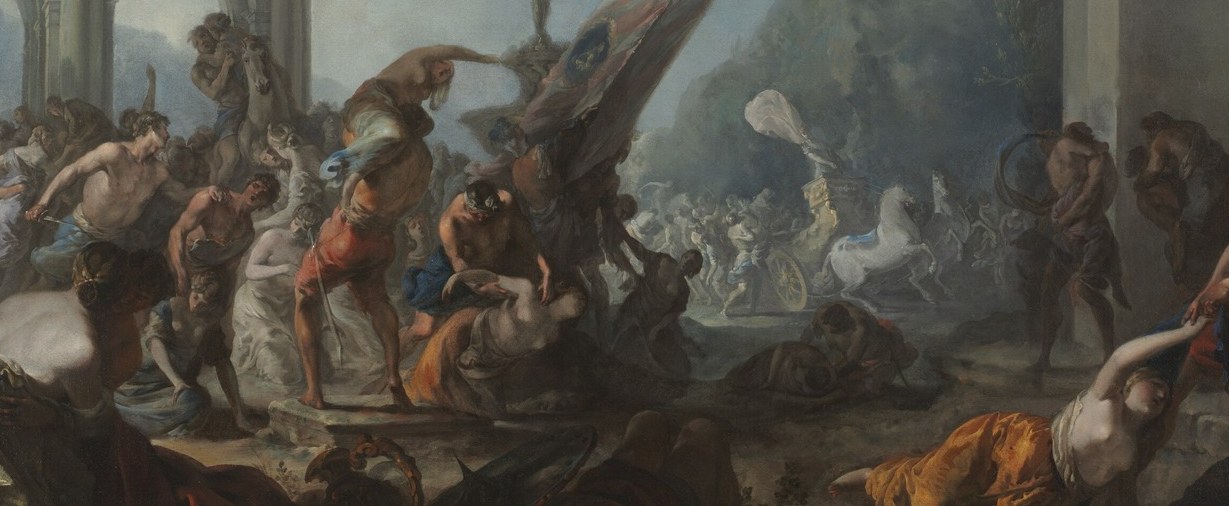
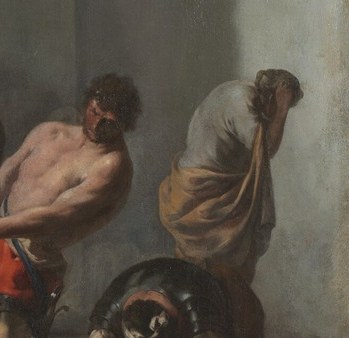
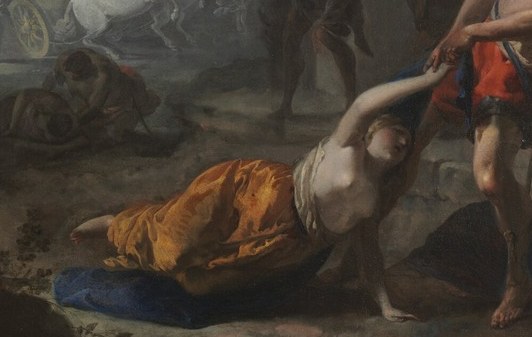
The painting's central figures, a Roman man seizing a Sabine woman, draw the eye into a scene of intense struggle and despair. Look closely at the faces and gestures in the dense crowd; they vividly convey the chaos and human emotion of the event.
Schönfeld, active during the Thirty Years' War in Germany, often imbued his historical narratives with dramatic intensity, reflecting the tumultuous times. This work showcases his mastery in orchestrating complex, multi-figure compositions with vibrant brushwork and strong contrasts.
This dramatic canvas serves as both a moral illustration of classical antiquity and a powerful display of Baroque artistry. What emotions do you see reflected in the figures' faces?
Details
Transcript
This painting depicts a founding myth of ancient Rome. Roman men abducted women from a neighboring tribe, the Sabines. The artist, Schönfeld, painted this in 1640. Look at the woman's face, a portrait of terror and resistance. Vigorous brushwork and strong chiaroscuro model the struggling bodies. This chaotic scene reflects Europe during the Thirty Years' War.