Tobias and the Angel by Lippi, Filippino
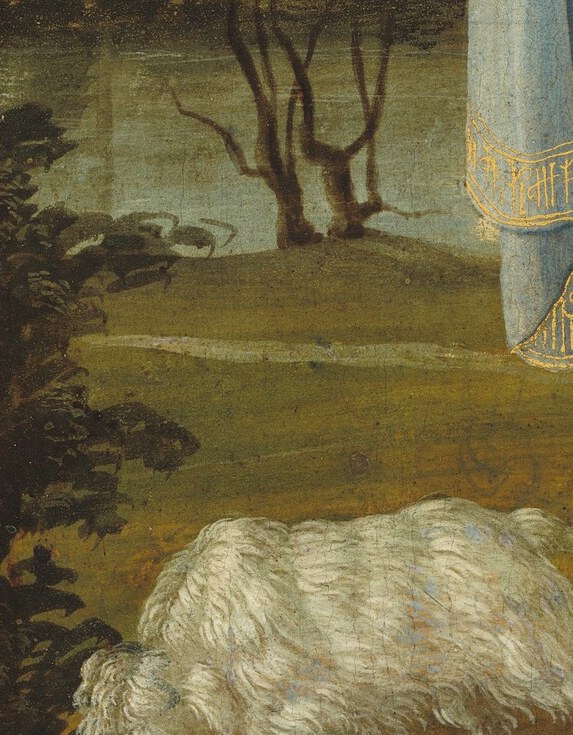
There is a tiny dog in Filippino Lippi's *Tobias and the Angel*, painted in Florence around 1475-1480, that most people never notice. It trots along the left edge of the road, small enough to scroll straight past on a phone. Finding it changes how you see the whole painting.
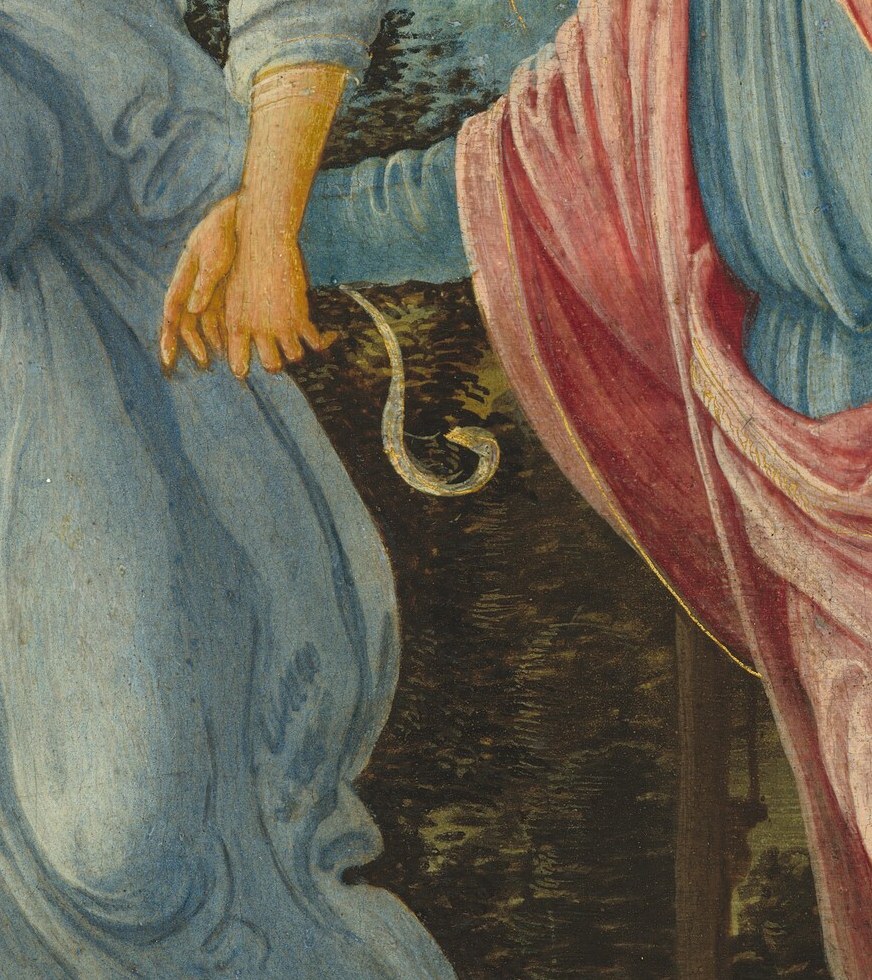
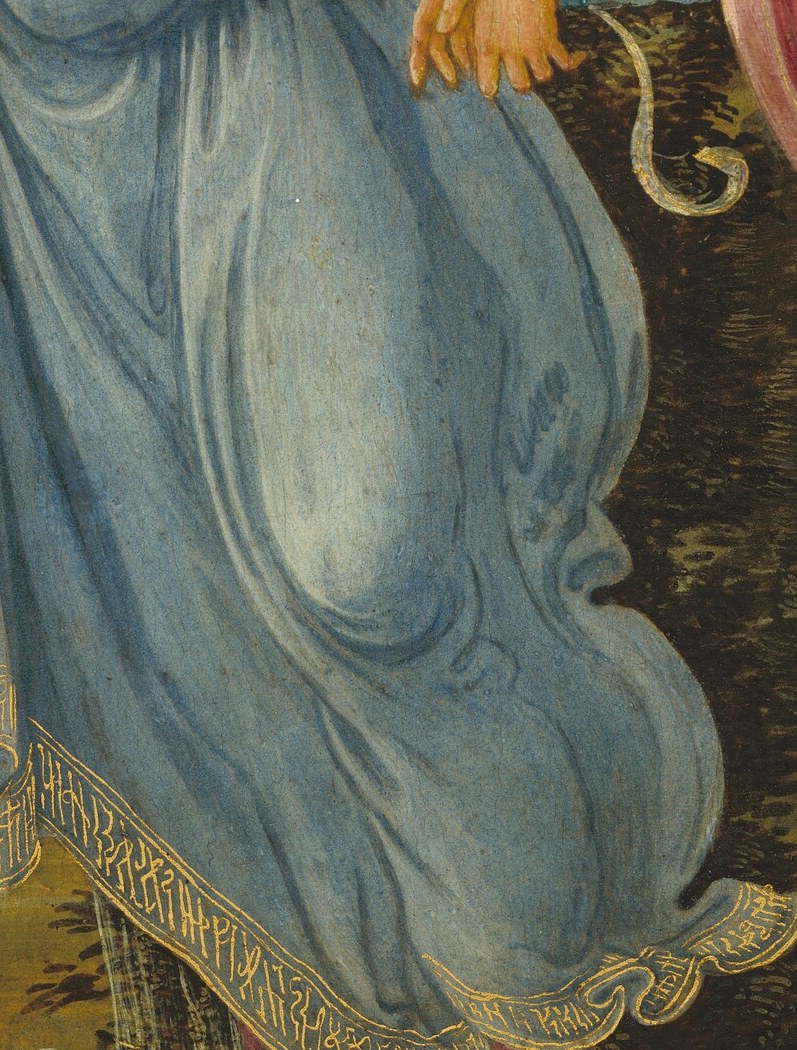
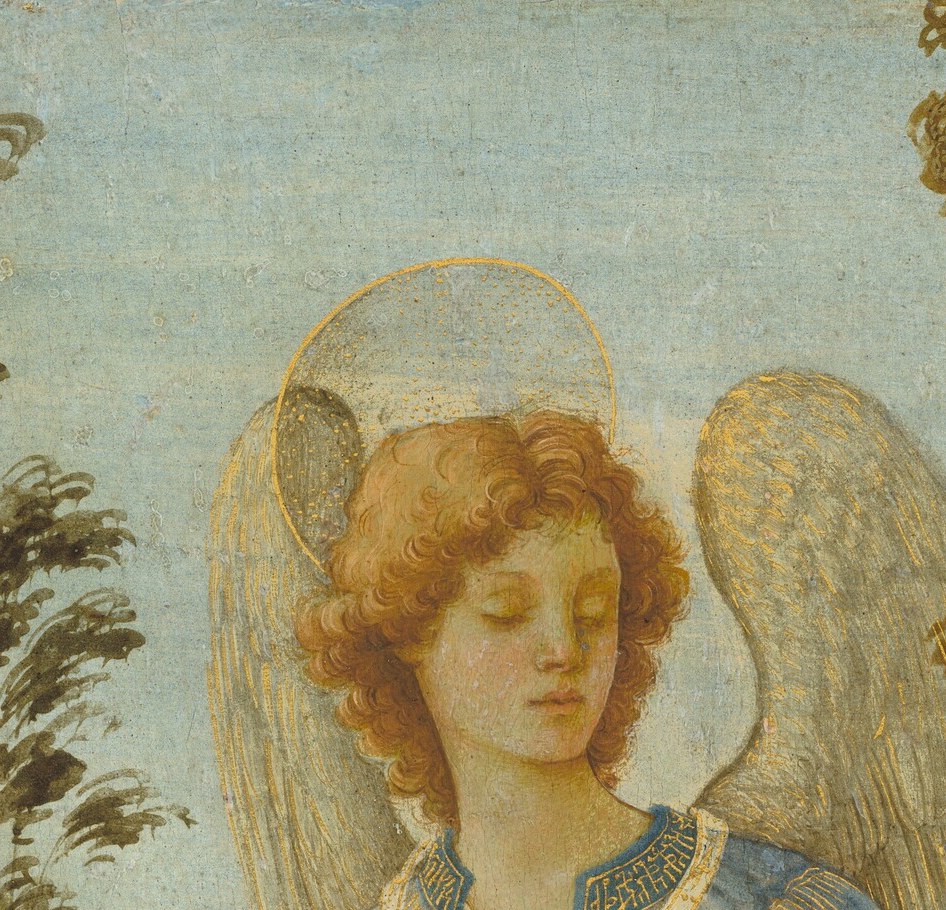
Look first at the joined hands in the center. The angel Raphael guides the young Tobias by the hand through a pale blue river valley. Tobias wears a vivid pink tunic; the angel is wrapped in ultramarine robes with gold threading at the sash. The fish in the angel's left hand is the story's hinge: its organs will cure the blindness of Tobias's father. Everything in the composition is built around trust, healing, and the long road ahead.
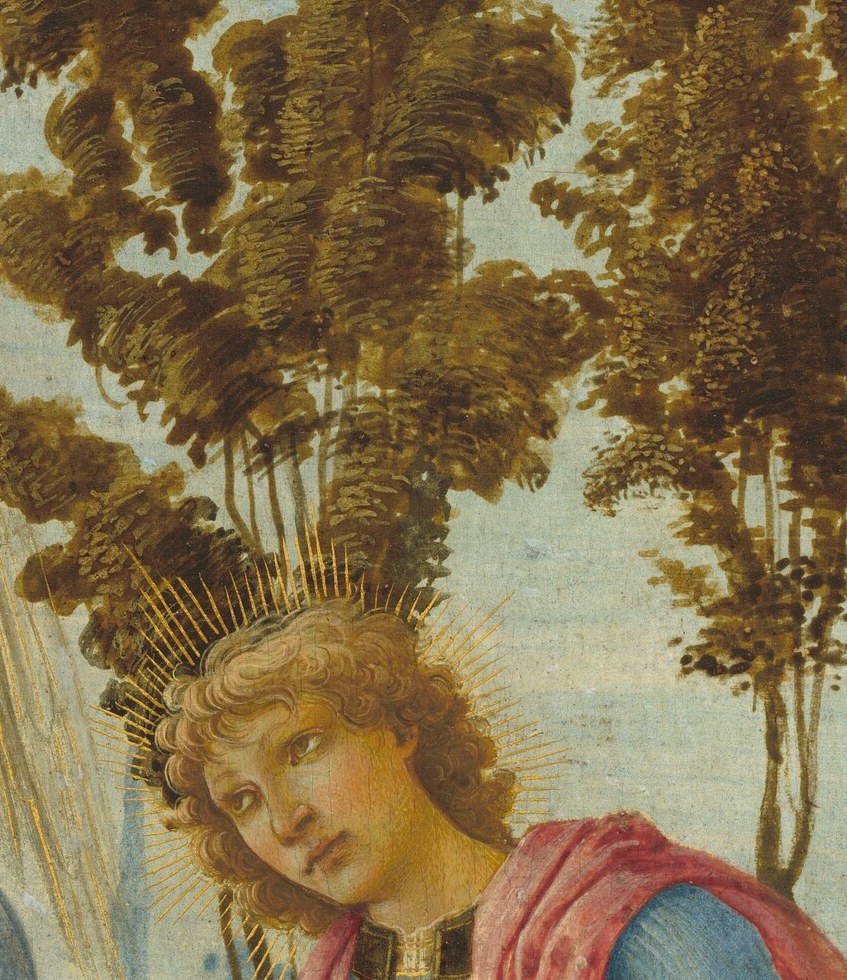
Now find the dog. The Book of Tobit 11:4 says, 'The dog went along behind them,' and Lippi included it. It is not a decorative addition or a workshop whim. It is a literalist's fidelity to the text, tucked into the middle ground as though the painter trusted that anyone who bothered to read the passage would look for it. The landscape's misty recession owes a debt to Flemish technique, a northern influence unusual in a Florentine panel of this date. Lippi's father, Fra Filippo Lippi, was a celebrated painter himself; Filippino inherited the workshop and the habit of close attention.
But the dog is the tell. It tells you the artist read the full story, not just the headline. Find it at the National Gallery of Art in Washington, D.C. What other details do you think you have missed in this painting?
Details
Transcript
A young man walks with an angel. A straightforward biblical scene. The angel guides him by the hand through a misty valley. That fish will cure his father's blindness. The story is about healing. Now look down, to the left edge of the road. A tiny white dog trots beside them. Most people scroll right past it. The Book of Tobit, chapter 11 verse 4: 'The dog went along behind them.' Filippino Lippi read the text so closely he painted the footnote.