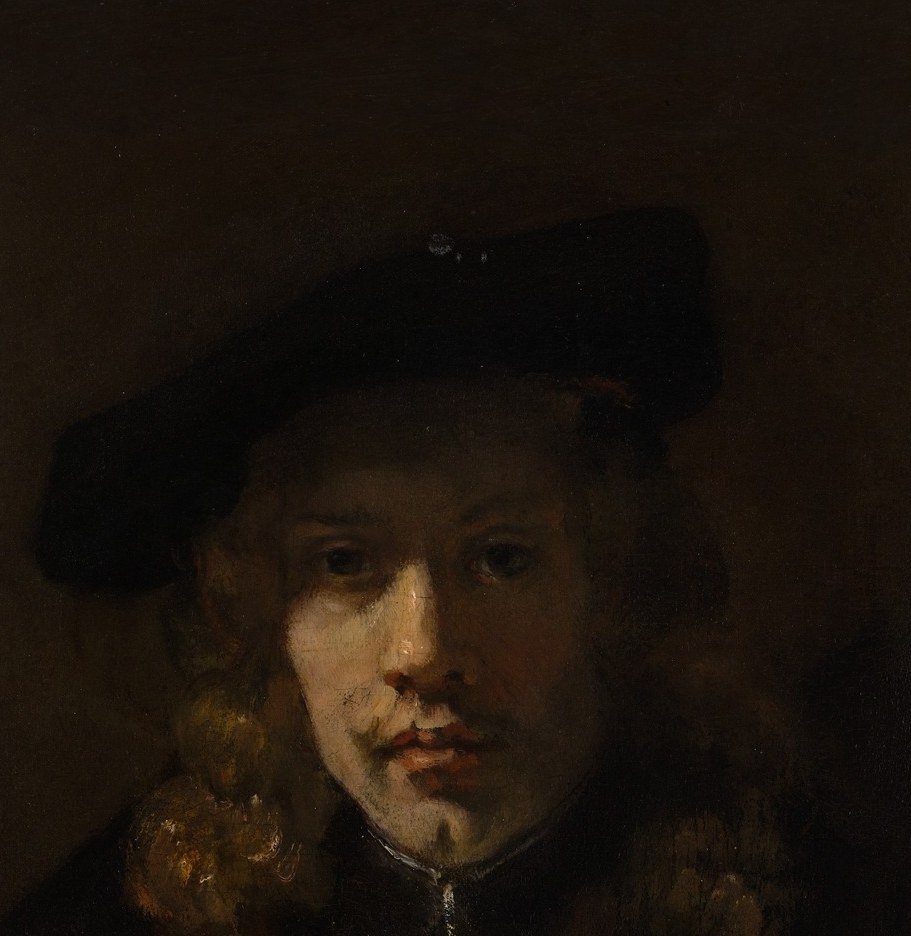
Man in a Beret by Rembrandt
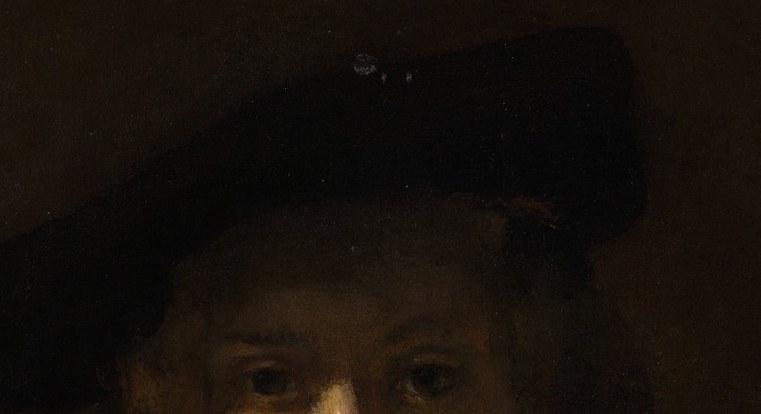
Rembrandt painted Man in a Beret around 1690, and it now lives at The Metropolitan Museum of Art. The painting is a portrait of an unknown man, but the real subject is light itself, and how a master at the end of his life, broke and largely out of fashion, still commanded it completely.
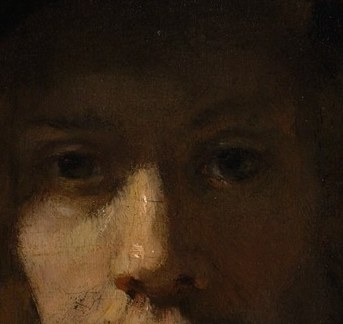
Watch the tip of the nose. That single brilliant dot of paint is a loaded brushstroke called an impasto, a thick, wet dab of lead-white and oil. Rembrandt didn't blend it in. He just left it there, raised off the canvas, to catch the light in the room. From three feet away it reads as a solid, glossy nose, alive in three dimensions. The trick is so small you could miss it, but it holds the whole painting together.
By 1690 Rembrandt had outlived his wife, his common-law wife, and three of his four children. His house and his art collection had been auctioned to pay his debts. He was buried in a rented grave. And yet in this painting, with this anonymous sitter in a borrowed beret, the sheer technical confidence is undiminished, a man who could build a human presence out of one brushstroke.
Next time you stand in front of a Rembrandt, step close and look for the highlight on the nose. That's where the artist is most present.
Details

Transcript
Late in life, Rembrandt painted this unknown man. He was broke. Creditors had seized his house. And still, he painted light that lands like a physical thing. The eyes are shadowed. Heavy with years. Now look at the tip of the nose. One loaded stroke of paint. A single impasto highlight. That tiny mark makes the entire face three-dimensional.