Louis Husson by Eakins, Thomas
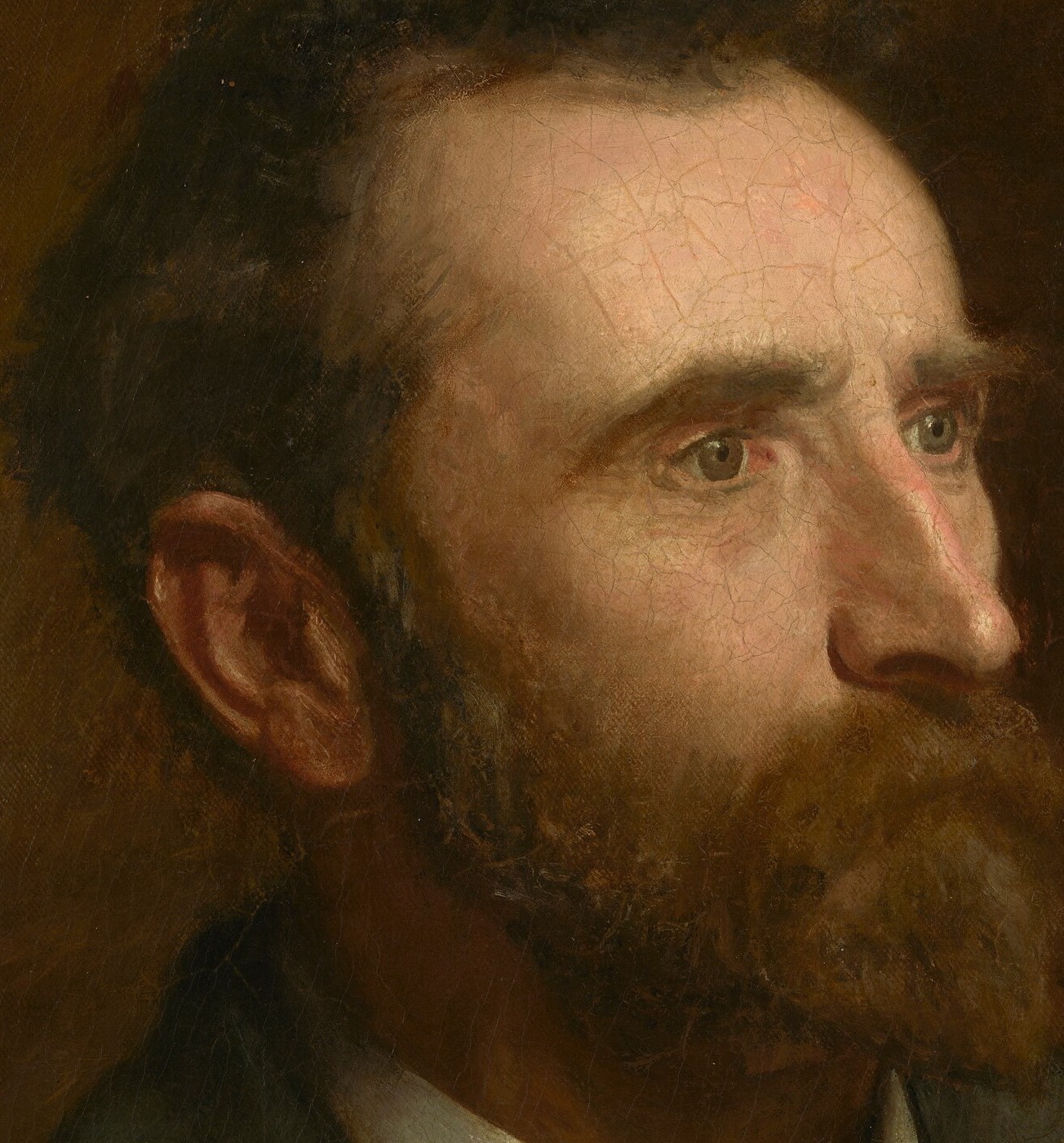
Thomas Eakins' 1899 portrait, "Louis Husson," at the Metropolitan Museum of Art, showcases the artist's dedication to unidealized realism. Eakins, known for his commitment to anatomical precision and psychological depth, rendered his subjects with remarkable truth.
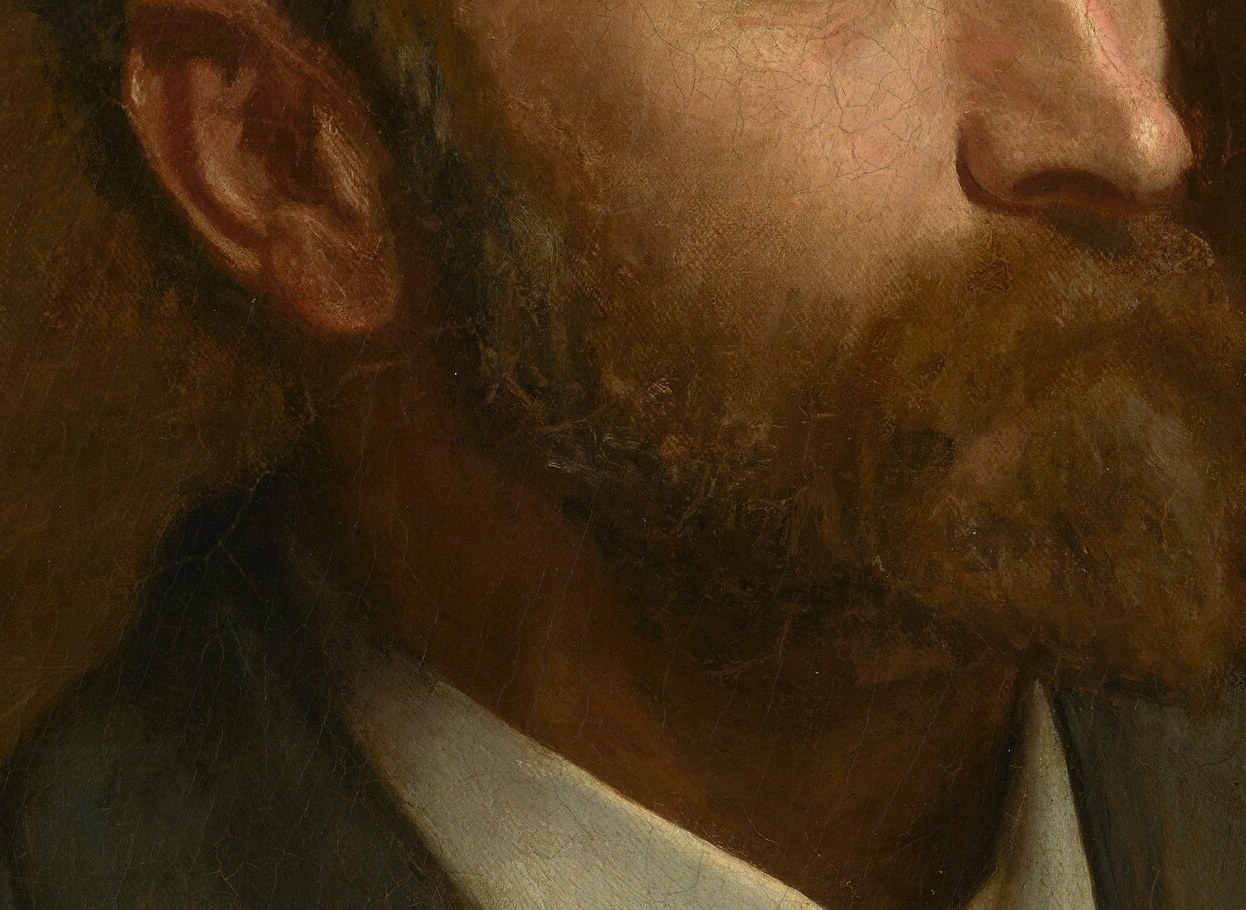
Notice the smooth, controlled brushwork in Husson's face and beard, capturing a thoughtful, introspective demeanor. Eakins used soft, focused lighting to draw all attention to the sitter, allowing his features to emerge from the plain, dark background.
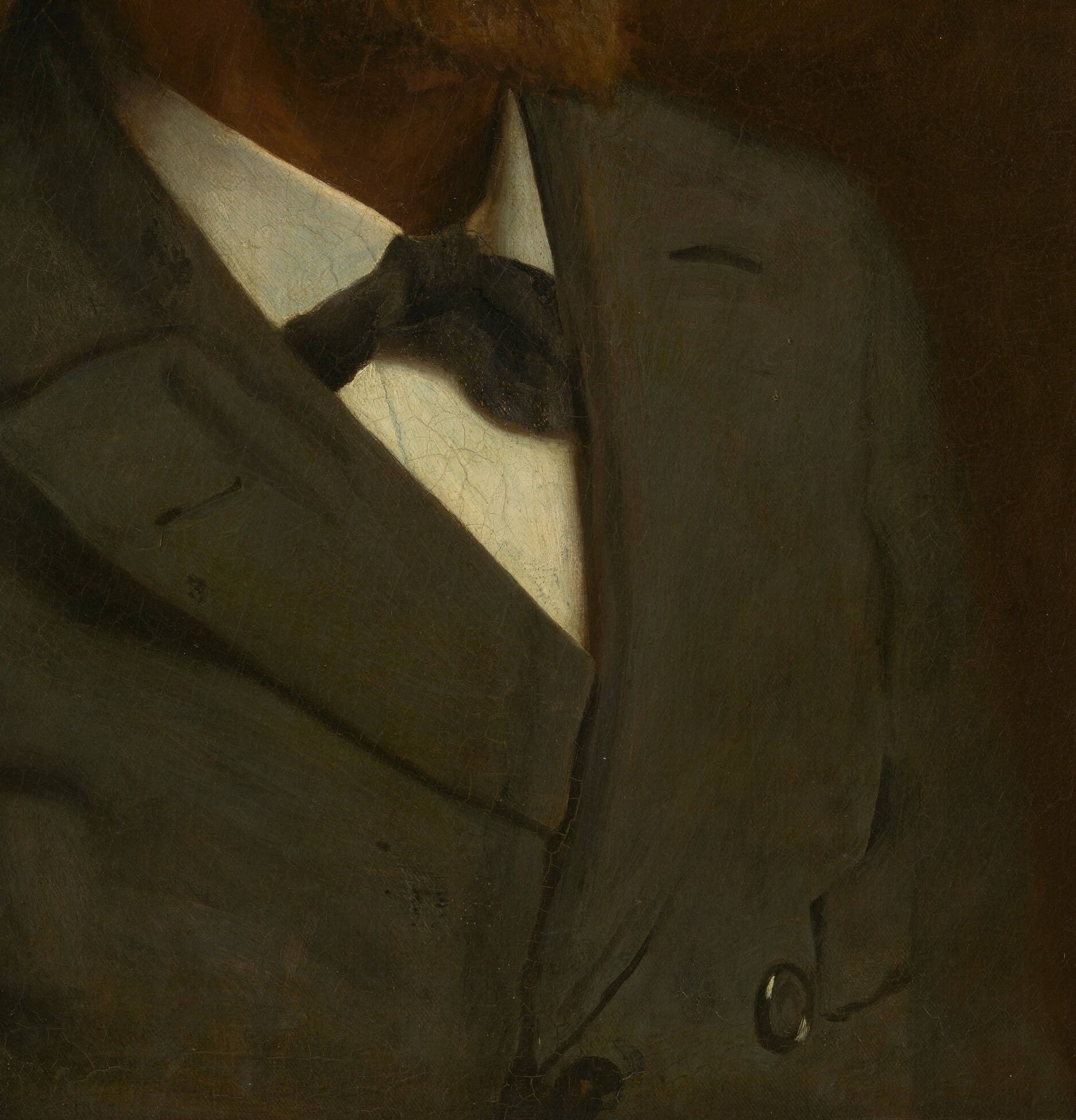
Yet, beyond the depicted subject, there's a subtle detail inherent to the artwork itself: the visible texture of the canvas. This undercurrent of material texture adds to the painting's realism and reminds us of its physical creation more than a century ago.
What other subtle details do you notice when looking closely at Eakins' work?
Details
Transcript
This is Louis Husson, painted by Thomas Eakins in 1899. Eakins was famous for his unidealized, realistic portraits. Look at the careful precision in the lines of his beard. His skin is rendered with incredibly smooth, controlled brushwork. But beneath the surface, there's another kind of detail. The texture of the canvas itself is subtly visible.